
The tourism industry offers exciting opportunities for individuals who want to combine their passion for travel with entrepreneurship. As travel demand continues to grow and customer preferences become more diverse, entrepreneurs are finding new ways to create innovative travel services, tourism experiences, and niche tourism ventures. This growth has made travel entrepreneurship an attractive career path for aspiring business owners looking to build successful brands within the tourism sector.
Unlike traditional employment, tourism entrepreneurship allows individuals to develop unique business ideas, create personalized customer experiences, and establish their own presence in the travel industry. From travel agencies and tour operations to destination services and digital tourism platforms, there are numerous tourism business ideas that entrepreneurs can explore based on their interests, expertise, and market opportunities.
However, building a successful tourism brand requires more than simply launching a business. Entrepreneurs must understand customer needs, create a strong brand identity, develop effective marketing strategies, and consistently deliver value to travelers. Learning how to build a tourism brand and manage a sustainable travel business startup can help aspiring entrepreneurs transform their ideas into profitable and long-lasting ventures.
With the tourism industry continuously evolving through digital innovation, experiential travel, and changing consumer expectations, travel entrepreneurship presents exciting opportunities for those who are prepared to learn, adapt, and create meaningful experiences for their customers.
What Is Travel Entrepreneurship and Why Is It Growing?
Travel entrepreneurship refers to the process of creating, managing, and growing a business within the travel and tourism industry. Entrepreneurs in this sector identify opportunities to provide travel-related products, services, or experiences that meet the evolving needs of travelers. Whether through travel agencies, tour operations, destination experiences, travel consultancy, or digital tourism platforms, tourism entrepreneurs contribute significantly to industry innovation and growth.
The rise of tourism entrepreneurship has been driven by several factors:
- Increasing domestic and international travel demand
- Growth of digital travel platforms
- Rising interest in personalized travel experiences
- Expansion of niche tourism markets
- Greater access to online marketing and business tools
- Growing consumer preference for unique travel services
Today’s travelers are seeking more customized and experience-driven journeys rather than standard travel packages. This shift has created new tourism business ideas for entrepreneurs who can offer specialized services, destination-focused experiences, sustainable tourism initiatives, and technology-enabled travel solutions.
Another reason for the growth of travel entrepreneurship is the relatively low barrier to entry for many tourism ventures. Entrepreneurs can start small, build an online presence, and gradually expand their services as they gain customers and industry experience. This flexibility makes tourism an attractive sector for aspiring business owners.
According to insights on travel brand building strategies, creating a strong brand identity and building customer trust are essential factors that help travel entrepreneurs differentiate themselves and establish long-term success in a competitive travel marketplace.
Choosing the Right Tourism Business Idea
Selecting the right business idea is one of the most important steps in building a successful travel business startup. The tourism industry offers a wide range of opportunities, but not every business model will suit every entrepreneur. Choosing a concept that aligns with market demand, customer needs, and personal interests can significantly improve the chances of long-term success.
Some popular tourism business ideas include:
- Travel agency services
- Tour operation businesses
- Destination experience companies
- Travel consultancy services
- Online travel platforms
- Event and group travel management
- Adventure and experiential tourism ventures
The best business idea is often one that solves a specific customer need or serves an underserved market segment. Entrepreneurs who identify gaps in the market can create unique services that stand out from competitors and attract loyal customers.
How to Identify a Profitable Tourism Niche
Before launching a business, it is important to evaluate:
- Market demand and travel trends
- Customer preferences and expectations
- Existing competition
- Revenue potential
- Long-term scalability
For example, some entrepreneurs focus on educational tours, while others specialize in luxury travel, corporate travel, adventure tourism, or destination experiences. A clear niche helps businesses build stronger brand recognition and target marketing efforts more effectively.
| Tourism Business Type | Opportunity Focus |
| Travel Agency | Travel planning and bookings |
| Tour Operator | Package creation and management |
| Destination Services | Local tourism experiences |
| Travel Consultancy | Travel advisory services |
| Digital Tourism Business | Online travel solutions |
Developing a business model based on a clear market opportunity is essential for sustainable growth. Understanding industry trends and learning from a structured travel business startup guide can help aspiring entrepreneurs identify the right niche and create a stronger foundation for their tourism venture.
How to Build a Strong Tourism Brand From the Beginning
Building a successful tourism business requires more than offering travel services. A strong brand helps customers recognize, trust, and remember your business. In a competitive industry, brand identity can become one of the biggest factors that influence customer decisions. This is why entrepreneurs who want to succeed in travel entrepreneurship should focus on building a clear and consistent tourism brand from the very beginning.
A strong tourism brand should include:
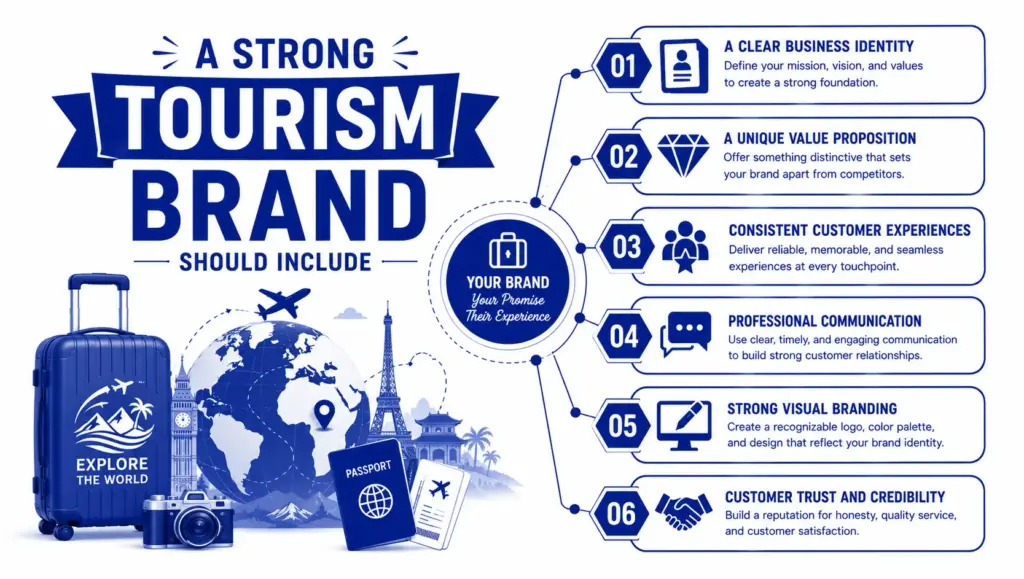
- A clear business identity
- A unique value proposition
- Consistent customer experiences
- Professional communication
- Strong visual branding
- Customer trust and credibility
Brand positioning is especially important because it helps customers understand what makes your business different from competitors. Some tourism brands focus on luxury travel, while others specialize in adventure tourism, educational tours, sustainable tourism, or personalized travel experiences. Having a clear niche helps strengthen brand recognition and customer loyalty.
Customer trust is another critical element of tourism entrepreneurship. Travelers often invest significant time and money into their travel plans, so they prefer businesses that demonstrate professionalism, transparency, and reliability. Positive customer experiences and consistent service quality can help build long-term trust and encourage repeat business.
According to insights on destination branding insights, successful tourism brands create meaningful connections with their target audiences by developing clear brand identities, authentic storytelling, and memorable customer experiences that differentiate them from competitors.
By establishing a strong brand foundation early, entrepreneurs can improve visibility, attract the right customers, and create sustainable growth opportunities for their tourism ventures.
Essential Skills Every Travel Entrepreneur Should Develop
Success in travel entrepreneurship depends not only on having a good business idea but also on developing the skills needed to manage operations, attract customers, and grow a sustainable brand. The tourism industry is highly competitive and customer-focused, which means entrepreneurs must be prepared to handle multiple responsibilities while maintaining high service standards.
Some of the most important skills every travel entrepreneur should develop include:
- Communication and interpersonal skills
- Customer service excellence
- Leadership and team management abilities
- Sales and negotiation skills
- Business planning and management knowledge
- Problem-solving and decision-making capabilities
Strong communication skills help entrepreneurs build relationships with customers, suppliers, partners, and team members. Effective communication also improves customer trust and helps businesses deliver better service experiences.
Customer service is equally important because satisfied customers often become repeat clients and brand advocates. Positive customer experiences can significantly influence business growth and reputation in the tourism sector.
Leadership skills help entrepreneurs manage teams, coordinate operations, and make strategic decisions that support business growth. Sales and negotiation abilities are also valuable because tourism businesses rely on customer acquisition, vendor partnerships, and revenue generation to remain competitive.
| Essential Skill | Business Benefit |
| Communication | Stronger customer relationships |
| Customer Service | Higher customer retention |
| Leadership | Better team management |
| Sales Skills | Increased revenue opportunities |
| Problem Solving | Improved business adaptability |
Entrepreneurs who continuously improve these skills are better equipped to manage challenges, identify opportunities, and build successful tourism brands. Strong tourism entrepreneur skills not only support daily business operations but also contribute to long-term growth, customer loyalty, and sustainable success in the travel industry.
Tourism Marketing Strategies That Help Brands Grow
Marketing is one of the most important factors in the success of any tourism business. Even the best travel products or services may struggle to gain customers without effective promotion and brand visibility. For entrepreneurs involved in travel entrepreneurship, a well-planned marketing strategy helps attract customers, build trust, and establish a strong presence in a competitive marketplace.
Some of the most effective tourism marketing strategies include:
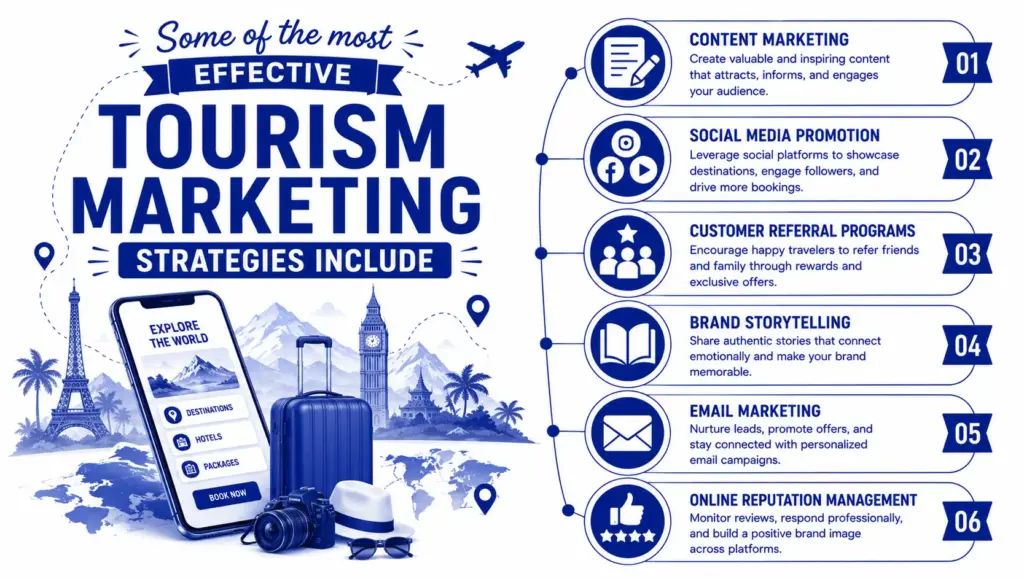
- Content marketing
- Social media promotion
- Customer referral programs
- Brand storytelling
- Email marketing
- Online reputation management
Content marketing has become particularly valuable because travelers often research destinations, experiences, and travel providers before making purchasing decisions. Sharing informative blogs, travel guides, destination insights, and travel tips can position a business as a trusted source of information while improving customer engagement.
Social media platforms also play a significant role in tourism brand growth. Travel businesses can showcase experiences, customer testimonials, destination highlights, and promotional offers to reach a wider audience. Consistent engagement helps strengthen brand awareness and build customer relationships.
Brand storytelling is another powerful marketing tool. Travelers are more likely to connect with businesses that communicate their mission, values, and unique experiences in an authentic way. A compelling brand story helps differentiate a tourism business from competitors and creates stronger emotional connections with customers.
According to insights on tourism content marketing strategies, successful tourism brands use a combination of valuable content, customer-focused messaging, and consistent digital engagement to attract travelers and strengthen their market presence.
By implementing effective marketing strategies, tourism entrepreneurs can improve visibility, attract qualified customers, increase brand recognition, and support long-term business growth.
How Industry Exposure Supports Tourism Entrepreneurship Success
Industry exposure is a valuable asset for anyone pursuing travel entrepreneurship. While business knowledge and planning are important, real-world industry experience helps entrepreneurs better understand customer expectations, market trends, operational challenges, and growth opportunities. Exposure to the tourism ecosystem enables aspiring business owners to make informed decisions and develop stronger, more sustainable business strategies.
Industry exposure can be gained through:
- Tourism workshops and seminars
- Industry networking events
- Travel and hospitality conferences
- Business mentorship opportunities
- Internship and training programs
- Professional collaborations and partnerships
One of the biggest advantages of industry exposure is the opportunity to learn directly from experienced professionals. Entrepreneurs can gain practical insights into customer service, travel operations, destination management, supplier relationships, and tourism marketing strategies. These experiences often provide knowledge that cannot be acquired through theory alone.
Networking is equally important because strong professional relationships can lead to business partnerships, referrals, collaborations, and new growth opportunities. Building connections within the tourism industry can help entrepreneurs access valuable resources and stay informed about emerging trends and market developments.
Participating in programs that offer industry collaboration opportunities can help aspiring tourism entrepreneurs gain practical industry insights, expand their professional networks, and strengthen their understanding of real-world tourism business operations.
By combining industry exposure with continuous learning and entrepreneurial thinking, individuals can improve their ability to identify opportunities, overcome challenges, and build successful tourism ventures in an increasingly competitive marketplace.
Building Long-Term Growth and Sustainability in Tourism Businesses
Launching a tourism business is only the first step in the entrepreneurial journey. Long-term success depends on a company’s ability to adapt to industry changes, maintain customer trust, and continuously improve its services. For entrepreneurs involved in travel entrepreneurship, sustainable growth requires a strategic approach that balances customer satisfaction, innovation, and operational efficiency.
Some key strategies that support long-term business growth include:
- Building strong customer relationships
- Encouraging repeat business and referrals
- Diversifying service offerings
- Adopting new technologies
- Monitoring tourism industry trends
- Investing in continuous learning and improvement
Customer loyalty is one of the most valuable assets for any tourism business. Satisfied customers are more likely to return for future travel services and recommend the brand to others. Providing consistent service quality, personalized experiences, and responsive customer support can significantly improve retention rates.
Business diversification also helps reduce risk and create additional revenue opportunities. For example, a travel business that initially focuses on holiday packages may later expand into corporate travel, educational tours, event management, or destination experiences. Expanding services allows businesses to reach new customer segments while strengthening their market position.
Technology plays a major role in sustainable growth as well. Online booking systems, customer relationship management tools, digital marketing platforms, and data analytics can help tourism businesses improve efficiency and deliver better customer experiences.
Successful tourism entrepreneurship also requires adaptability. Travel trends, customer preferences, and market conditions can change rapidly. Entrepreneurs who remain flexible and proactive are better equipped to identify new opportunities and respond effectively to industry developments.
By focusing on innovation, customer satisfaction, operational excellence, and continuous improvement, tourism entrepreneurs can build resilient businesses that achieve sustainable growth and long-term success in the evolving travel industry.
Final Thoughts
Travel entrepreneurship offers exciting opportunities for individuals who want to transform their passion for travel into a successful business venture. As the tourism industry continues to evolve, entrepreneurs can create value by offering innovative travel services, personalized experiences, and customer-focused solutions that meet changing traveler expectations. Building a strong tourism brand requires more than a great idea—it demands strategic planning, effective marketing, industry knowledge, and a commitment to delivering exceptional customer experiences.
From selecting the right tourism business ideas and developing a unique brand identity to mastering essential entrepreneurial skills and implementing effective marketing strategies, every step plays a crucial role in long-term success. Entrepreneurs who focus on customer satisfaction, continuous learning, and business adaptability are often better positioned to build sustainable and competitive tourism ventures.
The future of tourism entrepreneurship remains promising as digital transformation, experiential travel, sustainable tourism, and niche travel markets continue to create new business opportunities. By staying informed about industry trends and investing in professional development, aspiring entrepreneurs can successfully build a tourism brand that stands out in an increasingly competitive marketplace.
Whether you are planning a travel agency, destination service company, tour operation business, or digital travel platform, success ultimately depends on your ability to create meaningful customer experiences and continuously evolve with the industry. With the right mindset, skills, and business strategy, travel entrepreneurship can become a rewarding pathway toward long-term growth and professional achievement.
Start Building Your Tourism Brand Today
The tourism industry offers countless opportunities for aspiring entrepreneurs who are ready to turn innovative ideas into successful businesses. Developing strong business knowledge, industry awareness, and customer-focused strategies can help you build a tourism brand that grows sustainably and creates lasting value for travelers.
If you’re ready to take the next step in your entrepreneurial journey, explore travel entrepreneurship programs and discover how practical learning and industry-focused guidance can help you build a successful tourism business.
FAQs
1. What is travel entrepreneurship?
Travel entrepreneurship involves creating, managing, and growing a business within the travel and tourism industry. This can include travel agencies, tour operations, destination services, travel consultancy, and other tourism-related ventures.
2. How do I start a tourism business?
To start a tourism business, you should identify a market opportunity, choose a business model, create a business plan, build a brand, establish partnerships, and develop a marketing strategy.
3. Is travel entrepreneurship profitable?
Travel entrepreneurship can be profitable when supported by strong planning, quality customer service, effective marketing, and a clear understanding of customer needs and industry trends.
4. What are some popular tourism business ideas?
Popular tourism business ideas include travel agencies, tour operation services, destination experience businesses, travel consultancy, corporate travel management, and online travel platforms.
5. How can I build a successful tourism brand?
Building a successful tourism brand requires a clear brand identity, unique value proposition, consistent customer experiences, effective marketing, and strong customer trust.
6. Why is branding important in the tourism industry?
Branding helps tourism businesses differentiate themselves from competitors, build customer loyalty, increase recognition, and establish credibility in the marketplace.
7. What skills are required for travel entrepreneurship?
Essential skills include communication, customer service, leadership, sales, negotiation, problem-solving, business planning, and tourism industry knowledge.
8. How important is marketing for tourism businesses?
Marketing is crucial because it helps businesses attract customers, increase visibility, build brand awareness, and generate consistent business growth.
9. What marketing strategies work best for tourism startups?
Content marketing, social media marketing, email campaigns, customer referrals, brand storytelling, and online reputation management are among the most effective strategies.
10. How can tourism startups attract their first customers?
Tourism startups can attract customers through targeted digital marketing, networking, promotional offers, customer referrals, and by delivering exceptional service experiences.
11. What challenges do travel entrepreneurs commonly face?
Common challenges include market competition, customer acquisition, brand building, operational management, supplier coordination, and adapting to changing travel trends.
12. How can I identify a profitable tourism niche?
A profitable tourism niche can be identified by analyzing market demand, customer preferences, competition levels, industry trends, and long-term growth potential.
13. Can I start a tourism business online?
Yes, many tourism businesses operate successfully online through websites, booking platforms, social media channels, virtual consultations, and digital marketing strategies.
14. How does industry networking help tourism entrepreneurs?
Industry networking helps entrepreneurs build partnerships, gain business insights, access mentorship opportunities, stay informed about trends, and identify new growth opportunities.
15. How can I achieve long-term success in travel entrepreneurship?
Long-term success comes from maintaining customer satisfaction, continuously improving services, embracing innovation, adapting to industry changes, building strong relationships, and focusing on sustainable business growth.