
India’s tourism and travel sector continues to grow rapidly, creating exciting opportunities for aspiring entrepreneurs. Increasing domestic travel, rising international tourism, and the growing popularity of online travel bookings have contributed to the expansion of the travel services market. As a result, many individuals are exploring how to start a travel agency business in India and build successful ventures within the thriving tourism industry.
Starting a travel agency can be an attractive business opportunity because it allows entrepreneurs to offer a wide range of services, including travel planning, tour packages, hotel bookings, transportation arrangements, and customer support. However, building a successful travel agency business in India requires more than a passion for travel. Entrepreneurs must understand industry operations, customer expectations, business planning, and marketing strategies to establish a sustainable and competitive business.
The travel industry is highly customer-focused, making communication, service quality, and relationship management essential for long-term success. Understanding how to open a travel agency, identify profitable travel business opportunities, and create a practical travel agency startup guide can help aspiring business owners navigate the challenges of entrepreneurship more effectively. With proper planning, industry knowledge, and a customer-centric approach, entrepreneurs can build successful travel businesses that capitalize on India’s growing tourism market.
Why the Travel Agency Business Is Growing in India
The travel industry in India has experienced significant growth over the past decade, driven by increasing tourism activities, improved transportation infrastructure, and changing consumer travel preferences. More people are traveling for leisure, business, education, and cultural experiences than ever before. This growth has created strong opportunities for entrepreneurs looking to start a travel agency business in India and participate in one of the country’s fastest-growing service sectors.
Several factors are contributing to the expansion of the travel industry:
- Growth in domestic tourism
- Increasing international travel demand
- Rising disposable incomes
- Expansion of airline and hospitality services
- Growth of online travel bookings
- Increased interest in personalized travel experiences
Digital technology has also transformed how customers plan and book trips. Travelers now expect convenient booking options, customized itineraries, and seamless customer support. This has created new travel business opportunities for agencies that can provide value-added services and personalized travel solutions.
The growing demand for travel services has opened opportunities in areas such as leisure travel, corporate travel management, group tours, educational travel, and specialized tourism segments. Entrepreneurs who understand customer preferences and industry trends can build successful businesses by offering tailored services that meet evolving market needs.
According to insights on travel business growth opportunities, India’s expanding tourism ecosystem and increasing travel demand continue to create favorable conditions for new travel agency businesses and tourism entrepreneurs.
Understanding the Different Types of Travel Agency Businesses
Before launching a travel company, it is important to understand the different business models available in the industry. Each type of travel agency serves a specific market segment and offers unique services. Choosing the right model is one of the most important decisions when planning to start a travel agency business in India because it influences investment requirements, target customers, and long-term growth opportunities.
Some of the most common travel agency models include:
- Retail Travel Agencies
- Online Travel Agencies (OTAs)
- Corporate Travel Management Companies
- Tour Operation Businesses
- Specialized Travel Agencies
Retail travel agencies focus on assisting customers with travel bookings, holiday packages, and travel planning services. Online travel agencies primarily operate through digital platforms, allowing customers to make bookings and manage travel arrangements online. Corporate travel agencies specialize in business travel management, while tour operators design and manage complete travel packages.
Choosing the Right Travel Agency Model for Your Goals
Selecting the right business model depends on several factors:
- Available investment budget
- Target customer segment
- Service specialization
- Business scalability goals
- Market demand and competition
| Travel Agency Type | Primary Business Focus |
| Retail Travel Agency | Customer travel bookings |
| Online Travel Agency | Digital travel services |
| Corporate Travel Agency | Business travel management |
| Tour Operator | Travel package creation |
| Specialized Agency | Niche travel services |
Choosing the right model helps entrepreneurs align their services with customer needs and market opportunities. Understanding these options is a crucial step in building a successful travel agency business in India and developing a practical roadmap for sustainable growth.
According to insights on travel agency startup planning, selecting a business model that matches market demand, expertise, and financial capacity is one of the key factors influencing the success of a travel agency startup.
Steps to Start a Travel Agency Business in India
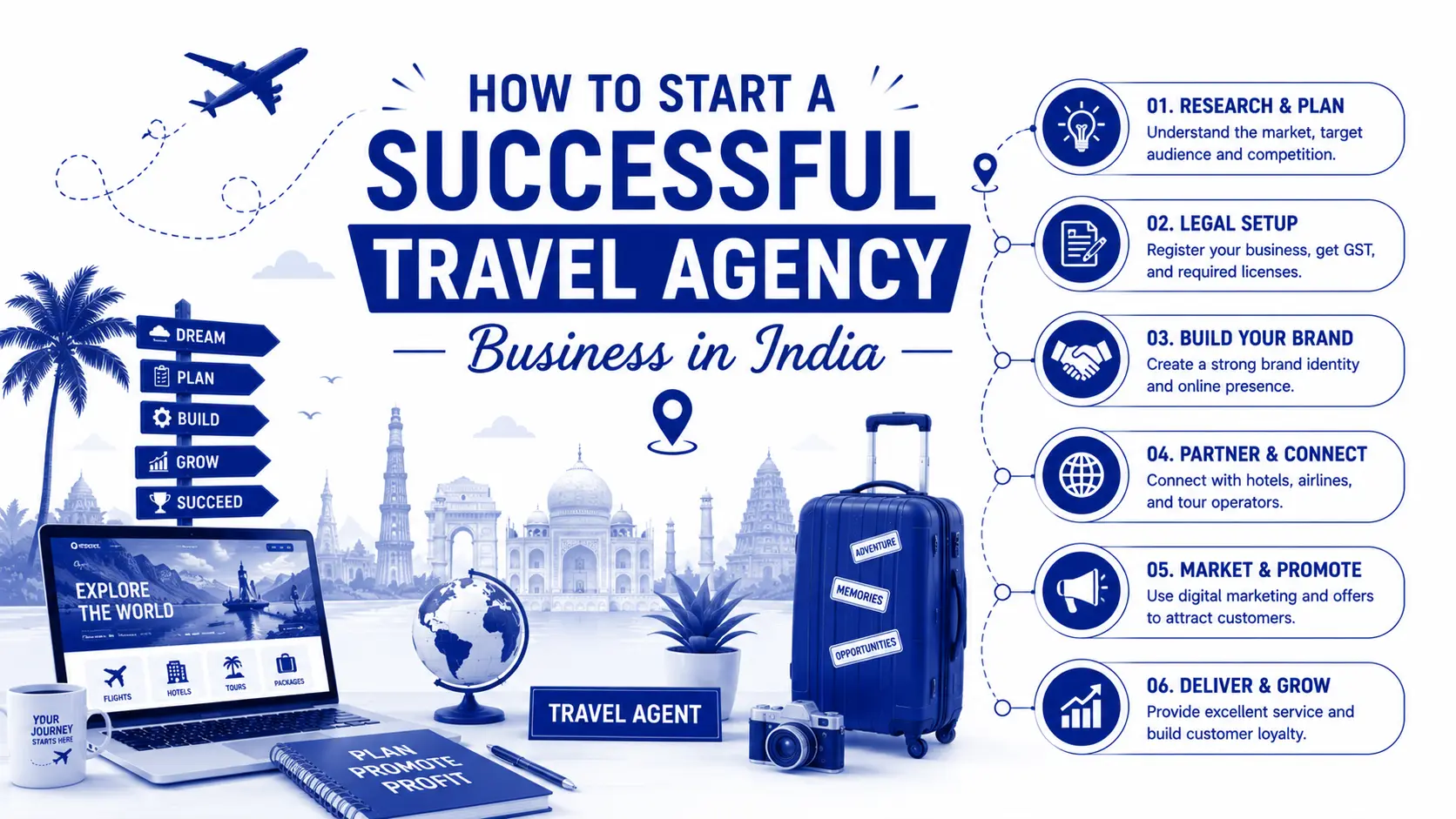
Starting a travel agency requires careful planning, industry understanding, and a clear business strategy. While the travel industry offers significant growth potential, entrepreneurs must establish a strong operational foundation before launching their services. Following a structured approach can help aspiring business owners successfully start a travel agency business in India and build a sustainable venture.
Some important steps include:
1. Conduct Market Research
Analyze customer preferences, travel trends, competitor offerings, and potential market gaps. Understanding demand helps identify profitable travel business opportunities and target customer segments.
2. Create a Business Plan
Develop a detailed plan outlining business objectives, services, target audience, marketing strategy, operational processes, and financial goals. A strong business plan serves as a roadmap for growth and decision-making.
3. Complete Business Registration
Choose an appropriate business structure and complete the required registration processes. Entrepreneurs should also understand applicable regulatory and compliance requirements before launching operations.
4. Build Supplier and Vendor Partnerships
Travel agencies depend on relationships with airlines, hotels, transportation providers, tour operators, and destination management companies. Strong partnerships help deliver quality services and competitive pricing.
5. Develop Service Offerings
Define the services your agency will provide, such as holiday packages, flight bookings, hotel reservations, corporate travel management, or specialized travel experiences.
6. Plan Customer Acquisition Strategies
Establish marketing and customer engagement plans to attract potential travelers and build brand visibility in a competitive market.
According to insights on travel agency registration guidance, proper planning, business registration, supplier relationships, and operational readiness are essential components for successfully launching and managing a travel agency business in India.
Skills Required to Run a Successful Travel Agency
Running a travel agency involves much more than booking flights and arranging holidays. Successful agency owners must manage customer relationships, coordinate travel services, solve operational challenges, and continuously adapt to changing market trends. Developing the right skills is therefore essential for anyone planning to start a travel agency business in India and achieve long-term success.
Some of the most important skills include:
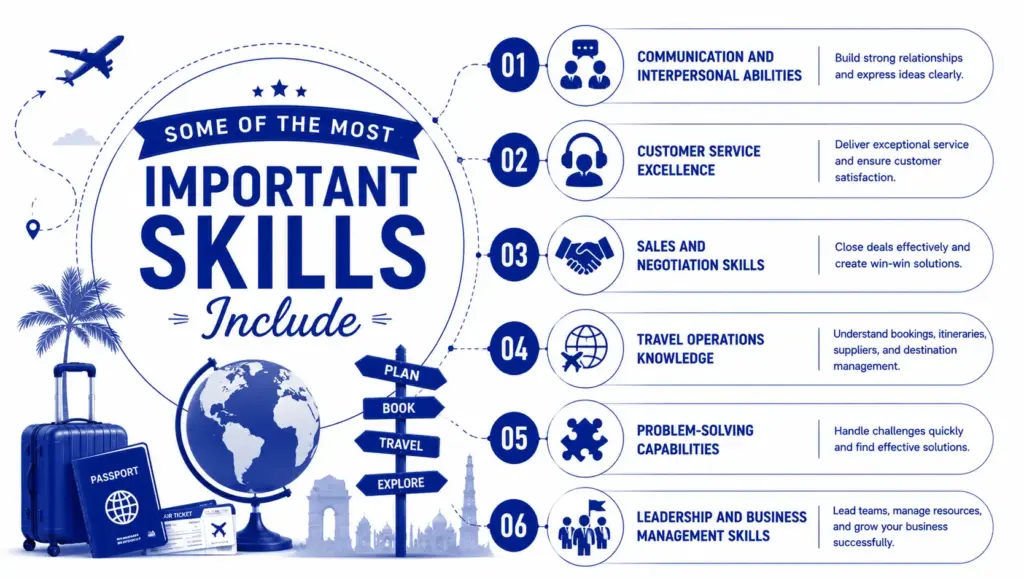
- Communication and interpersonal abilities
- Customer service excellence
- Sales and negotiation skills
- Travel operations knowledge
- Problem-solving capabilities
- Leadership and business management skills
Strong communication helps agency owners understand customer requirements and recommend suitable travel solutions. Customer service skills are equally important because positive client experiences often lead to repeat bookings and referrals, which contribute significantly to business growth.
Sales and negotiation abilities help travel entrepreneurs build partnerships with suppliers, secure competitive pricing, and convert inquiries into bookings. Meanwhile, problem-solving skills enable businesses to handle travel disruptions, customer concerns, and operational challenges effectively.
| Essential Skill | Business Benefit |
| Communication | Better customer relationships |
| Customer Service | Higher client satisfaction |
| Sales Skills | Increased bookings |
| Problem Solving | Efficient issue resolution |
| Leadership | Strong business management |
Developing strong business and operational knowledge through tourism business knowledge can help aspiring entrepreneurs strengthen their management capabilities, improve customer service standards, and build a successful travel agency business in India that remains competitive in a rapidly evolving market.
Marketing Strategies That Help Travel Agencies Attract Customers
Marketing plays a crucial role in the success of any travel agency. Even with excellent services and competitive pricing, a business may struggle to grow if potential customers are unaware of its offerings. Effective marketing helps travel agencies build brand visibility, attract new customers, and establish trust within a competitive marketplace. This makes marketing an essential component when planning to start a travel agency business in India.
Some effective marketing strategies include:
- Building a professional online presence
- Leveraging social media platforms
- Creating travel-focused content
- Encouraging customer referrals
- Running targeted digital advertising campaigns
- Maintaining strong customer relationships
Digital marketing has become particularly important because most travelers research destinations, compare packages, and make booking decisions online. A well-designed website, engaging social media content, and customer testimonials can significantly improve brand credibility and attract potential clients.
Content marketing is another valuable strategy. Sharing travel tips, destination guides, and industry insights helps position a travel agency as a trusted source of information while improving customer engagement. Referral programs and positive customer reviews can also contribute to business growth by generating word-of-mouth recommendations.
Building strong professional connections through industry networking opportunities can help entrepreneurs gain valuable industry insights, establish partnerships, and identify new opportunities for expanding their travel business.
By combining digital marketing, customer relationship management, and strategic networking, travel agencies can strengthen their market presence and attract a consistent flow of customers in a competitive travel industry.
Common Challenges New Travel Agency Owners Face
While the travel industry offers exciting entrepreneurial opportunities, new agency owners often encounter challenges during the initial stages of business development. Understanding these obstacles in advance can help entrepreneurs prepare effective strategies and improve their chances of long-term success. Anyone planning to start a travel agency business in India should be aware of the common challenges associated with running a travel enterprise.
Some of the most common challenges include:
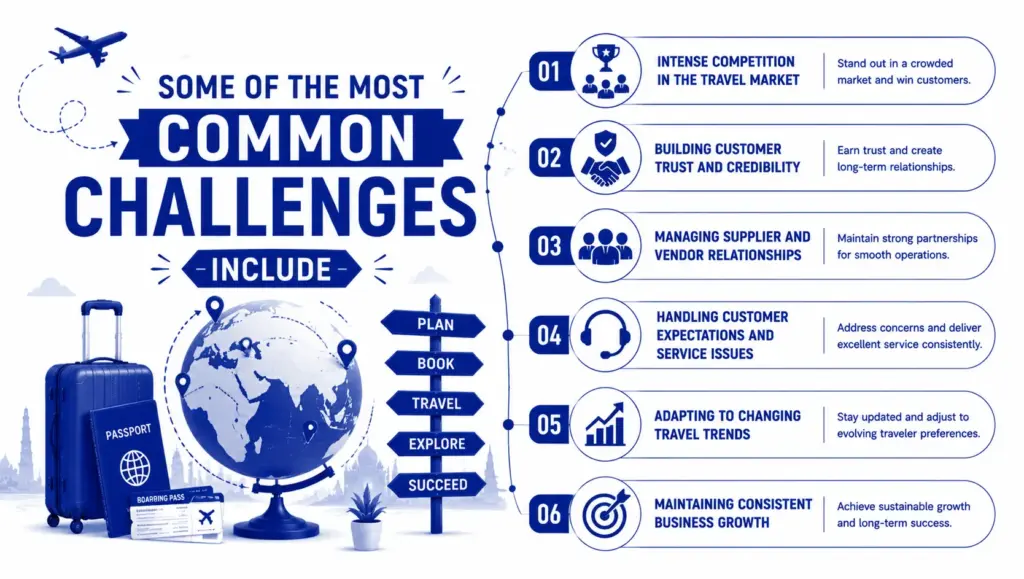
- Intense competition in the travel market
- Building customer trust and credibility
- Managing supplier and vendor relationships
- Handling customer expectations and service issues
- Adapting to changing travel trends
- Maintaining consistent business growth
One of the biggest challenges is customer acquisition. New agencies often compete with established brands and online travel platforms that already have strong market recognition. Building a reputation requires consistent service quality, positive customer experiences, and effective marketing efforts.
Vendor coordination can also be challenging because travel agencies rely on airlines, hotels, transportation providers, and tour operators to deliver services. Delays, booking issues, or supplier-related disruptions can impact customer satisfaction and business performance.
Additionally, the travel industry is influenced by economic conditions, seasonal demand fluctuations, and changing traveler preferences. Entrepreneurs must remain flexible and continuously adapt their business strategies to respond to market changes and customer expectations.
Despite these challenges, agencies that focus on service quality, customer relationships, operational efficiency, and continuous improvement are often better positioned to overcome obstacles and establish a strong presence within the travel industry.
How to Build Long-Term Growth in the Travel Business
Building a travel agency is not only about launching services and acquiring customers. Long-term success depends on the ability to adapt, innovate, and consistently deliver value to travelers. Entrepreneurs who focus on sustainable growth strategies are more likely to establish strong brands and remain competitive in the evolving tourism industry. This is particularly important for those looking to start a travel agency business in India and achieve lasting business success.
Some effective strategies for long-term growth include:
- Focusing on customer retention
- Expanding service offerings
- Leveraging technology and automation
- Building strategic partnerships
- Monitoring industry trends
- Investing in continuous learning and development
Customer retention is often more cost-effective than acquiring new customers. Providing excellent service, personalized travel experiences, and responsive customer support can encourage repeat bookings and positive referrals.
Service diversification is another important growth strategy. Travel agencies can expand into specialized areas such as corporate travel, educational tours, adventure tourism, luxury travel, or event-based travel services. Offering a broader range of services helps businesses reach new customer segments and increase revenue opportunities.
Technology also plays a major role in business growth. Online booking systems, customer relationship management tools, and digital marketing platforms help agencies improve operational efficiency while enhancing customer experiences.
Successful travel entrepreneurs continuously monitor market trends and traveler preferences. By staying informed and adapting to industry changes, agencies can identify emerging opportunities and remain relevant in a competitive marketplace.
Long-term growth in the travel industry ultimately depends on a combination of customer satisfaction, operational excellence, strategic planning, and continuous improvement. Businesses that consistently focus on these areas are better positioned to achieve sustainable success and capitalize on future travel business opportunities.
Final Thoughts
Starting a travel agency can be a rewarding entrepreneurial journey for individuals who are passionate about travel, customer service, and business growth. With India’s tourism sector continuing to expand, there are numerous opportunities for aspiring entrepreneurs to establish successful businesses that cater to the evolving needs of travelers. Understanding how to start a travel agency business in India requires a combination of industry knowledge, strategic planning, operational efficiency, and a customer-focused approach.
From selecting the right business model and completing essential setup steps to developing strong communication, sales, and management skills, every aspect contributes to building a sustainable travel agency business in India. Entrepreneurs who invest time in understanding customer preferences, forming reliable supplier partnerships, and implementing effective marketing strategies are often better positioned for long-term success.
While challenges such as competition, customer acquisition, and market fluctuations may arise, these obstacles can be overcome through continuous learning, adaptability, and a commitment to service excellence. Identifying emerging travel business opportunities and staying updated with industry trends can further help agencies remain competitive and relevant.
As the travel and tourism industry continues to evolve, entrepreneurs who combine innovation, professionalism, and customer-centric service delivery will be well-equipped to build successful travel businesses and create lasting value for travelers.
Turn Your Travel Business Idea into Reality
The travel industry offers tremendous opportunities for aspiring entrepreneurs who are ready to combine passion with practical business knowledge. Building a successful agency requires an understanding of travel operations, customer service, business planning, and industry trends.
If you’re interested in developing the skills and knowledge needed to launch and grow a travel business, explore travel entrepreneurship programs and discover how structured learning can help you prepare for a successful journey in tourism entrepreneurship.
FAQs
1. How can I start a travel agency business in India?
To start a travel agency business in India, you should conduct market research, create a business plan, complete the required registrations, build supplier partnerships, define your services, and develop a customer acquisition strategy.
2. Is the travel agency business profitable in India?
Yes, the travel agency business can be profitable when managed effectively. Success depends on factors such as service quality, customer acquisition, supplier relationships, and market positioning.
3. What are the different types of travel agency businesses?
Common types include retail travel agencies, online travel agencies (OTAs), corporate travel agencies, tour operators, and specialized travel agencies focusing on niche travel segments.
4. What skills are required to run a successful travel agency?
Essential skills include communication, customer service, sales, negotiation, leadership, travel operations knowledge, problem-solving, and business management abilities.
5. How much investment is needed to start a travel agency in India?
The investment depends on the business model, office setup, technology requirements, staffing, and marketing plans. Online agencies may require lower initial investment compared to traditional office-based agencies.
6. Do I need industry experience to start a travel agency?
While prior experience is beneficial, it is not mandatory. However, understanding travel operations, customer service, and tourism industry practices can significantly improve business success.
7. What services can a travel agency offer?
Travel agencies may provide flight bookings, hotel reservations, holiday packages, visa assistance, travel insurance, transportation arrangements, corporate travel management, and tour planning services.
8. How do travel agencies earn revenue?
Travel agencies typically earn through commissions, service fees, supplier incentives, package margins, and customized travel planning services.
9. What are the biggest challenges for new travel agencies?
Common challenges include customer acquisition, market competition, vendor management, maintaining service quality, and adapting to changing travel trends.
10. How important is digital marketing for a travel agency?
Digital marketing is extremely important because most travelers search, compare, and book travel services online. A strong digital presence helps attract customers and build credibility.
11. Can I start a travel agency from home?
Yes, many entrepreneurs start home-based travel agencies using online booking systems, digital marketing, and remote customer support services before expanding operations.
12. What role do supplier partnerships play in a travel agency business?
Supplier partnerships with airlines, hotels, transport providers, and tour operators help agencies offer competitive pricing, quality services, and reliable travel solutions.
13. How can a travel agency attract more customers?
Travel agencies can attract customers through social media marketing, search engine optimization, customer referrals, content marketing, travel promotions, and excellent customer service.
14. What are some growth opportunities for travel agency businesses?
Growth opportunities include corporate travel services, luxury travel, educational tours, destination management, adventure tourism, group travel, and specialized travel packages.
15. How can I build long-term success in the travel industry?
Long-term success comes from delivering excellent customer experiences, maintaining strong supplier relationships, embracing technology, adapting to industry trends, and continuously improving business operations and service quality.