
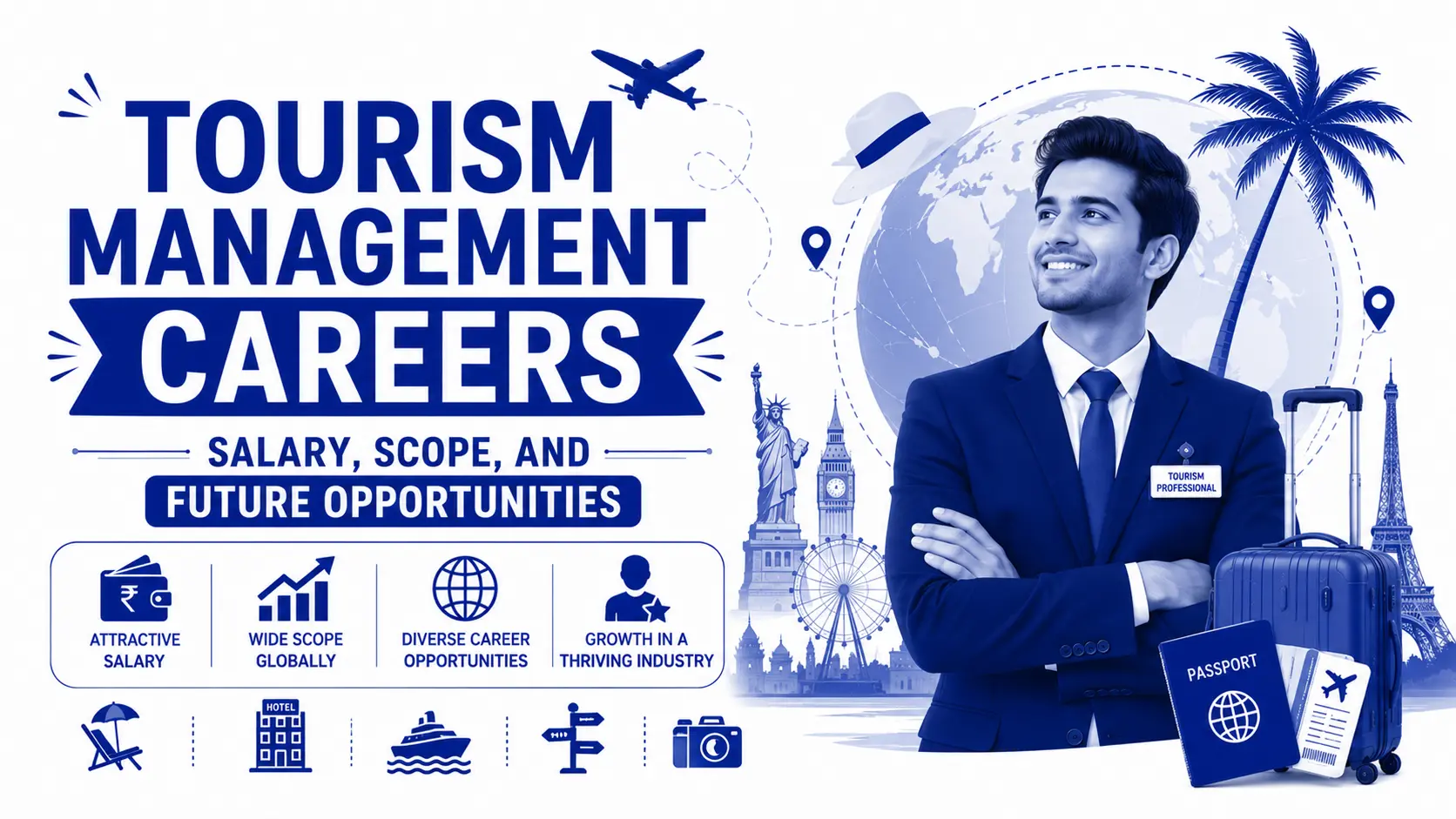
The tourism industry is one of the world’s largest and fastest-growing service sectors, creating a wide range of professional opportunities across travel, hospitality, aviation, event management, and destination services. As tourism continues to evolve with changing traveler preferences and technological advancements, the demand for skilled professionals is steadily increasing. This growth has made tourism management careers an attractive option for students and aspiring professionals seeking dynamic and rewarding career paths.
Tourism management involves planning, coordinating, and managing travel-related services to ensure positive customer experiences and efficient tourism operations. Professionals in this field work across various sectors, including travel agencies, tour operations, hotels, airlines, destination management companies, and tourism boards. As a result, there are numerous tourism management jobs available for individuals with the right combination of industry knowledge, communication abilities, and customer service skills.
Many students exploring a career in tourism management are also interested in understanding salary prospects, industry growth, and future employment opportunities. While career progression depends on factors such as experience, skills, specialization, and employer type, the expanding tourism sector continues to create promising opportunities for professional development. With increasing travel demand and evolving tourism services, tourism career opportunities are expected to remain strong, making tourism management a valuable career choice for individuals interested in the travel and hospitality industry.
What Are Tourism Management Careers and Why Are They Important?
Tourism management careers involve planning, organizing, coordinating, and managing services that support travelers and tourism-related businesses. These professionals play a vital role in ensuring smooth travel experiences while helping tourism organizations operate efficiently. As the travel industry continues expanding, tourism management careers have become increasingly important in supporting tourism growth, customer satisfaction, and business success.
Tourism management professionals may work in:
- Travel agencies
- Tour operation companies
- Hotels and resorts
- Airlines and airport services
- Destination management organizations
- Event and tourism service companies
Their responsibilities often include travel planning, customer service management, operational coordination, tourism marketing, vendor management, and business development. These activities help tourism businesses deliver quality services while meeting the evolving expectations of travelers.
The importance of tourism management extends beyond travel planning. Professionals in this field contribute to economic growth, tourism development, customer engagement, and service innovation. As tourism businesses continue adapting to new technologies and changing consumer preferences, the demand for skilled tourism management professionals continues to increase.
A successful career in tourism management offers opportunities to work in dynamic environments, interact with diverse customers, and contribute to one of the world’s most influential service industries. Understanding tourism operations, customer expectations, and business management principles helps professionals create meaningful travel experiences while supporting organizational growth.
According to insights on tourism career growth insights, tourism management professionals play a crucial role in managing travel services, enhancing customer experiences, and supporting the continued expansion of the tourism and hospitality sectors.
Popular Tourism Management Jobs Available for Graduates
One of the biggest advantages of pursuing tourism management careers is the wide variety of job opportunities available across different sectors of the travel and hospitality industry. Graduates can choose from customer-facing, operational, managerial, and coordination-based roles depending on their interests, skills, and career goals. As the tourism industry continues to expand, the demand for qualified professionals is creating numerous tourism management jobs for freshers and experienced candidates alike.
Some of the most popular career options include:
- Travel Consultant
- Tourism Executive
- Tour Manager
- Destination Manager
- Hospitality Operations Executive
- Airline Customer Service Executive
- Event Coordinator
- Travel Operations Executive
These roles allow professionals to work closely with travelers, tourism businesses, hospitality organizations, and travel service providers. They also provide opportunities to develop expertise in customer service, travel planning, tourism operations, and business management.
Tourism Roles That Offer Strong Career Growth Potential
Certain tourism roles offer excellent opportunities for long-term career advancement because they involve leadership responsibilities, customer relationship management, and operational decision-making.
Examples include:
- Tourism Operations Manager
- Destination Manager
- Corporate Travel Manager
- Hospitality Manager
- Tourism Business Development Executive
| Tourism Job Role | Primary Responsibility |
| Travel Consultant | Travel planning and bookings |
| Tourism Executive | Tourism operations management |
| Tour Manager | Tour coordination and execution |
| Destination Manager | Destination planning and promotion |
| Hospitality Executive | Guest service and operations |
According to insights on tourism management job profiles, tourism graduates can explore a diverse range of professional opportunities across travel services, hospitality management, tourism operations, and customer experience roles, making the industry highly versatile for career development.
Tourism Management Salary: Factors That Influence Earnings
One of the most common questions students ask when exploring tourism management careers is about salary potential. While there is no fixed salary structure across the industry, earnings generally depend on factors such as job role, experience, skills, specialization, employer type, and location. Understanding these factors can help aspiring professionals build realistic expectations and plan their career growth effectively.
Several factors influence tourism management salary growth:
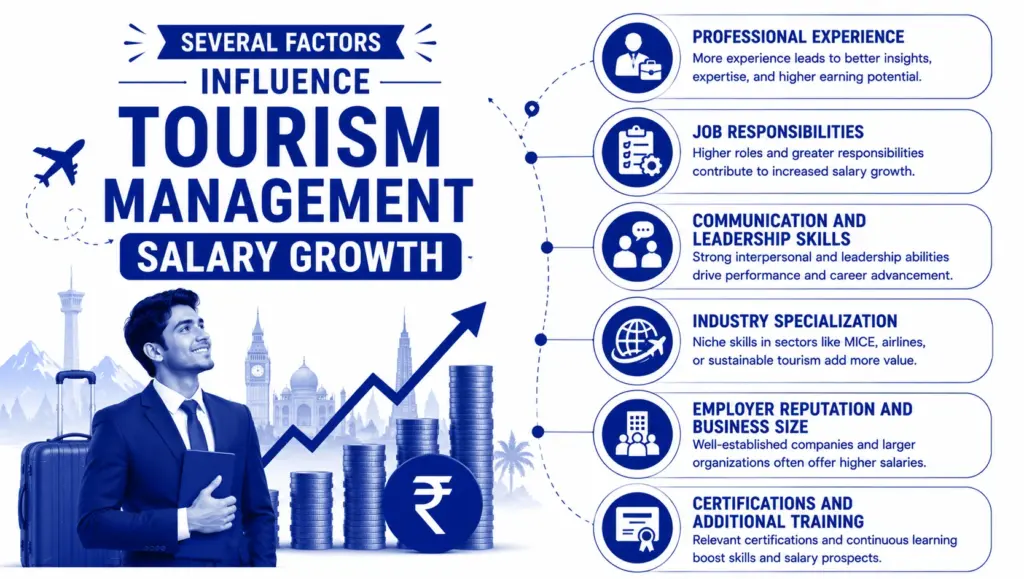
- Professional experience
- Job responsibilities
- Communication and leadership skills
- Industry specialization
- Employer reputation and business size
- Certifications and additional training
Entry-level professionals typically begin with operational or customer service roles, where they gain practical experience and industry exposure. As they develop expertise and take on greater responsibilities, opportunities for salary growth and career advancement often increase.
Professionals who specialize in areas such as destination management, corporate travel, hospitality operations, event management, or tourism business development may also experience stronger career progression. Leadership capabilities and management expertise can further contribute to higher earning potential over time.
| Career Level | Salary Growth Influencers |
| Entry-Level | Skills, internships, communication |
| Mid-Level | Experience, specialization |
| Senior-Level | Leadership and management expertise |
| Executive Roles | Business development and strategy |
| Entrepreneurship | Business performance and growth |
While salary expectations vary across organizations and sectors, the tourism industry offers significant opportunities for professional growth. According to insights on tourism salary expectations, factors such as experience, specialization, and industry demand play a major role in determining career progression and earning potential within tourism management.
Why the Scope of Tourism Management Careers Continues to Expand
The scope of tourism management careers continues to grow as the global travel and hospitality industry evolves to meet changing consumer demands. Increasing domestic tourism, international travel, business tourism, and experiential travel trends have created new opportunities for professionals across multiple sectors. This expansion has significantly increased the demand for skilled individuals who can manage tourism operations, customer experiences, and business growth effectively.
Several factors are driving the growth of tourism management scope:
- Rising domestic and international travel demand
- Expansion of hospitality and accommodation services
- Growth in aviation and transportation networks
- Increasing popularity of experiential tourism
- Development of digital travel platforms
- Emergence of niche tourism segments
Modern tourism is no longer limited to traditional holiday packages. New segments such as sustainable tourism, adventure tourism, wellness tourism, luxury travel, and event-based tourism are creating diverse career opportunities for professionals with specialized knowledge and skills.
The growing integration of technology has also expanded employment opportunities within the industry. Travel booking platforms, customer relationship management systems, and digital tourism services require professionals who can combine operational expertise with technological understanding. This has broadened the range of tourism industry careers available to graduates and experienced professionals alike.
Developing a strong tourism industry understanding can help aspiring professionals better understand emerging trends, industry expectations, and future opportunities within the rapidly expanding tourism sector.
As travel continues to play an important role in economic development and global connectivity, the long-term outlook for tourism management careers remains highly positive, offering promising opportunities for career growth and professional advancement.
Essential Skills Required for Success in Tourism Management
Success in tourism management careers depends on more than academic qualifications and industry knowledge. Employers increasingly seek professionals who can effectively manage customer relationships, coordinate operations, solve problems, and adapt to changing industry demands. Developing the right skills is therefore essential for building a successful career in tourism management and achieving long-term professional growth.
Some of the most important skills required in tourism management include:
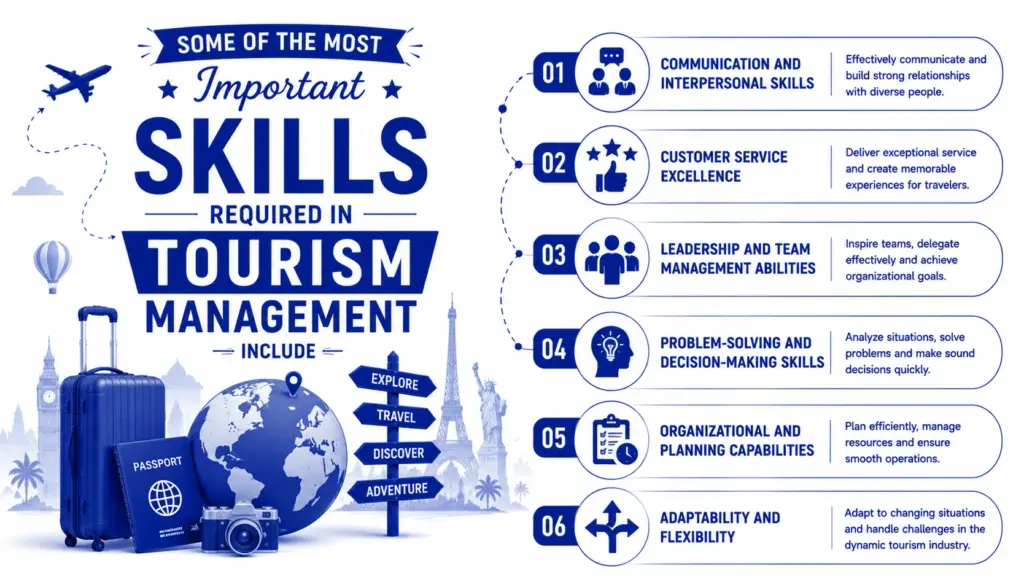
- Communication and interpersonal skills
- Customer service excellence
- Leadership and team management abilities
- Problem-solving and decision-making skills
- Organizational and planning capabilities
- Adaptability and flexibility
Communication plays a particularly important role because tourism professionals regularly interact with travelers, suppliers, hospitality teams, and business partners. Strong communication helps improve customer satisfaction, resolve concerns efficiently, and build positive professional relationships.
Customer service is equally critical because tourism businesses rely heavily on customer experiences and reputation. Professionals who can understand customer needs and deliver high-quality service often perform better in operational and managerial roles.
Leadership and organizational skills are also valuable because tourism managers frequently coordinate teams, manage travel operations, and oversee service delivery. The ability to make informed decisions and respond effectively to challenges contributes significantly to workplace success.
Developing strong tourism career skills can help aspiring professionals improve employability, strengthen workplace readiness, and prepare for the evolving demands of the tourism and hospitality industry.
By continuously improving these competencies, individuals can enhance their professional value and create stronger opportunities for advancement within tourism management jobs and leadership-focused tourism careers.
Future Opportunities in Tourism Management and Travel Services
The future of tourism management careers looks highly promising as the travel and hospitality industry continues to evolve. Changing traveler preferences, technological advancements, and the emergence of new tourism segments are creating exciting opportunities for professionals who are prepared to adapt and develop specialized expertise. As a result, the demand for skilled tourism management professionals is expected to remain strong in the coming years.
Several emerging areas are shaping the future of the tourism industry:
- Digital tourism and travel technology
- Sustainable and eco-tourism initiatives
- Event and destination management
- Luxury and experiential tourism
- Wellness and medical tourism
- Tourism entrepreneurship and travel startups
Digital transformation is creating new opportunities in online travel services, customer experience management, and travel technology platforms. Professionals who understand both tourism operations and digital tools can gain a competitive advantage in the evolving job market.
Sustainable tourism is another growing sector as travelers increasingly seek environmentally responsible and socially conscious travel experiences. Organizations are looking for professionals who can develop tourism strategies that balance economic growth with sustainability goals.
The rise of experiential travel has also expanded opportunities in destination management, cultural tourism, adventure tourism, and personalized travel experiences. These segments require professionals who can create unique travel offerings while maintaining high service standards.
Entrepreneurship is becoming an increasingly attractive path for tourism professionals as well. Individuals with industry knowledge and business skills can explore opportunities in travel consultancy, tour operations, destination services, and specialized tourism ventures.
As industry trends continue to evolve, professionals who remain adaptable, continuously improve their skills, and stay informed about emerging opportunities will be well-positioned to build successful and future-ready tourism management careers within the global tourism and travel sector.
How Practical Industry Exposure Improves Career Growth
Practical industry exposure plays a crucial role in helping students and professionals build successful tourism management careers. While classroom learning provides theoretical knowledge, real-world experience helps individuals understand industry operations, customer expectations, and workplace responsibilities more effectively. Employers often prefer candidates who possess practical experience because they can adapt more quickly to professional environments and contribute to business operations from the beginning.
Practical exposure can be gained through:
- Industry internships
- Tourism workshops and seminars
- Travel and hospitality events
- Operational training programs
- Industry projects and case studies
- Professional networking opportunities
These experiences help learners develop communication skills, customer service abilities, problem-solving capabilities, and operational understanding. They also provide valuable insights into how tourism businesses manage travel services, customer interactions, and tourism operations on a daily basis.
Internships and industry-based learning opportunities are particularly beneficial because they allow individuals to apply theoretical concepts in real business environments. This hands-on experience improves workplace confidence and helps learners understand industry standards, service expectations, and professional practices.
Participating in programs that offer tourism operations experience can help aspiring professionals gain practical knowledge of travel management, event coordination, group travel planning, and tourism operations. Such experiences strengthen career readiness and improve employability within the tourism sector.
By combining academic learning with practical industry exposure, individuals can build stronger professional profiles, enhance workplace competence, and create better opportunities for long-term success in tourism management jobs and leadership-focused tourism careers.
Final Thoughts
The tourism industry continues to offer exciting and diverse opportunities for individuals who are passionate about travel, hospitality, customer service, and business management. With the sector expanding across domestic tourism, international travel, hospitality services, aviation, and event management, tourism management careers have become an attractive choice for students and aspiring professionals seeking long-term growth and career stability.
From roles such as Travel Consultant, Tourism Executive, Tour Manager, and Destination Manager to leadership positions in hospitality and travel management, the industry provides a wide range of tourism management jobs that cater to different interests and skill sets. While tourism management salary levels vary based on experience, specialization, and responsibilities, professionals who continuously develop their skills and gain practical industry exposure often enjoy strong career progression opportunities.
The growing tourism management scope is being driven by digital transformation, sustainable tourism initiatives, experiential travel trends, and the increasing demand for personalized travel experiences. As a result, future opportunities within tourism management are expected to expand further, creating rewarding pathways for professionals who are adaptable, customer-focused, and industry-ready.
By combining industry knowledge, practical experience, communication skills, and continuous learning, individuals can build successful and sustainable tourism management careers while contributing to one of the world’s most dynamic and rapidly evolving industries.
Build a Future-Ready Career in Tourism Management
A successful tourism management career requires more than theoretical knowledge. Employers increasingly value professionals who possess practical industry experience, strong communication abilities, leadership potential, and a deep understanding of tourism operations.
If you’re ready to strengthen your tourism expertise and explore emerging opportunities in travel and event management, explore tourism management opportunities and discover how industry-focused learning can help you prepare for long-term success in the tourism sector.
FAQs
1. What are tourism management careers?
Tourism management careers involve planning, coordinating, and managing travel, hospitality, tourism operations, customer experiences, and tourism-related business activities.
2. Is tourism management a good career option?
Yes, tourism management is a promising career option because it offers diverse job opportunities, career growth potential, and opportunities to work in a dynamic global industry.
3. What are the most popular tourism management jobs?
Popular tourism management jobs include Travel Consultant, Tourism Executive, Tour Manager, Destination Manager, Hospitality Executive, Event Coordinator, and Corporate Travel Manager.
4. What is the scope of tourism management careers?
The scope of tourism management continues to expand due to growing domestic tourism, international travel, hospitality development, digital tourism services, and emerging tourism segments.
5. What factors influence tourism management salary?
Tourism management salary typically depends on experience, job role, industry specialization, communication skills, leadership abilities, and employer type.
6. Can fresh graduates build successful careers in tourism management?
Yes, fresh graduates can start in entry-level tourism roles and gradually progress into supervisory, managerial, and leadership positions through experience and skill development.
7. What skills are required for tourism management careers?
Important skills include communication, customer service, leadership, problem-solving, teamwork, organizational abilities, adaptability, and tourism operations knowledge.
8. What industries hire tourism management professionals?
Tourism management professionals are hired by travel agencies, tour operators, hotels, resorts, airlines, airports, destination management companies, tourism boards, and event management firms.
9. Are tourism management jobs only related to travel agencies?
No. Tourism management careers extend beyond travel agencies and include hospitality, aviation, event management, destination planning, tourism marketing, and customer experience management.
10. How does practical industry exposure help tourism careers?
Practical exposure helps individuals gain real-world experience, improve workplace readiness, strengthen professional skills, and better understand tourism operations.
11. What are the future opportunities in tourism management?
Future opportunities include digital tourism, sustainable tourism, luxury travel, destination management, experiential tourism, wellness tourism, and tourism entrepreneurship.
12. Can tourism management professionals work internationally?
Yes, tourism management skills are transferable across countries, creating opportunities to work with international travel companies, hospitality brands, airlines, and tourism organizations.
13. Is leadership important in tourism management careers?
Yes, leadership skills are important because tourism professionals often manage teams, coordinate operations, oversee customer experiences, and support business growth initiatives.
14. How can students prepare for tourism management careers?
Students can prepare by developing communication skills, gaining industry exposure through internships, improving customer service abilities, and staying updated with tourism industry trends.
15. Why is tourism management considered a future-ready career?
Tourism management remains future-ready because travel demand continues to grow, new tourism segments are emerging, and businesses increasingly require skilled professionals to manage evolving customer expectations and tourism operations.