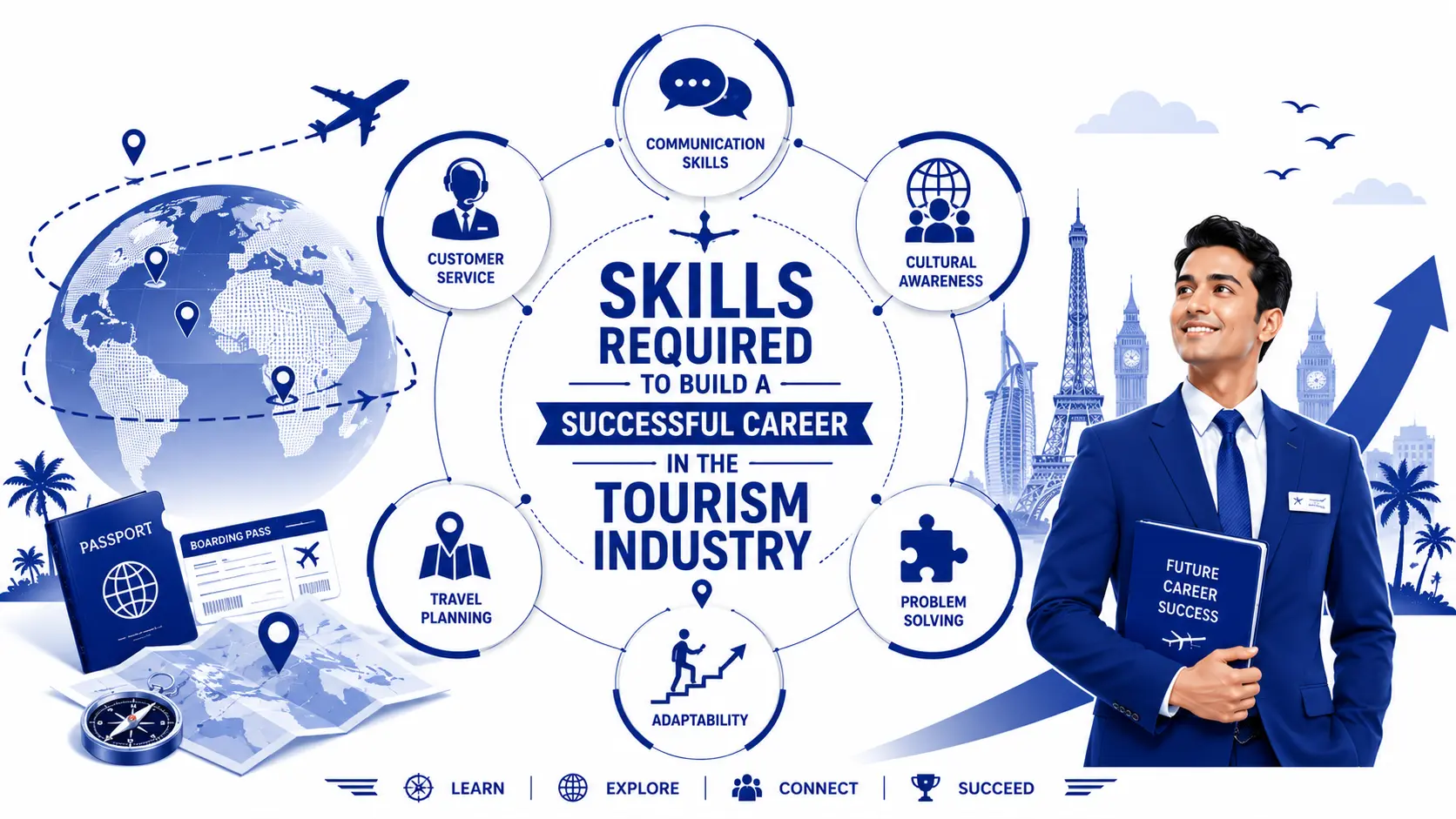
Building a successful career in the tourism sector requires more than academic knowledge alone. As the industry continues expanding, employers are increasingly looking for professionals who can communicate effectively, deliver exceptional customer experiences, and adapt to dynamic work environments. Developing the right skills required for tourism industry careers is therefore essential for improving employability, workplace performance, and long-term professional growth.
Tourism professionals regularly interact with travelers, coordinate services, manage customer expectations, and handle operational challenges. These responsibilities require a combination of communication, customer service, teamwork, and problem-solving abilities. Strong tourism industry skills help individuals build positive customer relationships, manage travel-related situations efficiently, and contribute effectively to organizational success.
The growing demand for skilled professionals across travel agencies, hospitality businesses, tour operations, and aviation services has increased the importance of continuous skill development. Practical tourism career skills and industry-focused learning help learners strengthen workplace confidence, professionalism, and adaptability. By developing essential travel and tourism professional skills, individuals can improve their career prospects, meet industry expectations, and build successful long-term careers in the tourism sector.
Why Skills Matter More Than Qualifications in the Tourism Industry
Academic qualifications provide a strong foundation for entering the tourism sector, but employers often place equal or greater importance on practical abilities and workplace readiness. The tourism industry is highly customer-focused, requiring professionals to interact with travelers, solve problems, and manage service experiences effectively. This is why developing the right skills required for tourism industry careers is essential for long-term success.
Employers typically look for candidates who can:
- Communicate confidently with customers
- Deliver excellent customer service
- Handle unexpected situations professionally
- Work effectively within teams
- Adapt to changing travel requirements
- Maintain professional workplace behavior
Unlike many industries where technical expertise is the primary requirement, tourism professionals are expected to combine industry knowledge with strong interpersonal and operational skills. These abilities help organizations provide better customer experiences while improving service quality and operational efficiency.
Strong tourism industry skills also improve employability because professionals who can manage customer interactions and workplace responsibilities effectively are often more valuable to employers. Communication confidence, adaptability, and customer service excellence continue to be among the most sought-after qualities in tourism recruitment.
According to insights on tourism employability skills, employers increasingly prioritize practical skills such as communication, teamwork, customer service, and adaptability because these abilities directly influence workplace performance and customer satisfaction in tourism careers.
Communication Skills Every Tourism Professional Must Develop
Communication is one of the most important skills required for tourism industry careers because professionals interact with customers, travel partners, service providers, and team members on a daily basis. The ability to communicate clearly and professionally helps build customer trust, improve service quality, and ensure smooth travel experiences. Strong communication abilities also contribute to workplace confidence and long-term career growth.
Tourism professionals should focus on developing:
- Verbal communication skills
- Active listening abilities
- Customer interaction skills
- Professional communication confidence
- Cross-cultural communication awareness
Effective communication helps professionals understand customer requirements, provide accurate information, and resolve concerns efficiently. Since tourism often involves interacting with people from different cultures and backgrounds, professionals must also be able to communicate respectfully and adapt their communication style when necessary.
Common Communication Mistakes That Affect Customer Experience
Poor communication can negatively impact customer satisfaction and create challenges for tourism businesses. Some common communication mistakes include:
- Not listening carefully to customer needs
- Providing unclear or incomplete information
- Using unprofessional language
- Responding slowly to customer inquiries
- Failing to communicate confidently during interactions
| Communication Skill | Tourism Career Benefit |
| Verbal Communication | Better customer interaction |
| Active Listening | Improved service quality |
| Professional Communication | Stronger workplace relationships |
| Presentation Skills | Increased confidence |
| Cross-Cultural Communication | Better guest experiences |
According to insights on hospitality communication abilities, strong communication and interpersonal skills are among the most valuable qualities employers seek in tourism and hospitality professionals because they directly influence customer satisfaction and service excellence.
Why Customer Service Excellence Is Essential for Tourism Careers
Customer service is at the heart of the tourism industry because every travel experience depends on how well professionals meet customer expectations. Whether working in travel agencies, hotels, airlines, tour operations, or destination management companies, tourism professionals are responsible for ensuring travelers receive a positive and memorable experience. This makes customer service one of the most important skills required for tourism industry careers.
Professionals with strong customer service abilities can:
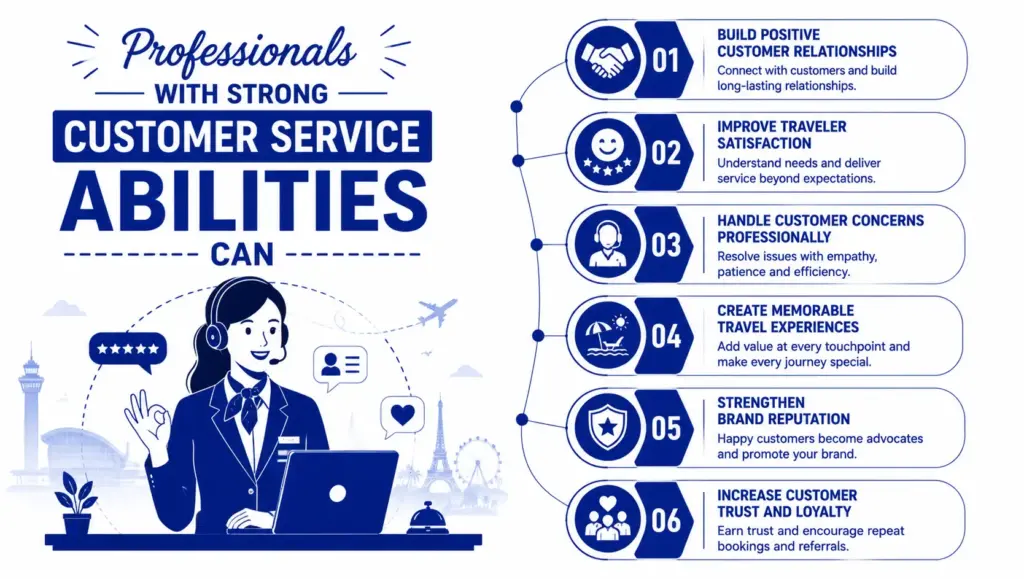
- Build positive customer relationships
- Improve traveler satisfaction
- Handle customer concerns professionally
- Create memorable travel experiences
- Strengthen brand reputation
- Increase customer trust and loyalty
Tourism businesses rely heavily on customer feedback and reputation. A single positive interaction can encourage repeat business and referrals, while poor service can affect customer confidence and business performance. This is why employers place significant importance on hiring candidates who demonstrate strong travel and tourism professional skills and customer-focused attitudes.
Customer service excellence also supports career growth because professionals who consistently deliver quality service are often considered for leadership and supervisory roles. Strong skills for tourism careers help individuals manage customer interactions confidently while improving workplace performance and professional credibility.
Developing strong workplace behavior through professional service standards can further help tourism professionals enhance customer interactions, maintain professionalism, and create positive service experiences that contribute to long-term career success.
Problem-Solving and Adaptability Skills That Employers Value
The tourism industry is dynamic and often unpredictable, making problem-solving and adaptability essential tourism industry skills for professionals. Travel delays, booking changes, customer concerns, weather disruptions, and operational challenges can occur at any time. Employers therefore look for candidates who can remain calm under pressure and find effective solutions while maintaining high service standards.
Professionals with strong problem-solving abilities can:
- Resolve customer issues efficiently
- Handle unexpected travel situations
- Make quick and informed decisions
- Minimize service disruptions
- Improve customer satisfaction
- Support smooth tourism operations
Adaptability is equally important because tourism professionals regularly work in changing environments where customer expectations, travel regulations, and operational requirements may vary. Individuals who can adjust quickly to new situations often perform better in customer-facing and operational roles.
Strong travel and tourism professional skills also help professionals manage workplace challenges confidently while maintaining service quality. Employers value adaptable employees because they contribute to operational efficiency and help organizations respond effectively to industry changes.
According to insights on workplace readiness skills, adaptability, critical thinking, and problem-solving abilities are among the key competencies that support success in hospitality and tourism careers, helping professionals navigate challenges and deliver positive customer experiences.
How Teamwork and Professionalism Improve Career Growth
Tourism professionals rarely work independently. Travel experiences often involve coordination between travel agencies, hotels, airlines, transportation providers, tour operators, and customer service teams. This makes teamwork and professionalism essential skills for tourism careers because effective collaboration directly influences service quality and customer satisfaction.
Professionals with strong teamwork abilities can:
- Coordinate efficiently with colleagues
- Support smooth tourism operations
- Improve customer experiences
- Resolve workplace challenges collaboratively
- Enhance service delivery
- Build stronger professional relationships
Professionalism is equally important because tourism employees represent their organizations during customer interactions. Maintaining a positive attitude, demonstrating reliability, and communicating respectfully help create trust among customers and colleagues. Strong tourism career skills also improve workplace credibility and increase opportunities for career progression.
Employers often prefer candidates who can work effectively in team environments while maintaining professional standards. Individuals who demonstrate accountability, adaptability, and strong interpersonal skills are more likely to be considered for leadership responsibilities and advanced career opportunities.
| Professional Skill | Career Impact |
| Teamwork | Better workplace coordination |
| Professionalism | Stronger credibility |
| Adaptability | Increased employability |
| Customer Service | Higher customer satisfaction |
| Leadership Potential | Career advancement opportunities |
Developing teamwork and professionalism helps individuals strengthen their travel and tourism professional skills, improve workplace performance, and build a solid foundation for long-term success within the tourism industry.
How Practical Learning Helps Build Tourism Career Skills
Practical learning plays a vital role in helping students and aspiring professionals develop the skills required for tourism industry careers. While classroom knowledge provides an understanding of tourism concepts and industry operations, real-world exposure helps learners apply that knowledge in professional environments. Employers often prefer candidates who possess practical experience because they can adapt more quickly to workplace expectations and customer interactions.
Practical learning opportunities may include:
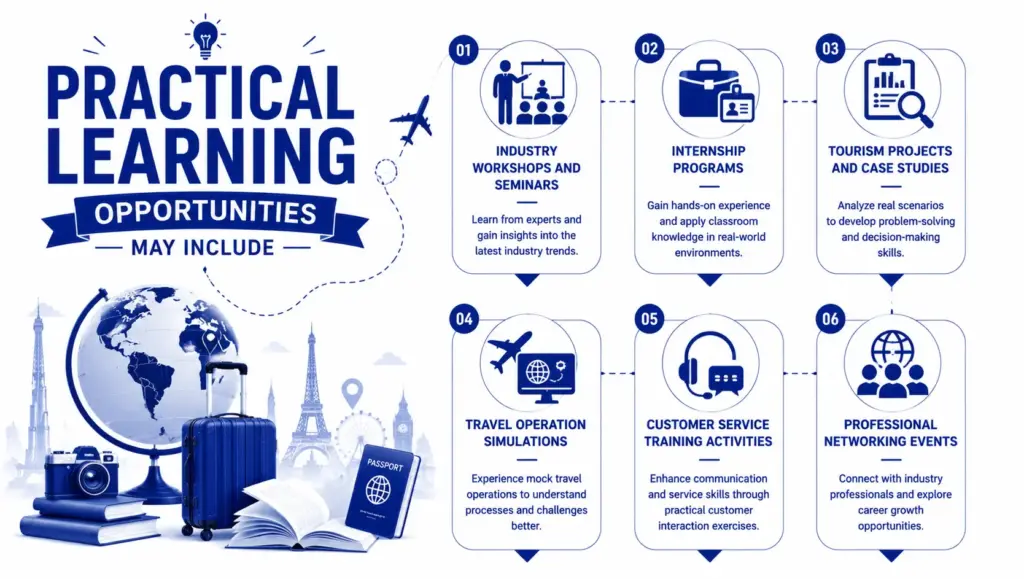
- Industry workshops and seminars
- Internship programs
- Tourism projects and case studies
- Travel operation simulations
- Customer service training activities
- Professional networking events
These experiences help learners improve communication, problem-solving, teamwork, and customer service abilities while gaining a deeper understanding of industry practices. Exposure to real tourism environments also allows students to develop confidence when interacting with customers, colleagues, and industry professionals.
Practical learning bridges the gap between academic knowledge and workplace requirements. It enables learners to understand operational challenges, service expectations, and professional standards that are commonly encountered in tourism careers. This makes individuals more prepared for employment and improves their overall career readiness.
Participating in structured industry learning experiences helps learners gain valuable exposure to industry practices, strengthen tourism career skills, and develop the workplace confidence needed to succeed in a competitive tourism and hospitality environment.
Building Long-Term Success Through Continuous Skill Development
The tourism industry continues to evolve as customer expectations, travel technologies, and service standards change over time. Professionals who continuously update their knowledge and improve their abilities are often better prepared to adapt to industry developments and seize new career opportunities. This is why continuous learning remains one of the most valuable skills required for tourism industry success.
Continuous skill development helps professionals:
- Stay updated with industry trends
- Improve customer service capabilities
- Strengthen communication confidence
- Adapt to changing workplace requirements
- Enhance leadership potential
- Increase long-term employability
As tourism businesses become more technology-driven, professionals are expected to develop both technical and interpersonal competencies. Learning new tools, understanding emerging travel trends, and improving workplace skills can help individuals remain competitive in the job market.
Continuous development also supports career progression because employers often prefer professionals who demonstrate a willingness to learn and improve. Strong tourism industry skills combined with ongoing professional growth can lead to greater responsibilities, leadership opportunities, and long-term career advancement.
Individuals who invest in continuous learning and skill enhancement are more likely to succeed in diverse tourism career skills roles, adapt to industry changes, and build sustainable careers within the travel, hospitality, and tourism sectors.
Final Thoughts
Success in the tourism sector depends on a combination of technical knowledge, practical experience, and strong professional abilities. While academic qualifications help individuals enter the industry, employers increasingly prioritize candidates who possess the right skills required for tourism industry careers. Communication, customer service, teamwork, adaptability, and problem-solving abilities all play a crucial role in delivering positive customer experiences and supporting efficient tourism operations.
Developing strong tourism industry skills helps professionals improve workplace performance, build customer trust, and adapt to the dynamic nature of travel and hospitality environments. Skills such as communication, confidence, professionalism, and customer relationship management not only improve employability but also create opportunities for long-term career growth and leadership development.
As the tourism industry continues expanding, the demand for skilled and adaptable professionals is expected to grow. Continuous learning and practical exposure remain essential for strengthening travel and tourism professional skills and preparing for future industry opportunities. Individuals who focus on skill development and workplace readiness will be better positioned to build successful and sustainable careers within the tourism sector.
Build the Skills Needed for a Successful Tourism Career
The tourism industry offers exciting opportunities for individuals who are prepared to develop strong professional skills and adapt to evolving industry demands. Building communication, customer service, operational, and leadership abilities can significantly improve employability and long-term career prospects.
If you’re ready to strengthen your industry knowledge and explore future opportunities, explore travel entrepreneurship opportunities and discover how practical learning can help you build a successful career in the tourism industry.
FAQs
1. What skills are required for the tourism industry?
The most important skills include communication, customer service, teamwork, problem-solving, adaptability, professionalism, and time management.
2. Why are communication skills important in tourism careers?
Communication skills help tourism professionals interact effectively with customers, provide accurate information, resolve concerns, and deliver positive travel experiences.
3. What customer service skills are needed in tourism?
Tourism professionals need active listening, empathy, patience, problem-solving abilities, and the ability to respond professionally to customer needs and concerns.
4. How does teamwork contribute to success in tourism careers?
Teamwork helps professionals coordinate with colleagues, travel partners, hotels, airlines, and service providers to ensure smooth operations and customer satisfaction.
5. Why do employers value adaptability in tourism professionals?
The tourism industry often faces unexpected situations such as travel delays, booking changes, and customer requests. Adaptable professionals can handle these challenges efficiently.
6. What role does professionalism play in tourism jobs?
Professionalism helps build customer trust, improve workplace relationships, enhance organizational reputation, and support long-term career growth.
7. How can problem-solving skills improve tourism career opportunities?
Problem-solving skills enable professionals to resolve travel issues, manage customer complaints, and maintain service quality during challenging situations.
8. Are soft skills important in the tourism industry?
Yes, soft skills such as communication, teamwork, leadership, adaptability, and customer service are highly valued because tourism is a people-focused industry.
9. What is workplace readiness in tourism?
Workplace readiness refers to having the practical skills, professional behavior, communication abilities, and industry awareness needed to perform effectively in tourism roles.
10. How can students develop tourism career skills?
Students can improve their skills through internships, workshops, industry events, practical training programs, networking opportunities, and real-world tourism exposure.
11. What skills do employers look for in tourism candidates?
Employers commonly seek communication skills, customer service excellence, teamwork, adaptability, professionalism, problem-solving abilities, and a positive attitude.
12. Why is customer service considered a key tourism industry skill?
Customer service directly impacts traveler satisfaction, business reputation, customer loyalty, and overall tourism service quality.
13. Can leadership skills help in tourism careers?
Yes, leadership skills improve decision-making, team coordination, workplace confidence, and career advancement opportunities within tourism organizations.
14. How does continuous learning support long-term tourism career growth?
Continuous learning helps professionals stay updated with industry trends, improve workplace skills, adapt to changes, and remain competitive in the job market.
15. What are the most valuable travel and tourism professional skills for future careers?
Communication, customer service, adaptability, teamwork, digital literacy, professionalism, and problem-solving abilities are among the most valuable skills for future tourism careers.