
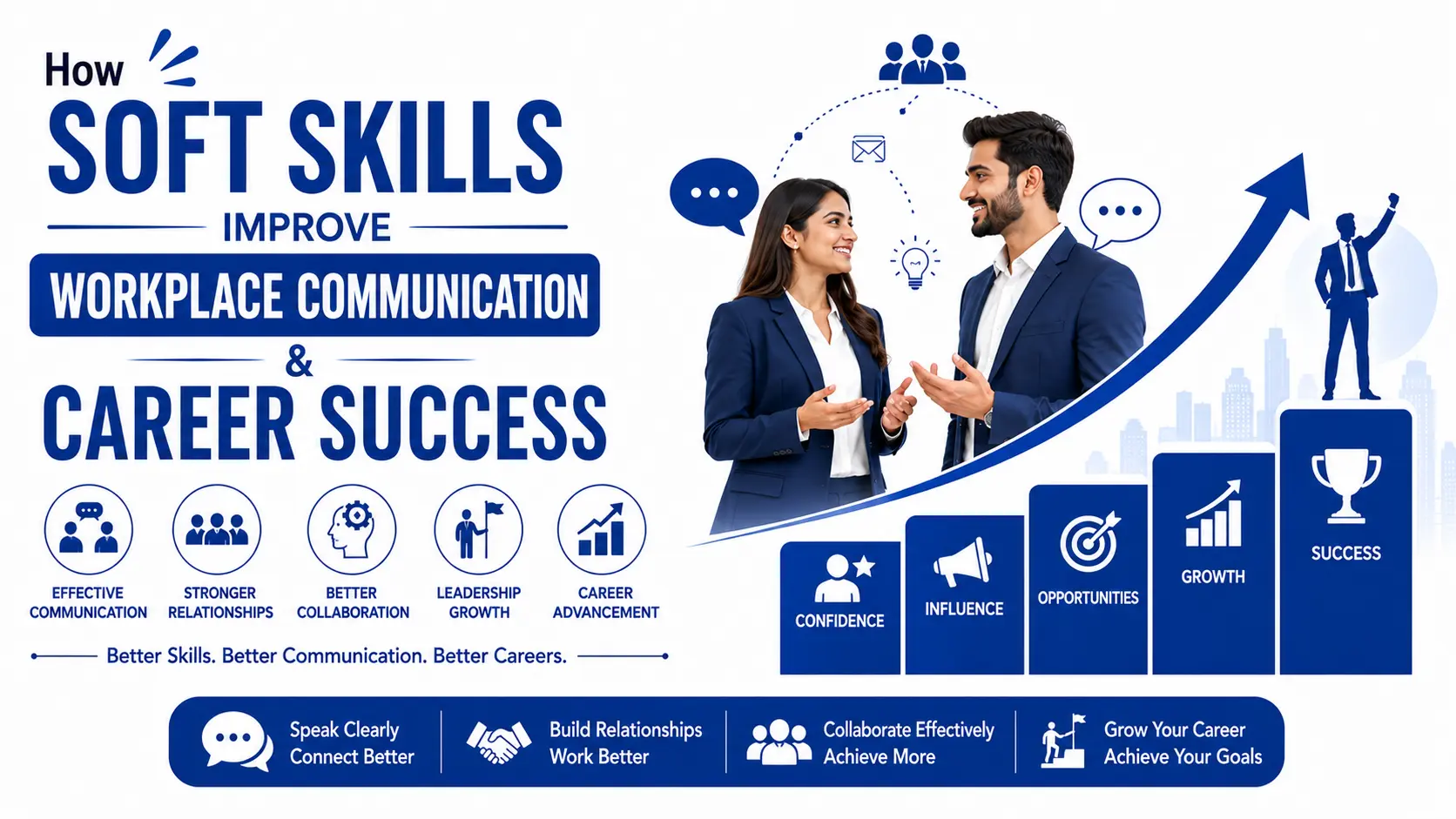
Strong communication has become one of the most important factors influencing workplace performance and professional growth. Many organizations face challenges such as poor collaboration, misunderstandings between teams, and ineffective workplace interactions despite having technically skilled employees. This is why improving workplace communication has become essential for students, professionals, and employees who want to build stronger professional relationships and achieve long-term career success.
Employees who communicate clearly and collaborate effectively often perform better in meetings, presentations, client interactions, and leadership discussions. Practical communication skills training helps individuals improve confidence, active listening, teamwork, and interpersonal interaction, which directly influence productivity and workplace relationships. Strong professional communication skills also help professionals manage workplace responsibilities more efficiently while adapting to fast-changing business environments.
As industries continue evolving, employers increasingly value professionals who can combine technical expertise with strong communication and collaboration abilities. Structured learning programs that focus on soft skills for career success and practical workplace collaboration skills help individuals strengthen workplace confidence, improve teamwork, and prepare for leadership opportunities. Effective communication therefore plays a major role in improving both workplace performance and long-term professional growth.
Why Workplace Communication Matters in Professional Environments
Effective workplace communication plays a major role in maintaining productivity, collaboration, and professional relationships within organizations. Employees communicate constantly through meetings, emails, presentations, team discussions, and client interactions. When communication is clear and professional, teams can coordinate tasks more efficiently and avoid misunderstandings that affect workplace performance.
Strong communication skills help employees:
- Share ideas confidently
- Collaborate effectively with teams
- Handle workplace discussions professionally
- Improve workflow coordination
- Build stronger professional relationships
- Reduce communication-related conflicts
Organizations increasingly prioritize employees who can communicate clearly because poor communication often leads to delays, confusion, and reduced productivity. Practical professional communication skills help individuals improve clarity, confidence, and interpersonal interaction while working in fast-paced professional environments.
Strong communication also improves leadership potential because employees who express ideas effectively are often better prepared for collaborative and managerial responsibilities. Practical communication skills training therefore supports both individual career growth and overall organizational performance.
According to insights on professional interactions, effective workplace communication continues to remain one of the most valuable soft skills for improving collaboration, employee engagement, and long-term professional success.
How Soft Skills Strengthen Workplace Communication
Strong soft skills help employees communicate more confidently and maintain better professional relationships in workplace environments. Communication is not limited to speaking clearly alone. It also involves listening actively, understanding team dynamics, responding professionally, and expressing ideas effectively during workplace interactions. This is why structured communication skills training plays an important role in improving overall workplace communication.
Professionals with strong communication abilities can:
- Participate confidently in meetings
- Handle workplace conversations professionally
- Collaborate effectively with teams
- Present ideas more clearly
- Build positive workplace relationships
- Manage client interactions smoothly
Soft skills such as emotional intelligence, adaptability, and active listening also improve workplace collaboration because employees become better at understanding different perspectives and resolving communication gaps. Strong workplace collaboration skills help teams work more efficiently while reducing misunderstandings and improving coordination.
Communication Habits That Improve Team Collaboration
Simple communication habits can significantly improve teamwork and workplace productivity. Some important habits include:
- Listening without interruption
- Providing constructive feedback
- Communicating respectfully
- Responding clearly and promptly
- Encouraging open discussions
| Poor Communication Habit | Improved Workplace Outcome |
| Unclear instructions | Better workflow clarity |
| Weak listening | Improved collaboration |
| Delayed communication | Faster task coordination |
| Poor presentation skills | Better professional visibility |
| Lack of feedback | Stronger team relationships |
According to insights on communication practices, strong communication habits help organizations improve collaboration, productivity, and professional relationships across teams.
Why Communication Skills Influence Career Success
Career growth depends not only on technical expertise but also on how effectively professionals communicate and manage workplace relationships. Employees who express ideas clearly, collaborate confidently, and handle professional conversations effectively often perform better in leadership roles and growth-oriented positions. This is why strong workplace communication and structured soft skills for career success have become essential across industries.
Professionals with strong communication abilities often experience:
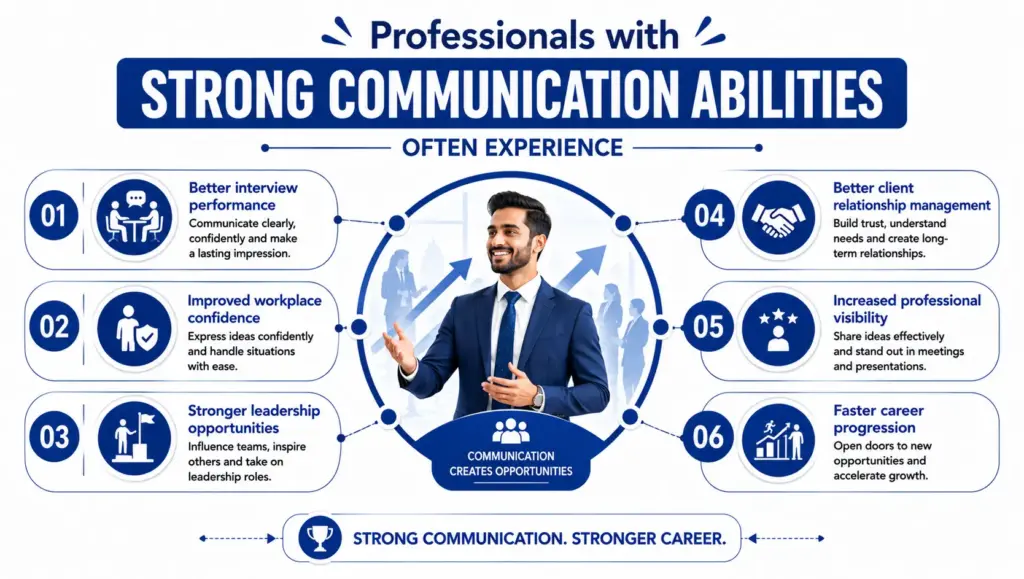
- Better interview performance
- Improved workplace confidence
- Stronger leadership opportunities
- Better client relationship management
- Increased professional visibility
- Faster career progression
Many organizations now evaluate employees based on teamwork, communication clarity, and workplace professionalism alongside technical performance. Practical professional communication skills help individuals participate more confidently in meetings, presentations, and collaborative projects while improving overall workplace interaction.
Communication also plays a major role in leadership development because professionals who can motivate teams and handle workplace discussions effectively are often considered for managerial responsibilities. A strong practical learning environment that focuses on real-world communication and professional interaction can significantly improve long-term employability and workplace confidence.
As workplace expectations continue evolving, structured communication skills training helps professionals strengthen adaptability, leadership communication, and relationship management skills that support long-term career success.
Common Workplace Communication Problems Employees Face
Many employees face communication challenges that affect teamwork, productivity, and professional relationships in the workplace. Even experienced professionals may struggle with workplace conversations, presentations, or collaborative discussions when communication skills are not developed properly. These issues often create misunderstandings and reduce overall workplace efficiency, making strong workplace communication essential for long-term professional success.
Some common communication challenges employees face include:
- Difficulty expressing ideas clearly
- Low confidence during meetings
- Poor listening habits
- Weak presentation abilities
- Misunderstandings between teams
- Difficulty handling workplace conflicts
These communication gaps can affect collaboration and create delays in project execution or team coordination. Employees who lack strong professional communication skills may also struggle during leadership discussions, client interactions, and decision-making situations.
Poor communication often affects workplace relationships because teams depend heavily on clear interaction and collaboration to maintain productivity. Structured communication skills training helps professionals improve clarity, confidence, and interpersonal interaction through practical learning methods and workplace-oriented exercises.
According to insights on workplace collaboration, organizations increasingly prioritize communication and teamwork skills because they directly influence employee engagement, collaboration, and overall workplace performance.
How Structured Training Improves Professional Communication Skills
Professional communication improves more effectively when learners practice skills in real workplace situations instead of relying only on theoretical concepts. Structured training programs help individuals develop confidence, clarity, and interpersonal abilities through practical activities that simulate real professional environments. This is why practical communication skills training plays a major role in improving overall workplace communication and career readiness.
Effective training programs usually include:
- Group discussions
- Presentation exercises
- Workplace role-play activities
- Mock professional interactions
- Team collaboration sessions
- Communication feedback exercises
These activities help professionals identify communication gaps and improve workplace interaction through continuous practice and mentoring. Structured learning environments also improve listening skills, presentation confidence, and professional etiquette, which are essential for workplace success.
| Communication Skill | Career Benefit |
| Active listening | Better workplace relationships |
| Presentation confidence | Higher professional visibility |
| Team communication | Improved collaboration |
| Conflict resolution | Stronger workplace adaptability |
| Professional interaction | Better career growth opportunities |
Participating in practical learning environments such as interactive workshops can further strengthen workplace confidence and communication effectiveness. Consistent practice and structured guidance help professionals become more adaptable, collaborative, and career-ready in modern business environments.
Why Leadership Communication Is Important for Workplace Growth
Leadership communication plays a major role in building productive and collaborative workplace environments. Employees who communicate clearly and confidently are often better prepared to guide teams, manage workplace discussions, and handle professional responsibilities effectively. This is why strong professional communication skills are considered essential for leadership development and long-term workplace growth.
Effective leadership communication helps professionals:
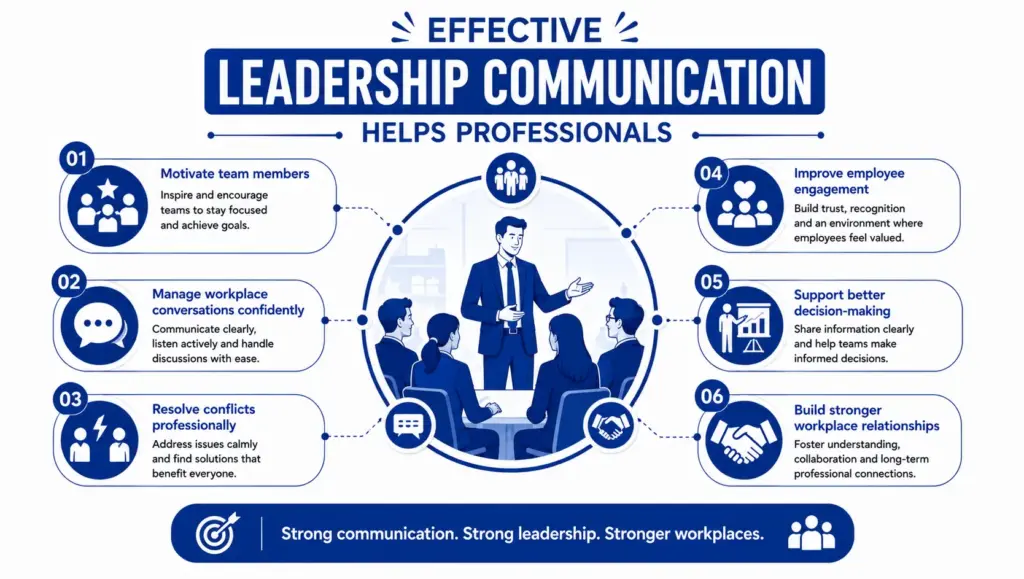
- Motivate team members
- Manage workplace conversations confidently
- Resolve conflicts professionally
- Improve employee engagement
- Support better decision-making
- Build stronger workplace relationships
Leaders who communicate clearly can create better coordination within teams and reduce misunderstandings that affect productivity. Strong workplace collaboration skills also help managers and team leaders maintain positive work environments where employees feel supported and engaged.
Organizations increasingly value professionals who can balance technical expertise with communication and leadership abilities. Structured soft skills for career success help individuals improve confidence, interpersonal interaction, and leadership presence through practical workplace-oriented learning experiences.
Employees with strong communication and leadership abilities are often more adaptable to workplace challenges and collaborative responsibilities. This not only improves individual career growth but also contributes positively to overall organizational performance and long-term business success.
How Soft Skills Create Long-Term Professional Confidence
Professional confidence develops gradually through consistent communication practice, workplace interaction, and real-world learning experiences. Employees who can communicate clearly, collaborate effectively, and handle workplace discussions confidently often adapt more successfully to professional environments. This is why strong workplace communication and structured soft skills learning play an important role in long-term career growth.
Professionals with strong communication confidence can:
- Participate actively in meetings
- Handle workplace conversations professionally
- Present ideas clearly and confidently
- Build stronger workplace relationships
- Manage client interactions effectively
- Adapt better to leadership responsibilities
Practical learning environments also help individuals overcome hesitation and improve interpersonal communication through continuous interaction and feedback. Structured communication skills training strengthens confidence by helping professionals practice real workplace scenarios, presentations, and collaborative discussions.
Strong communication abilities also improve professional credibility because employees who express ideas clearly are often viewed as more dependable and leadership-ready within organizations. Participating in structured communication training programs can help learners strengthen communication, collaboration, and workplace professionalism through practical-first learning approaches.
As workplaces continue evolving, strong soft skills for career success remain essential for improving adaptability, workplace confidence, and long-term professional growth across industries.
Final Thoughts
Strong communication and interpersonal abilities have become essential for maintaining productivity, collaboration, and professional growth in modern workplaces. Employees who can communicate clearly, work effectively with teams, and manage workplace interactions confidently often perform better in leadership roles and career-oriented opportunities. This is why improving workplace communication through practical learning and continuous skill development is important for long-term professional success.
Structured communication skills training helps individuals strengthen confidence, teamwork, presentation abilities, and relationship management through real-world learning experiences. Strong professional communication skills and effective workplace collaboration skills also improve adaptability, leadership potential, and workplace professionalism across different industries.
As organizations continue prioritizing communication and collaboration alongside technical expertise, investing in structured soft skills for career success can help professionals become more confident, career-ready, and adaptable in evolving business environments.
Strengthen Communication Skills for Better Professional Growth
Effective workplace communication can improve collaboration, leadership confidence, and long-term career opportunities across industries. Practical learning approaches help professionals strengthen interpersonal interaction, workplace adaptability, and professional communication abilities through real-world experiences and guided mentoring.Learners and professionals looking to improve communication confidence and workplace collaboration through structured professional communication programs can benefit from practical-first learning environments designed to support career growth and workplace success.
FAQs
1. What are soft skills in the workplace?
Soft skills are personal and interpersonal abilities such as communication, teamwork, leadership, adaptability, problem-solving, and emotional intelligence that help employees work effectively with others.
2. Why are soft skills important for workplace communication?
Soft skills help employees communicate clearly, listen actively, express ideas confidently, and build positive professional relationships within the workplace.
3. How do soft skills contribute to career success?
Soft skills improve teamwork, leadership, productivity, and professional behavior, helping individuals grow faster in their careers and access better job opportunities.
4. Which soft skills are most important for professional growth?
Communication skills, leadership, time management, emotional intelligence, teamwork, adaptability, and critical thinking are essential for professional growth.
5. Can soft skills improve teamwork in organizations?
Yes. Strong soft skills encourage collaboration, respect, active listening, and conflict resolution, leading to better teamwork and workplace productivity.
6. How do communication skills impact employee performance?
Good communication skills help employees share ideas effectively, avoid misunderstandings, build confidence, and improve workplace efficiency.
7. Are soft skills important for leadership roles?
Absolutely. Leadership roles require strong communication, decision-making, emotional intelligence, conflict management, and team motivation skills.
8. How can professionals improve their soft skills?
Professionals can improve soft skills through training programs, regular practice, workplace experience, mentorship, and continuous self-development.
9. Do employers value soft skills during hiring?
Yes. Many employers prioritize candidates with strong soft skills because they contribute to teamwork, adaptability, customer interaction, and workplace culture.
10. How do soft skills help in long-term career development?
Soft skills help professionals build strong relationships, adapt to workplace changes, lead teams effectively, and maintain consistent career growth over time.