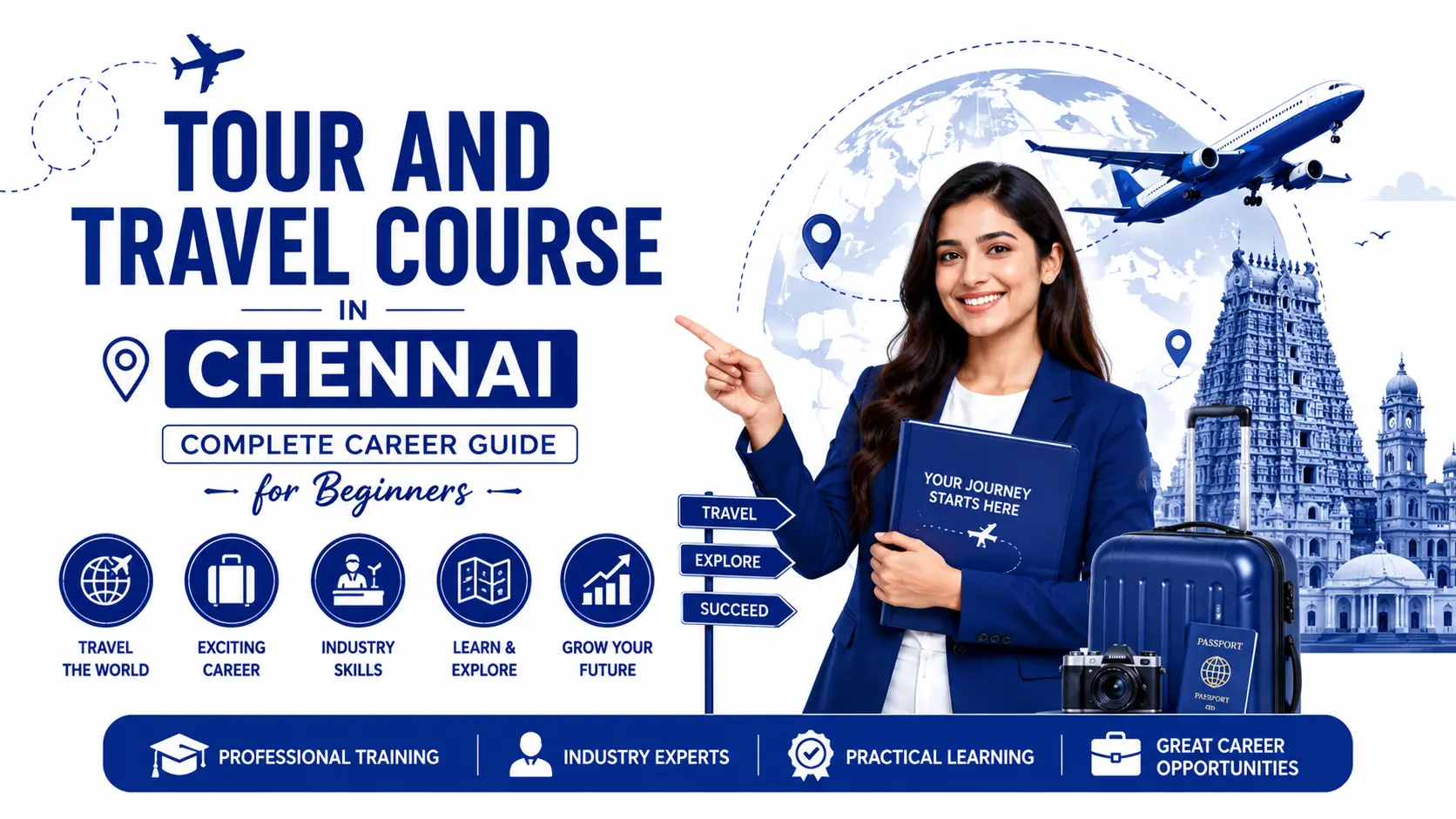
The tourism and travel industry is growing rapidly in India, creating excellent career opportunities for students interested in hospitality, travel management, and customer service. With increasing demand for tourism services, skilled professionals are needed in airlines, hotels, travel agencies, and tour operations across domestic and international markets.
Choosing a tour and travel course in Chennai helps beginners learn important industry skills such as travel planning, ticketing, tourism operations, communication, and hospitality management. Chennai has become a popular destination for tourism education because of its growing training institutes and career-focused programs.
Unlike traditional careers, tourism and travel jobs offer dynamic work environments, customer interaction, and opportunities to explore different places and cultures. n this blog, we’ll explore the types of tourism courses available, career opportunities, important skills, and provide a complete tourism career guide for beginners who want to build a successful future in the travel industry using this complete tourism career guide.
Why Tour and Travel Courses Are Growing in Chennai
Tourism and travel courses are becoming popular in Chennai because the tourism and hospitality industry is growing rapidly. Many companies now need skilled professionals for travel management, customer service, tourism operations, and hospitality roles.
A professional travel management course helps students learn practical industry skills and prepare for careers in:
- Airlines
- Travel agencies
- Hotels and resorts
- Tour operations
- Event management
Another reason for this growth is the increasing interest among students in dynamic careers instead of traditional office jobs. Chennai also has many institutes offering diploma, certification, and travel management programs for beginners.
As tourism demand continues increasing, trained professionals are expected to have strong career opportunities in the travel and hospitality industry.
In the next section, we’ll explore the different types of tour and travel courses available for beginners.
Types of Tour and Travel Courses Available for Beginners
Students interested in tourism and hospitality can choose from different types of courses, including a travel and tourism course Chennai institutes offer for beginners. These programs are designed to help beginners build industry knowledge and practical skills for travel-related careers.
One popular option is diploma courses. These programs usually focus on travel operations, ticketing, tourism management, and customer service while offering shorter course durations.
Certification programs are another good choice for beginners who want quick skill development and basic industry exposure. Many students choose these courses to start entry-level tourism careers faster.
Students can also explore:
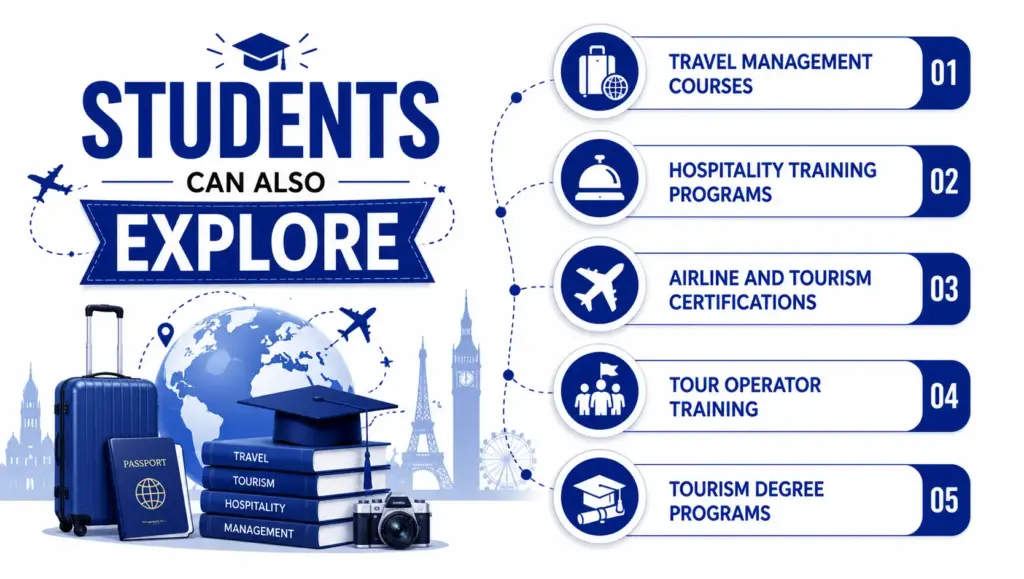
- Travel management courses
- Hospitality training programs
- Airline and tourism certifications
- Tour operator training
- Tourism degree programs
H3:How to Choose the Right Tourism Course
Choosing the right course is important because it directly affects career opportunities and industry readiness. Students should first identify their career interests before selecting a tourism program.
A good tourism career guide recommends selecting programs that combine practical training, industry exposure, and career-focused learning.
While exploring travel and tourism courses after 12th, students should compare:
- Course curriculum
- Practical training opportunities
- Internship support
- Certification value
- Industry exposure
Course duration and fees are also important factors. Some students may prefer short-term skill-based programs, while others may choose long-term degree courses for broader career opportunities.
Practical training plays a major role in tourism education because the industry values real-world experience and customer handling skills. Programs that include internships or industry projects often provide better career preparation.
Students should also consider whether the course focuses on modern tourism trends, digital booking systems, hospitality operations, and customer service management.
In the next section, we’ll explore the important skills students learn in a tour and travel course and how these skills support career growth in the tourism industry.
Skills Students Learn in a Tour and Travel Course
A tour and travel course helps students develop practical skills required for careers in tourism, hospitality, and travel management. These programs focus on both technical knowledge and customer-handling abilities needed in the industry.
One of the most important skills students learn is communication and customer service. Tourism professionals regularly interact with travelers, clients, and hospitality teams, making strong communication essential.
Students also learn:
- Travel planning and coordination
- Ticket booking and reservations
- Tourism operations management
- Hospitality handling
- Event and tour coordination
Another key area is problem-solving and customer support. Travel professionals often handle schedule changes, booking issues, and customer requests, so quick decision-making skills are important.
A strong travel and tourism career growth path usually depends on practical knowledge, professionalism, and industry exposure gained through training programs.
Many courses also include basic industry software training, which is an important component of a modern travel management course.
In the next section, we’ll explore the different career opportunities available after completing a tour and travel course.
Career Opportunities After Completing a Tour and Travel Course
The tourism and travel industry offers a wide range of career opportunities for students who complete professional training in tourism and hospitality. As the industry continues expanding globally, businesses are actively looking for skilled professionals who can manage customer experiences, travel operations, and hospitality services efficiently.
Graduates of a travel and tourism course Chennai training program often find opportunities in airlines, hotels, travel agencies, and tourism companies.
One of the most popular career options is becoming a travel consultant. Travel consultants help customers plan trips, book tickets, organize travel packages, and provide destination-related guidance.
Students can also pursue careers as:
- Tour managers
- Airline customer service executives
- Airport ground staff
- Travel coordinators
- Hospitality executives
Another major opportunity is working in hotels and resorts, where tourism graduates can handle guest services, front office operations, reservations, and event coordination.
The industry also offers opportunities in:
- Cruise tourism
- Event management
- Destination management
- International tourism services
- Corporate travel management
Airline and airport careers are especially attractive for students interested in customer interaction and travel operations. Many tourism graduates work in ticketing, passenger handling, airport support, and travel assistance roles.
Tourism professionals often benefit from:
- Dynamic work environments
- Career growth opportunities
- Customer interaction exposure
- International industry opportunities
- Skill-based advancement
Another growing area is digital tourism services, where companies require professionals who understand online booking systems, travel technology platforms, and customer support management.
With proper training, communication skills, and industry exposure, students can build long-term careers in both domestic and international tourism sectors.
Students completing a travel and tourism course Chennai training institutes provide often find opportunities across airlines, hospitality, and travel operations.
In the next section, we’ll compare tourism careers with traditional office jobs to understand the advantages and differences between these career paths.
Tour and Travel Careers vs Traditional Office Jobs
Tourism and travel careers differ significantly from traditional office jobs in terms of work environment, industry exposure, and career experiences. While office jobs usually follow routine work structures, tourism careers often provide dynamic and customer-focused professional environments.
One of the biggest advantages of tourism careers is exposure to different people, cultures, and travel experiences. Professionals in the tourism industry regularly interact with customers, travelers, hotels, airlines, and event teams, making the work environment more interactive and engaging.
Career Comparison Table
| Factor | Travel & Tourism Careers | Traditional Office Jobs | Impact |
| Work Style | Dynamic | Routine | Better exposure |
| Industry Growth | High | Moderate | More opportunities |
| Interaction | Customer-focused | Limited | Strong communication |
| Travel Opportunities | Frequent | Rare | Global experience |
Tourism careers also provide opportunities for faster practical learning because professionals handle real-time customer situations, travel coordination, and hospitality management regularly.
Traditional office jobs may offer stable routines, but tourism careers often attract students who prefer:
- Interactive work environments
- Communication-based roles
- Travel-related opportunities
- Customer engagement
- Flexible career experiences
Another major difference is industry growth. Tourism and hospitality sectors are expanding rapidly, creating new opportunities in airlines, hotels, travel agencies, cruise tourism, and event management.
However, tourism careers also require strong communication skills, adaptability, and customer service abilities because professionals frequently manage diverse customer expectations and travel-related challenges.
Students who enjoy people-oriented careers and dynamic work cultures often find tourism and travel industries more engaging than traditional office roles.
In the next section, we’ll explore the common mistakes students should avoid while choosing tourism courses and career pathways.
Common Mistakes Students Should Avoid While Choosing Tourism Courses
Many students select tourism courses without fully understanding industry requirements, career goals, or course quality. This can lead to skill gaps, poor career alignment, and limited job opportunities later. Choosing the right tourism program is important for building a successful long-term career in the travel and hospitality industry.
One common mistake is selecting a course without proper research. Some students focus only on advertisements or short-term trends instead of evaluating curriculum quality, practical training, and career support.
Mistake vs Better Approach Table
| Mistake | Impact | Better Approach |
| Choosing without research | Poor career fit | Compare course options |
| Ignoring practical training | Low exposure | Internship-based programs |
| Focusing only on fees | Skill gaps | Evaluate curriculum quality |
| No career planning | Slow growth | Goal-oriented specialization |
Following a reliable tourism career guide can help students avoid these mistakes and make informed learning decisions.
Another major issue is ignoring practical training opportunities. Tourism is a skill-based industry, and employers often prefer candidates with hands-on experience in customer service, travel operations, or hospitality management.
Some students also make the mistake of choosing courses based only on low fees. While affordability matters, course quality, certification value, and industry exposure are equally important for career growth.
Lack of career planning is another common problem. Students should first identify whether they are interested in:
- Travel operations
- Airline careers
- Hospitality management
- Event coordination
- Tourism consulting
This helps them choose more relevant specialization pathways.
Students should also avoid programs that lack:
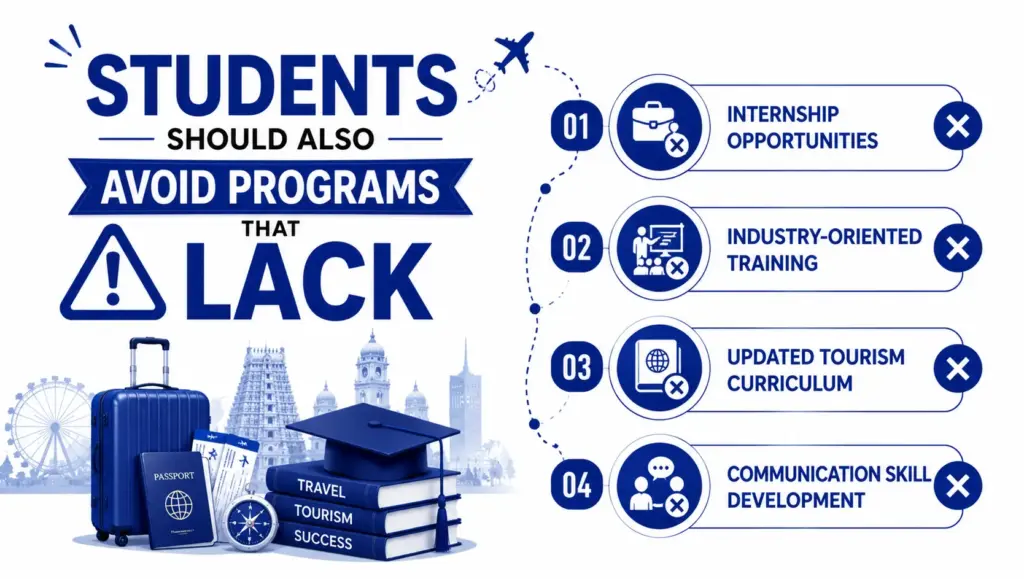
- Internship opportunities
- Industry-oriented training
- Updated tourism curriculum
- Communication skill development
Careful course selection helps students build stronger industry readiness and improves long-term career opportunities in tourism and hospitality sectors.
In the next section, we’ll explore how beginners can build successful long-term careers in the tourism industry.
How Beginners Can Build a Successful Career in Tourism
Building a successful career in tourism requires a combination of industry knowledge, communication skills, practical experience, and continuous learning. Since the travel and hospitality industry is highly customer-focused, beginners who develop strong professional skills early often achieve better career growth opportunities.
One of the most important factors is communication and customer handling. Tourism professionals regularly interact with travelers, clients, hotel guests, and service teams, making professional communication essential for success.
Beginners should also focus on:
- Practical industry exposure
- Internship opportunities
- Networking within the tourism sector
- Learning modern travel technologies taught in a quality travel management course
- Improving customer service skills
Another important step is staying updated with changing tourism trends. The industry continues evolving through online booking systems, digital travel platforms, and international tourism growth, creating new opportunities for skilled professionals.
Learning through Wilfred’s Academy programs can help students understand tourism industry expectations and skill development pathways more effectively.
Exploring tourism career pathways also helps beginners identify suitable career directions based on their interests, strengths, and long-term goals.
Practical experience plays a major role in tourism careers. Students who participate in internships, live projects, hospitality events, or travel coordination activities often build stronger confidence and industry readiness.
Beginners should also focus on developing:
- Problem-solving abilities
- Time management skills
- Team collaboration
- Professional etiquette
- Adaptability in customer situations
Consistency and continuous learning are important because tourism is a dynamic industry with evolving customer expectations and service standards.
Final Thoughts
The tourism and travel industry offers exciting career opportunities for students who enjoy communication, hospitality, customer interaction, and dynamic work environments. With the growing demand for skilled tourism professionals, choosing the right course can help beginners build strong industry foundations and long-term career growth.
This tourism career guide highlights the skills, training, and industry exposure needed to succeed in modern tourism careers.
A professional tour and travel course in Chennai helps students develop practical skills in travel operations, customer service, hospitality management, and tourism coordination. These skills open career opportunities across airlines, hotels, travel agencies, event management, and international tourism sectors.
By selecting the right travel and tourism course Chennai learners can gain practical skills, industry exposure, and stronger career opportunities.
Travel and Tourism Course in Chennai for Beginners: Enroll Now
The tourism industry continues creating exciting opportunities for students interested in travel, hospitality, customer service, and tourism management. Building the right skills and industry knowledge early can help beginners improve career opportunities and long-term professional growth.
Practical training, communication development, and real-world tourism exposure play an important role in preparing students for modern travel and hospitality careers. Explore Wilfred’s Academy to learn more about a travel and tourism course Chennai students can use to build industry-ready tourism skills and long-term career growth.
FAQs
1. What is a tour and travel course?
A tour and travel course teaches tourism management, travel operations, customer service, and hospitality skills.
2. Who can join a travel and tourism course Chennai institutes offer?
Students after 12th grade or graduates interested in tourism and hospitality careers can join.
3. What are the career options in tourism?
Travel consultant, tour manager, airline staff, hotel executive, and event coordinator are common roles.
4. Is tourism a good career option?
Yes, tourism offers strong growth opportunities and dynamic work environments.
5. What skills are important for tourism careers?
Communication, customer service, time management, and problem-solving skills are important.
6. Are internships important in tourism courses?
Yes, internships provide practical industry exposure and improve job readiness.
7. What is the duration of a travel and tourism course Chennai students can join?
Course duration varies from short-term certifications to multi-year degree programs.
8. Can beginners join a travel management course after completing school education?
Yes, many beginner-friendly tourism programs are available after school education.
9. Do tourism careers involve travel opportunities?
Yes, many tourism roles include domestic or international travel exposure.
10. Is communication important in tourism?
Yes, tourism careers require strong customer interaction and communication abilities.
11. What is the difference between tourism and hospitality?
Tourism focuses on travel services, while hospitality focuses on guest experiences and accommodation services.
12. Are tourism jobs available internationally?
Yes, tourism and hospitality industries offer global career opportunities.
13. Can tourism professionals work in airlines?
Yes, many tourism graduates work in airline and airport service roles.
14. What industries hire tourism graduates?
Travel agencies, hotels, airlines, cruise companies, and event firms hire tourism professionals.
15. How can students build successful tourism careers?
According to this tourism career guide, students can build successful tourism careers through practical experience, communication skills, and industry exposure.