
In today’s competitive business environment, organizations need more than quality products and services to achieve sustainable growth. They must be able to attract customers, build strong relationships, communicate value effectively, and generate consistent revenue. This is where sales and marketing skills play a critical role. Whether in small businesses, large corporations, or entrepreneurial ventures, these skills help organizations connect with their target audiences and achieve long-term success.
Sales and marketing are closely connected functions that drive business growth. Marketing creates awareness and generates interest, while sales converts potential customers into loyal clients. Together, they help businesses increase visibility, strengthen customer engagement, and improve overall performance. As a result, professionals with strong business sales skills and effective marketing capabilities are highly valued across industries.
The growing digital economy has further increased the importance of marketing skills for professionals. Businesses now rely on a combination of traditional communication techniques, digital marketing strategies, customer relationship management, and data-driven decision-making to remain competitive. Professionals who understand these concepts are better equipped to contribute to business objectives and adapt to changing market demands.
Whether you are a student, aspiring entrepreneur, business professional, or job seeker, developing strong sales and marketing career skills can significantly improve your career prospects and professional effectiveness. Understanding the importance of sales and marketing not only supports business growth but also helps individuals build valuable skills that are applicable across a wide range of industries and career paths.
Understanding the Role of Sales and Marketing in Business Success
Sales and marketing are two of the most important functions in any organization because they directly influence customer acquisition, customer retention, and revenue generation. While they serve different purposes, both work together to support business growth and long-term sustainability. Understanding the relationship between these functions helps explain why strong sales and marketing skills are essential for business success.
Marketing focuses on creating awareness and generating interest in products or services. It helps businesses reach potential customers through branding, advertising, content creation, market research, and promotional campaigns. The goal of marketing is to attract and engage the right audience while communicating the value of a business offering.
Sales, on the other hand, focuses on converting interested prospects into paying customers. Sales professionals build relationships, understand customer needs, address concerns, and guide potential buyers through the decision-making process. Effective business sales skills help organizations increase conversions and strengthen customer relationships.
Together, sales and marketing contribute to:
- Customer acquisition and lead generation
- Brand awareness and visibility
- Revenue growth and profitability
- Customer engagement and retention
- Business expansion and market reach
- Long-term competitive advantage
When sales and marketing teams work collaboratively, businesses can create a more seamless customer journey. Marketing generates qualified leads, while sales professionals nurture those opportunities and convert them into business outcomes. This alignment improves efficiency and supports overall organizational performance.
According to insights on marketing and sales fundamentals, successful businesses integrate marketing and sales efforts to better understand customer needs, strengthen customer relationships, and drive sustainable growth through effective customer acquisition and retention strategies.
Essential Sales and Marketing Skills Every Professional Should Develop
To succeed in today’s competitive business environment, professionals need more than technical expertise. They must be able to communicate effectively, understand customer needs, build relationships, and influence decision-making. These competencies form the foundation of strong sales and marketing skills and help individuals contribute meaningfully to business growth and customer success.
Some of the most important skills every professional should develop include:
- Communication and interpersonal skills
- Customer relationship management abilities
- Negotiation and persuasion techniques
- Presentation and public speaking skills
- Problem-solving and critical thinking capabilities
Strong communication skills help professionals explain ideas clearly, build trust, and engage customers effectively. Whether interacting with clients, colleagues, or stakeholders, clear communication improves collaboration and strengthens business relationships.
Why Communication Is the Foundation of Sales Success
Communication is often considered the most important skill in sales because every customer interaction depends on how effectively information is shared and understood. Successful sales professionals know how to:
- Listen actively to customer concerns
- Ask relevant questions
- Present solutions confidently
- Build trust through meaningful conversations
- Maintain long-term customer relationships
Effective communication also helps professionals identify customer needs and provide solutions that create value. This ability not only improves sales performance but also enhances customer satisfaction and loyalty.
| Sales and Marketing Skill | Professional Benefit |
| Communication | Stronger customer relationships |
| Negotiation | Better business outcomes |
| Customer Service | Higher customer retention |
| Presentation Skills | Increased confidence |
| Problem Solving | Effective customer support |
According to insights on high-demand sales and marketing skills, communication, relationship-building, adaptability, and customer-focused thinking are among the most valuable skills employers seek in sales and marketing professionals because they directly impact business performance and customer engagement.
How Sales Skills Help Businesses Increase Revenue
Sales skills are directly linked to business growth because they help organizations convert opportunities into revenue. While marketing generates awareness and attracts potential customers, sales professionals play a crucial role in guiding prospects through the buying journey and turning interest into action. This is why strong business sales skills are considered essential for achieving sustainable business success.
Effective sales professionals focus on:
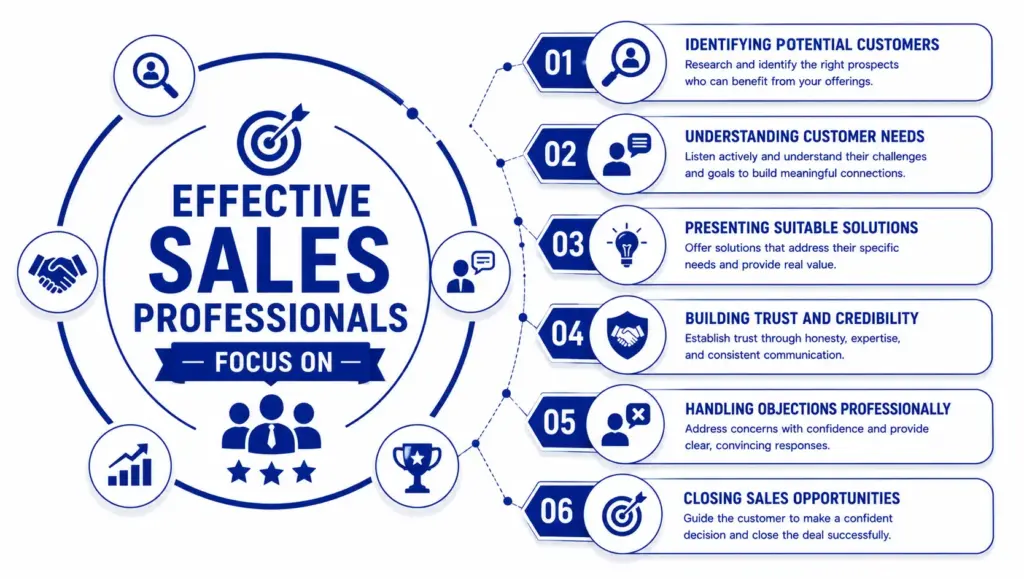
- Identifying potential customers
- Understanding customer needs
- Presenting suitable solutions
- Building trust and credibility
- Handling objections professionally
- Closing sales opportunities
One of the most important aspects of sales is lead generation. Businesses need a consistent flow of potential customers to maintain growth and expand their market presence. Skilled sales professionals know how to identify qualified prospects and engage them through meaningful conversations that create value.
Relationship management is another key factor. Customers are more likely to purchase from businesses they trust. By building strong relationships and maintaining regular communication, sales professionals can increase customer loyalty and encourage repeat business.
Negotiation skills also contribute significantly to revenue growth. Effective negotiators can create mutually beneficial outcomes while protecting business interests and strengthening customer satisfaction.
| Sales Activity | Business Impact |
| Lead Generation | Increased opportunities |
| Customer Engagement | Better conversion rates |
| Negotiation | Higher sales value |
| Follow-Up | Improved customer retention |
| Relationship Building | Long-term business growth |
Strong sales and marketing career skills help businesses improve conversion rates, retain customers, and increase profitability. Organizations that invest in sales training and customer-focused strategies are often better positioned to achieve long-term growth and maintain a competitive advantage in the marketplace.
Why Marketing Skills Are Critical for Brand Growth
Marketing is the process of creating awareness, attracting potential customers, and building meaningful relationships that support long-term business growth. In today’s competitive marketplace, businesses need more than great products or services—they need effective strategies to communicate their value and differentiate themselves from competitors. This is why strong marketing skills for professionals are essential for both business success and career development.
Marketing helps businesses:
- Increase brand awareness
- Attract potential customers
- Build customer trust and credibility
- Strengthen market positioning
- Improve customer engagement
- Support long-term business growth
One of the primary goals of marketing is to ensure that the right audience understands what a business offers and why it is valuable. Through branding, content creation, advertising, and customer communication, marketing helps organizations establish a strong presence in the minds of consumers.
Digital marketing has become particularly important in recent years. Businesses now use websites, social media platforms, email campaigns, search engines, and content marketing to reach customers more effectively. Professionals who understand these tools can help organizations improve visibility, generate leads, and build stronger customer relationships.
Marketing also plays a crucial role in brand growth. A strong brand creates recognition, trust, and customer loyalty. Consistent messaging, customer-focused communication, and valuable content help businesses strengthen their reputation and maintain long-term relationships with their target audience.
According to insights on business marketing capabilities, successful marketers combine strategic thinking, communication, customer understanding, and digital marketing knowledge to drive brand growth and create lasting business impact.
By developing strong sales and marketing skills, professionals can contribute to customer acquisition, brand development, and business expansion while enhancing their own career opportunities across a wide range of industries.
The Growing Career Opportunities in Sales and Marketing
The demand for professionals with strong sales and marketing skills continues to increase across industries. Every organization, regardless of its size or sector, relies on sales and marketing functions to attract customers, generate revenue, and maintain business growth. As a result, individuals who possess these skills often have access to diverse career opportunities and long-term professional development paths.
Some popular career options include:
- Sales Executive
- Business Development Executive
- Marketing Executive
- Digital Marketing Specialist
- Brand Manager
- Customer Relationship Manager
- Account Manager
- Sales and Marketing Manager
One of the biggest advantages of developing sales and marketing career skills is their versatility. These competencies are valuable in industries such as technology, healthcare, retail, finance, education, tourism, hospitality, and manufacturing. This flexibility allows professionals to explore opportunities across multiple sectors and adapt to changing job market demands.
Sales and marketing careers also offer strong growth potential. Entry-level professionals can progress into supervisory, managerial, and leadership positions as they gain experience and demonstrate results. Skills such as communication, negotiation, customer relationship management, and strategic thinking often contribute significantly to career advancement.
In addition, many leadership roles require a strong understanding of customer behavior, business development, and market dynamics. Professionals who excel in sales and marketing are often well-positioned to take on responsibilities related to business strategy, revenue management, and organizational growth.
Developing strong capabilities through professional development opportunities can help individuals improve employability, strengthen workplace readiness, and prepare for long-term success in sales, marketing, and business leadership roles.
As businesses continue focusing on customer acquisition, brand growth, and digital transformation, the need for skilled sales and marketing professionals is expected to remain strong, creating promising opportunities for career progression and professional success.
How Practical Industry Exposure Improves Sales and Marketing Skills
While theoretical knowledge provides a strong foundation, practical experience is what truly helps professionals master sales and marketing skills. Real-world exposure allows individuals to interact with customers, understand market dynamics, handle business challenges, and apply their learning in professional environments. Employers often value candidates with practical experience because they can adapt more quickly to workplace expectations and contribute effectively from day one.
Practical industry exposure can include:
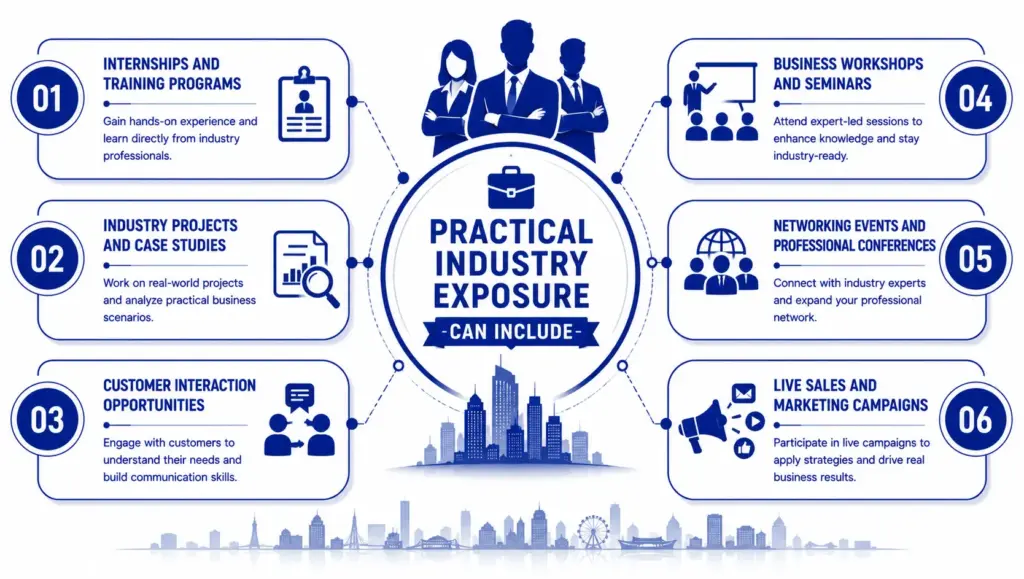
- Internships and training programs
- Industry projects and case studies
- Customer interaction opportunities
- Business workshops and seminars
- Networking events and professional conferences
- Live sales and marketing campaigns
One of the biggest benefits of practical exposure is the opportunity to understand customer behavior. Professionals learn how customers make purchasing decisions, respond to marketing messages, and evaluate products or services. This knowledge helps improve communication strategies and enhances overall sales effectiveness.
Practical experience also strengthens problem-solving and decision-making abilities. Sales and marketing professionals frequently encounter situations that require quick thinking, adaptability, and customer-focused solutions. Real-world exposure helps build confidence in handling these challenges while improving workplace readiness.
Networking opportunities gained through industry events and professional collaborations can also contribute to career growth. Building relationships with experienced professionals helps individuals gain industry insights, discover career opportunities, and stay informed about emerging trends.
Participating in programs that offer industry learning experiences can help learners gain practical business exposure, strengthen customer engagement abilities, and develop the real-world competencies needed to succeed in sales and marketing roles.
By combining academic learning with hands-on experience, professionals can enhance their skills, improve employability, and prepare themselves for long-term success in customer-focused business environments.
Building Long-Term Business Success Through Continuous Skill Development
The business world is constantly evolving, and professionals who stop learning often struggle to keep pace with changing customer expectations, technologies, and market trends. This is especially true in sales and marketing, where new tools, communication channels, and customer engagement strategies emerge regularly. Continuous learning is therefore essential for maintaining strong sales and marketing skills and achieving long-term business success.
Ongoing skill development helps professionals:
- Stay updated with industry trends
- Improve customer engagement techniques
- Adapt to changing consumer behavior
- Strengthen leadership capabilities
- Enhance career advancement opportunities
- Remain competitive in the job market
One of the most significant changes affecting sales and marketing today is digital transformation. Businesses increasingly rely on social media marketing, customer relationship management platforms, marketing automation tools, data analytics, and digital communication channels. Professionals who continuously update their knowledge can leverage these technologies more effectively and contribute greater value to their organizations.
Continuous learning also improves adaptability. Customer preferences, market conditions, and business strategies can change rapidly. Individuals who actively seek new knowledge and refine their skills are often better prepared to respond to challenges and identify growth opportunities.
In addition, lifelong learning supports professional confidence and career progression. Employers value individuals who demonstrate a willingness to learn, improve performance, and stay informed about industry developments. These qualities often lead to greater responsibilities, leadership opportunities, and long-term career success.
Whether through professional training, certifications, industry events, mentorship, or self-directed learning, investing in continuous development helps professionals strengthen their sales and marketing career skills, improve business performance, and remain relevant in an increasingly competitive marketplace.
By embracing a mindset of continuous improvement, individuals can build stronger careers, contribute more effectively to business growth, and create lasting success in sales, marketing, and customer-focused roles.
Final Thoughts
Sales and marketing skills are among the most valuable competencies in today’s business environment. They help organizations attract customers, build strong relationships, increase revenue, and strengthen brand presence. Whether working in sales, marketing, entrepreneurship, customer service, or management, professionals who develop these skills are better equipped to contribute to business growth and achieve long-term career success.
From communication and negotiation to customer relationship management and digital marketing, these capabilities support every stage of the customer journey. Businesses that invest in sales and marketing excellence are often better positioned to compete effectively, adapt to changing market conditions, and create sustainable growth opportunities.
As industries continue evolving, the demand for professionals with strong business sales skills and marketing expertise is expected to remain high. Continuous learning, practical experience, and adaptability will play a crucial role in helping individuals stay relevant and maximize their professional potential.
Developing strong sales and marketing career skills is not only beneficial for business performance but also for personal and professional growth. By strengthening these abilities, individuals can unlock new opportunities, improve workplace effectiveness, and build successful careers in a wide range of industries.
Strengthen Your Sales and Marketing Expertise
Success in today’s competitive business environment requires more than technical knowledge. Strong communication, negotiation, customer relationship management, and marketing capabilities can significantly improve both career prospects and business performance.
If you’re ready to develop industry-relevant skills that support customer success and business growth, explore sales and customer success training and discover how practical learning can help you build a successful future in sales and marketing.
FAQs
1. What are sales and marketing skills?
Sales and marketing skills are the abilities used to attract customers, build relationships, promote products or services, generate revenue, and support business growth.
2. Why are sales and marketing skills important?
These skills help businesses acquire customers, increase revenue, strengthen brand awareness, improve customer retention, and achieve long-term success.
3. How do sales skills contribute to business growth?
Sales skills help professionals identify prospects, build customer relationships, convert leads into customers, and generate consistent revenue for the business.
4. Why are marketing skills important for professionals?
Marketing skills help professionals understand customer behavior, promote products effectively, increase brand visibility, and support business objectives.
5. What communication skills are needed in sales and marketing?
Important communication skills include active listening, persuasive speaking, presentation abilities, customer engagement, relationship building, and professional written communication.
6. How can negotiation skills improve business performance?
Negotiation skills help professionals secure better agreements, resolve conflicts, create mutually beneficial outcomes, and strengthen customer relationships.
7. What is customer relationship management in sales and marketing?
Customer relationship management involves building, maintaining, and strengthening relationships with customers to improve satisfaction, loyalty, and long-term business success.
8. What careers require sales and marketing skills?
Sales and marketing skills are valuable in careers such as Sales Executive, Marketing Executive, Business Development Executive, Brand Manager, Digital Marketing Specialist, Account Manager, and Customer Relationship Manager.
9. How can students develop sales and marketing skills?
Students can develop these skills through internships, workshops, practical projects, networking events, communication practice, and industry-focused training programs.
10. What role does digital marketing play in business success?
Digital marketing helps businesses reach larger audiences, improve brand visibility, generate leads, engage customers, and support revenue growth through online channels.
11. Are sales and marketing skills useful for entrepreneurs?
Yes, entrepreneurs rely heavily on sales and marketing skills to attract customers, build brand awareness, generate revenue, and grow their businesses.
12. How do marketing skills support brand growth?
Marketing skills help businesses communicate their value, engage target audiences, build trust, increase visibility, and establish a strong market presence.
13. What are the most in-demand sales and marketing skills today?
Some of the most sought-after skills include communication, customer relationship management, negotiation, digital marketing, content marketing, lead generation, and data-driven decision-making.
14. How can practical experience improve sales performance?
Practical experience helps professionals understand customer behavior, improve communication techniques, build confidence, handle objections effectively, and strengthen relationship-building skills.
15. Why is continuous learning important in sales and marketing?
Continuous learning helps professionals stay updated with industry trends, adapt to changing customer expectations, improve technical knowledge, and remain competitive in the job market.