

In today’s customer-driven business environment, technical knowledge alone is no longer enough to succeed professionally. Organizations increasingly seek individuals who can communicate effectively, build strong relationships, understand customer needs, and contribute to positive customer experiences. As a result, sales and customer relationship skills have become some of the most valuable competencies employers look for when hiring and developing talent.
Businesses across industries rely on strong customer relationships to drive growth, improve customer retention, and strengthen brand reputation. Whether working in sales, customer service, business development, or account management, professionals who possess excellent customer relationship management skills are often better equipped to create trust, solve customer problems, and support long-term business success.
The rise of customer-centric business models has further increased the demand for professionals with strong communication, relationship-building, and customer engagement abilities. Companies recognize that positive customer experiences often lead to repeat business, customer loyalty, and valuable referrals. This makes customer relationship skills essential not only for organizational performance but also for individual career growth.
For students, fresh graduates, and working professionals, developing strong sales career skills can improve employability, enhance workplace performance, and create opportunities for advancement. Understanding the skills companies value most can help individuals prepare for successful careers in customer-focused roles while contributing meaningfully to business growth and customer satisfaction.
Why Sales and Customer Relationship Skills Are More Important Than Ever
The modern business landscape has become increasingly customer-focused. Customers today have access to more information, more choices, and higher expectations than ever before. They expect businesses to provide personalized experiences, timely communication, and solutions that genuinely address their needs. As a result, organizations are placing greater emphasis on sales and customer relationship skills when hiring and developing employees.
Several factors have increased the importance of these skills:
- Rising customer expectations
- Increased market competition
- Growth of digital communication channels
- Greater focus on customer retention
- Demand for personalized customer experiences
Businesses understand that attracting customers is only part of the challenge. Maintaining strong relationships and delivering positive experiences are equally important for long-term success. Professionals with strong customer relationship skills help organizations build trust, improve customer loyalty, and strengthen brand reputation.
Customer-centric business models have also changed how companies approach sales. Instead of focusing solely on transactions, organizations now prioritize relationship building, customer engagement, and long-term value creation. This shift has increased the demand for professionals who can communicate effectively, understand customer concerns, and create meaningful interactions.
According to insights on in-demand sales skills, employers increasingly value skills such as communication, relationship building, adaptability, and customer-focused problem-solving because these abilities directly contribute to business growth and customer success.
For professionals looking to advance their careers, developing strong sales career skills and customer relationship capabilities is becoming essential for standing out in a competitive job market and succeeding in customer-facing roles.
Essential Sales and Customer Relationship Skills Employers Value
Employers today look for professionals who can do more than meet sales targets. They want individuals who can build trust, understand customer expectations, and create positive experiences that contribute to long-term business growth. Strong sales and customer relationship skills help professionals engage customers effectively while supporting customer satisfaction and retention.
Some of the most valued skills include:
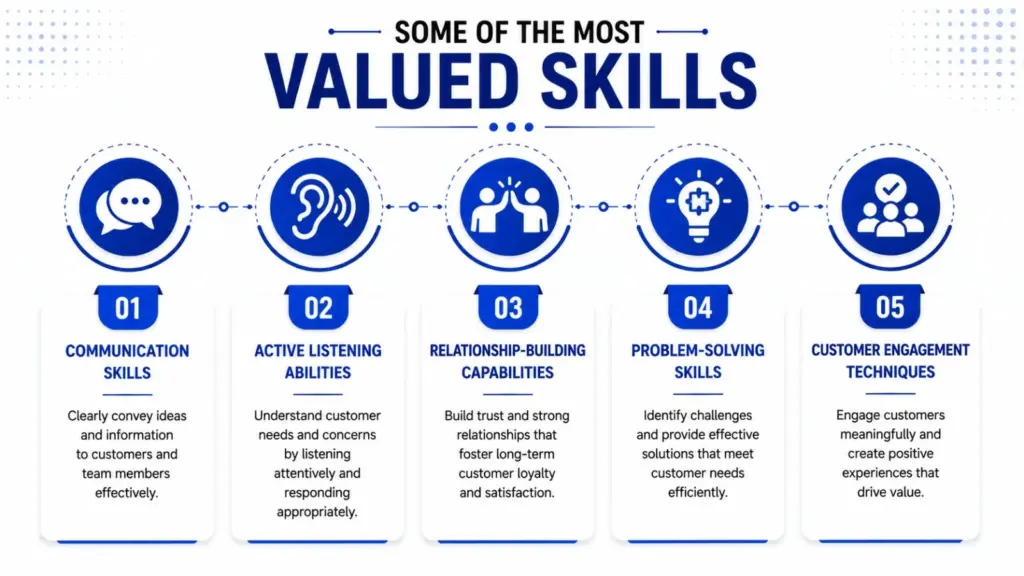
- Communication skills
- Active listening abilities
- Relationship-building capabilities
- Problem-solving skills
- Customer engagement techniques
These skills enable professionals to interact confidently with customers, identify needs accurately, and provide solutions that create value. Companies recognize that employees who excel in these areas often contribute significantly to customer loyalty and business success.
How Communication Builds Strong Customer Relationships
Communication is one of the most important customer relationship management skills because every customer interaction depends on how clearly information is shared and understood.
Effective communication helps professionals:
- Understand customer needs and concerns
- Build trust and credibility
- Explain solutions clearly
- Manage customer expectations
- Strengthen long-term relationships
Active listening is equally important. Customers want to feel heard and understood, and professionals who listen carefully are better able to provide relevant recommendations and support.
| Skill | Workplace Benefit |
| Communication | Better customer interactions |
| Active Listening | Improved understanding |
| Relationship Building | Stronger customer loyalty |
| Problem Solving | Faster issue resolution |
| Customer Engagement | Higher satisfaction |
According to insights on customer service skills employers seek, communication, empathy, problem-solving, and relationship management are among the most sought-after skills because they help organizations deliver exceptional customer experiences and improve business outcomes.
Developing these sales skills for professionals can improve employability, workplace performance, and long-term career growth in customer-facing roles.
Why Relationship Building Is Critical for Sales Success
Relationship building is one of the most valuable sales and customer relationship skills because customers are more likely to engage with businesses they trust. While products and services may attract initial interest, long-term business success often depends on the quality of relationships developed with customers over time.
Strong customer relationships help businesses:
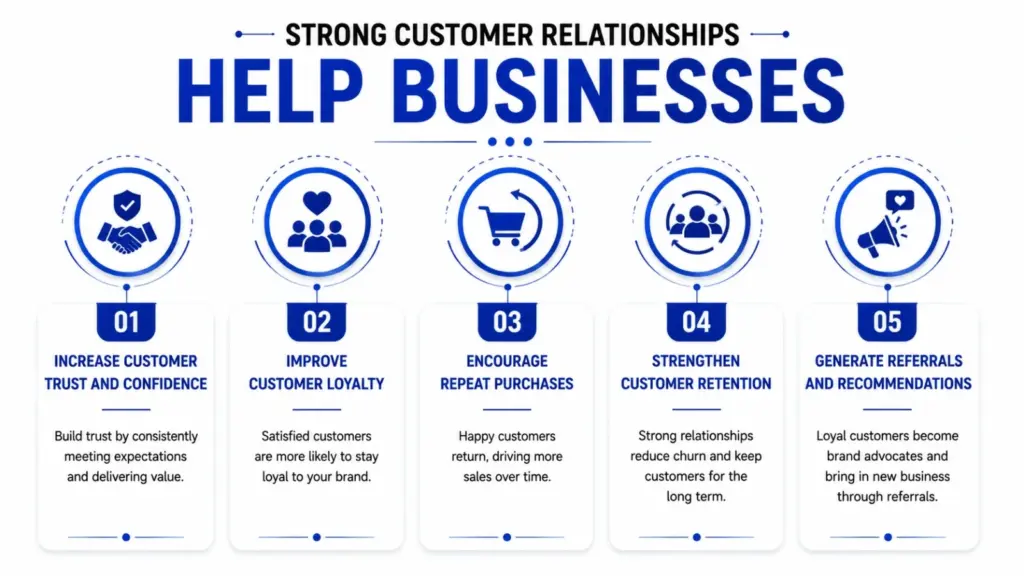
- Increase customer trust and confidence
- Improve customer loyalty
- Encourage repeat purchases
- Strengthen customer retention
- Generate referrals and recommendations
Trust is the foundation of every successful customer relationship. When customers believe a professional genuinely understands their needs and is committed to helping them achieve their goals, they are more likely to make purchasing decisions and continue doing business with the company.
Relationship building also supports customer retention. Acquiring a new customer often requires significant effort and resources, whereas maintaining an existing customer relationship can lead to ongoing business opportunities and higher customer lifetime value. Professionals who focus on relationship management contribute directly to long-term revenue growth.
Consistent communication plays an important role in maintaining strong relationships. Regular follow-ups, personalized interactions, and proactive support help customers feel valued and appreciated. These actions demonstrate commitment beyond the initial sale and strengthen customer engagement.
| Relationship Activity | Business Impact |
| Regular Follow-Ups | Improved retention |
| Personalized Communication | Better engagement |
| Customer Support | Stronger loyalty |
| Feedback Collection | Service improvement |
| Trust Building | Increased conversions |
Organizations increasingly recognize that customer loyalty is built through meaningful interactions rather than one-time transactions. Professionals who excel at relationship building often perform better in sales roles because they can create stronger customer connections, improve satisfaction levels, and contribute to sustainable business growth.
Customer Service Excellence as a Career Advantage
Customer service excellence has become a major differentiator in today’s competitive job market. Employers increasingly seek professionals who can deliver positive customer experiences, resolve concerns effectively, and maintain strong relationships with clients. As a result, strong sales and customer relationship skills are no longer limited to sales roles—they are valuable across a wide range of customer-facing professions.
Customer service excellence contributes to:
- Higher customer satisfaction
- Stronger professional reputation
- Improved conflict resolution
- Better workplace performance
- Increased career opportunities
Professionals who consistently provide excellent service help organizations build trust and strengthen customer loyalty. They understand how to communicate professionally, handle difficult situations calmly, and create positive interactions that leave lasting impressions on customers.
Conflict resolution is another important aspect of customer service. Customer concerns and challenges are inevitable in any business environment. Employees who can address issues promptly and professionally help maintain customer confidence while protecting the organization’s reputation.
Strong customer service skills also support career advancement. Many leadership roles require the ability to manage relationships, understand customer expectations, and make customer-focused decisions. Professionals who demonstrate these capabilities are often considered for greater responsibilities and management positions.
According to insights on customer service career skills, employers highly value communication, empathy, adaptability, problem-solving, and customer-focused thinking because these skills contribute directly to workplace effectiveness and customer satisfaction.
By developing customer service excellence alongside strong customer relationship management skills, professionals can improve employability, enhance workplace performance, and create stronger opportunities for long-term career growth.
How Practical Industry Exposure Helps Develop These Skills
While classroom learning provides a strong foundation, practical experience is essential for mastering sales and customer relationship skills. Real-world exposure allows individuals to interact with customers, understand workplace expectations, and apply communication and relationship-building techniques in professional settings. Employers often prefer candidates with hands-on experience because they can adapt more quickly to customer-facing roles.
Practical industry exposure can include:
- Internships and training programs
- Industry projects and case studies
- Customer interaction opportunities
- Professional networking events
- Business workshops and seminars
- Workplace simulations and role-plays
One of the biggest benefits of practical exposure is the opportunity to develop confidence. Professionals learn how to communicate effectively with customers, handle objections, resolve concerns, and build meaningful relationships. These experiences strengthen both technical and interpersonal skills.
Industry projects also help individuals understand customer behavior and business processes. Working on real-world scenarios improves problem-solving abilities and teaches professionals how to adapt their communication style based on customer needs and expectations.
Networking opportunities further support professional development by allowing learners to connect with industry experts, gain career insights, and understand current market trends. These interactions often provide valuable perspectives that cannot be gained through theory alone.
Participating in programs that offer industry learning opportunities can help individuals gain practical experience, strengthen customer engagement abilities, and improve workplace readiness.
By combining academic knowledge with real-world exposure, professionals can develop stronger customer relationship skills, improve communication effectiveness, and enhance their ability to succeed in sales, customer service, and business development careers.
The Role of Adaptability and Continuous Learning in Customer-Focused Careers
Customer expectations, communication methods, and business technologies continue to evolve rapidly. As a result, professionals who work in sales, customer service, and business development must be willing to learn, adapt, and improve continuously. Adaptability has become one of the most important sales and customer relationship skills because it enables professionals to respond effectively to changing customer needs and workplace demands.
Adaptability helps professionals:
- Respond to changing customer expectations
- Learn new technologies and tools
- Improve communication techniques
- Handle diverse customer situations
- Stay competitive in the job market
Modern businesses increasingly use digital communication channels, customer relationship management (CRM) systems, and data-driven decision-making processes. Professionals who can quickly learn and use these tools often perform more effectively in customer-facing roles.
Continuous learning is equally important for long-term career success. Developing new skills, attending training programs, and staying informed about industry trends can help professionals improve their performance and remain relevant in an evolving workplace. Learning also helps individuals strengthen problem-solving abilities, customer engagement strategies, and relationship management techniques.
Building strong professional capabilities often requires ongoing guidance and industry exposure. Individuals interested in enhancing their customer-focused skills can connect with industry-focused learning to explore opportunities that support professional growth and career development.
Professionals who embrace adaptability and lifelong learning are better equipped to build strong customer relationships, contribute to business success, and create sustainable career opportunities in customer-centric industries.
Building Long-Term Career Success Through Customer-Centric Skills
Long-term career success is no longer determined solely by technical expertise or academic qualifications. Employers increasingly value professionals who can understand customer needs, build meaningful relationships, and contribute to positive customer experiences. This is why strong sales and customer relationship skills have become essential for career growth across industries.
Customer-centric professionals are often recognized for their ability to:
- Build trust with customers and stakeholders
- Improve customer satisfaction and loyalty
- Strengthen business relationships
- Support team collaboration
- Contribute to organizational growth
These skills are particularly valuable because they can be applied across multiple roles, including sales, customer service, account management, business development, and leadership positions. Professionals who consistently demonstrate empathy, communication, and relationship-building abilities are often considered for greater responsibilities and advancement opportunities.
Customer-centric thinking also supports leadership development. Effective leaders understand the importance of customer satisfaction and use customer insights to make informed business decisions. They encourage collaboration, promote service excellence, and help create a culture focused on delivering value.
Strong customer relationship management skills can also improve workplace performance by helping professionals manage conflicts, handle challenging situations, and maintain positive professional relationships. These abilities contribute to both individual success and overall business effectiveness.
As organizations continue prioritizing customer experience as a competitive advantage, professionals who invest in developing customer-focused skills will be better positioned to achieve sustainable career growth, expand their opportunities, and succeed in an increasingly relationship-driven business environment.
Final Thoughts
Sales and customer relationship skills have become some of the most important competencies employers look for in today’s workplace. Businesses increasingly depend on professionals who can communicate effectively, build trust, manage customer relationships, and deliver positive customer experiences.
From communication and active listening to relationship building and customer service excellence, these skills contribute directly to customer satisfaction, loyalty, and business growth. Professionals who develop these capabilities are often better equipped to succeed in customer-facing roles and adapt to changing workplace demands.
Practical experience, continuous learning, and adaptability further strengthen these skills, helping individuals remain competitive and prepared for future opportunities. As organizations continue focusing on customer-centric strategies, the demand for professionals with strong relationship management abilities is expected to grow.
Investing in sales and customer relationship skills not only improves employability but also creates a strong foundation for long-term professional success across a wide range of industries.
Strengthen Your Sales and Customer Relationship Skills
Building strong customer relationships is one of the most valuable investments you can make in your professional future. Effective communication, customer engagement, negotiation, and relationship management skills can help you stand out in today’s competitive job market.
If you’re ready to develop industry-relevant customer relationship and sales skills, explore sales and customer success training and discover how practical learning can support your career growth and workplace success.
FAQs
1. What are sales and customer relationship skills?
Sales and customer relationship skills are abilities that help professionals communicate effectively, build trust, understand customer needs, solve problems, and maintain long-term customer relationships that support business growth.
2. Why do companies value customer relationship skills?
Companies value these skills because strong customer relationships improve customer satisfaction, loyalty, retention, and overall business performance while helping organizations build a positive reputation.
3. What communication skills are important in sales?
Important communication skills include active listening, clear verbal communication, professional writing, presentation skills, empathy, and the ability to explain solutions in a customer-friendly manner.
4. How does active listening improve customer relationships?
Active listening helps professionals understand customer concerns, identify needs accurately, build trust, and provide relevant solutions that improve customer satisfaction and engagement.
5. Why is relationship building important in business?
Relationship building helps create trust, strengthen customer loyalty, encourage repeat business, improve retention rates, and generate valuable referrals for long-term growth.
6. What customer service skills do employers look for?
Employers commonly seek communication, empathy, problem-solving, adaptability, conflict resolution, patience, customer engagement, and relationship management skills.
7. How can students develop customer relationship skills?
Students can develop these skills through internships, workshops, customer-facing projects, networking events, role-playing exercises, and practical industry exposure.
8. What careers require strong customer relationship management skills?
These skills are valuable in sales, customer service, business development, account management, hospitality, banking, retail, healthcare, and client relationship management roles.
9. How does customer engagement affect business success?
Customer engagement helps businesses build stronger relationships, improve satisfaction, increase loyalty, encourage repeat purchases, and strengthen brand reputation.
10. Why is adaptability important in customer-facing roles?
Adaptability helps professionals respond effectively to changing customer expectations, new technologies, workplace challenges, and evolving business environments.
11. How can professionals improve customer communication?
Professionals can improve communication by practicing active listening, understanding customer needs, using clear language, seeking feedback, and continuously refining their interpersonal skills.
12. What role does customer satisfaction play in career growth?
Professionals who consistently contribute to customer satisfaction often build stronger reputations, improve workplace performance, and create greater opportunities for career advancement.
13. How does practical experience strengthen sales skills?
Practical experience helps professionals build confidence, improve communication, handle customer interactions effectively, and apply relationship-building techniques in real business situations.
14. Why is continuous learning important for sales professionals?
Continuous learning helps professionals stay updated with industry trends, improve customer engagement strategies, develop new skills, and remain competitive in the job market.
15. How can customer-centric skills improve employability?
Customer-centric skills demonstrate a professional’s ability to build relationships, solve customer problems, communicate effectively, and contribute to business success, making them highly attractive to employers.