
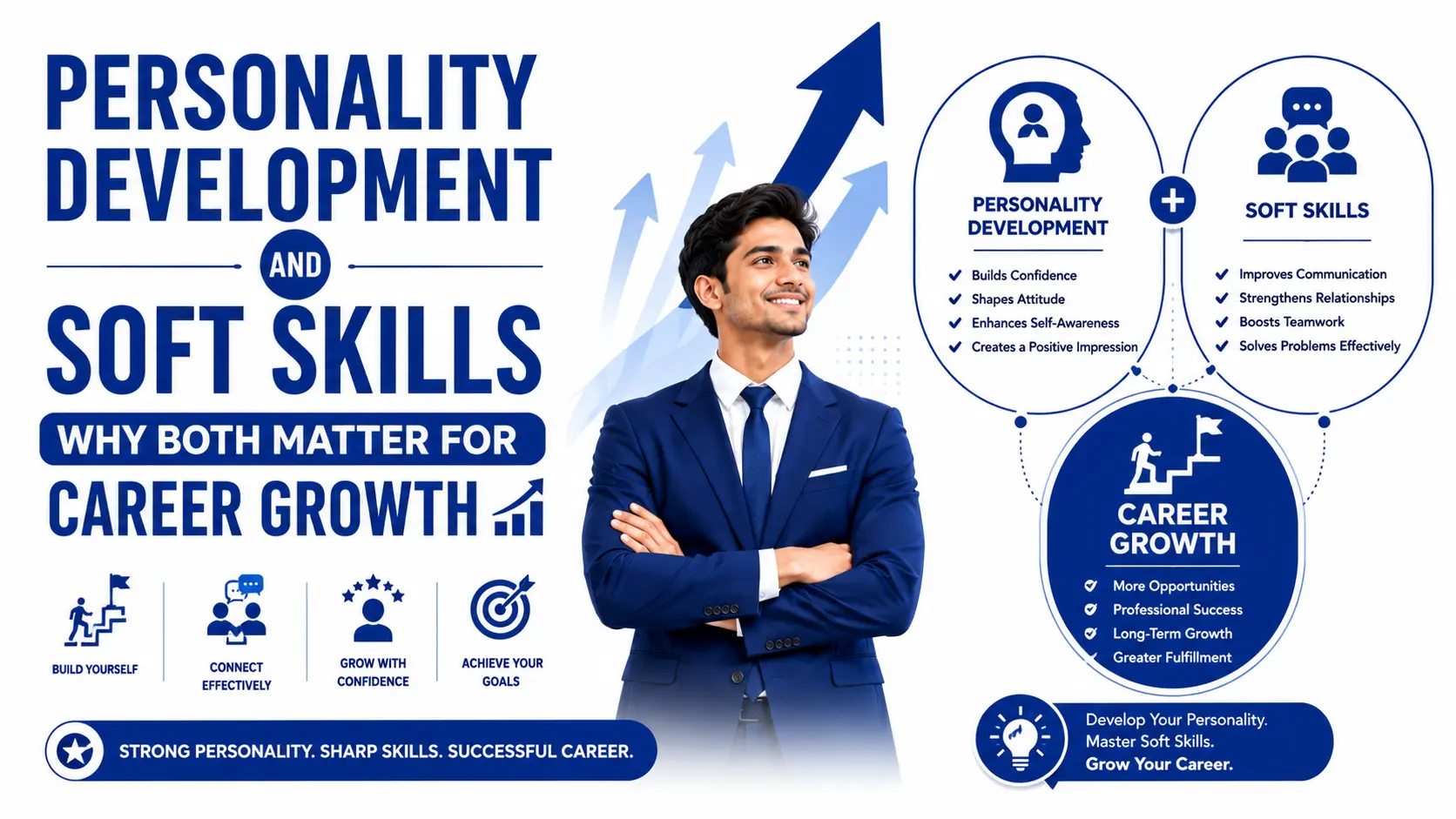
Career growth today depends on much more than academic qualifications or technical expertise alone. Employers increasingly expect professionals to communicate confidently, work effectively with teams, adapt to workplace challenges, and maintain professional behavior in dynamic work environments. This growing shift has increased the importance of developing strong personality development and soft skills to improve workplace confidence, employability, and long-term professional success.
Many students and professionals struggle during interviews, workplace interactions, and leadership discussions because they lack communication confidence and interpersonal abilities. Poor presentation skills, low self-confidence, and difficulty handling workplace conversations often affect career growth opportunities. Practical personality development training and structured communication and leadership skills programs help individuals improve workplace interaction, professional behavior, and confidence through real-world learning experiences and guided practice activities.
Organizations today increasingly value professionals who can combine technical knowledge with adaptability, teamwork, and effective communication. Strong soft skills for career growth and continuous professional personality development help individuals become more career-ready while improving workplace professionalism and leadership potential. Developing these skills therefore plays a major role in improving workplace relationships, professional confidence, and long-term career advancement across industries.
Understanding the Difference Between Personality Development and Soft Skills
Many people use personality development and soft skills interchangeably, but both focus on different aspects of professional growth. Personality development mainly improves an individual’s confidence, attitude, behavior, and overall professional presence. Soft skills, on the other hand, focus on communication, teamwork, adaptability, leadership, and interpersonal interaction within workplace environments. Together, these skills help individuals become more career-ready and professionally confident.
Personality development usually focuses on:
- Confidence building
- Positive attitude
- Professional behavior
- Public speaking confidence
- Self-discipline
Soft skills mainly include:
- Communication abilities
- Team collaboration
- Leadership qualities
- Problem-solving skills
- Workplace adaptability
Both are equally important because technical expertise alone is often not enough for long-term career success. Strong professional personality development helps individuals create a positive professional impression, while effective communication and leadership skills improve collaboration and workplace interaction.
Organizations increasingly prefer employees who demonstrate confidence, professionalism, and strong interpersonal abilities alongside technical qualifications. Practical soft skills for career growth therefore support better workplace communication, leadership readiness, and professional adaptability.
According to insights on professional development skills, communication, confidence, and professional behavior continue to remain essential factors influencing workplace success and long-term career growth.
Why Communication and Confidence Influence Career Growth
Strong communication and confidence directly influence how professionals perform in interviews, workplace discussions, presentations, and leadership situations. Employees who can express ideas clearly and interact confidently with teams often build stronger professional relationships and improve career growth opportunities. This is why practical communication and leadership skills are considered essential for long-term workplace success.
Professionals with strong communication abilities can:
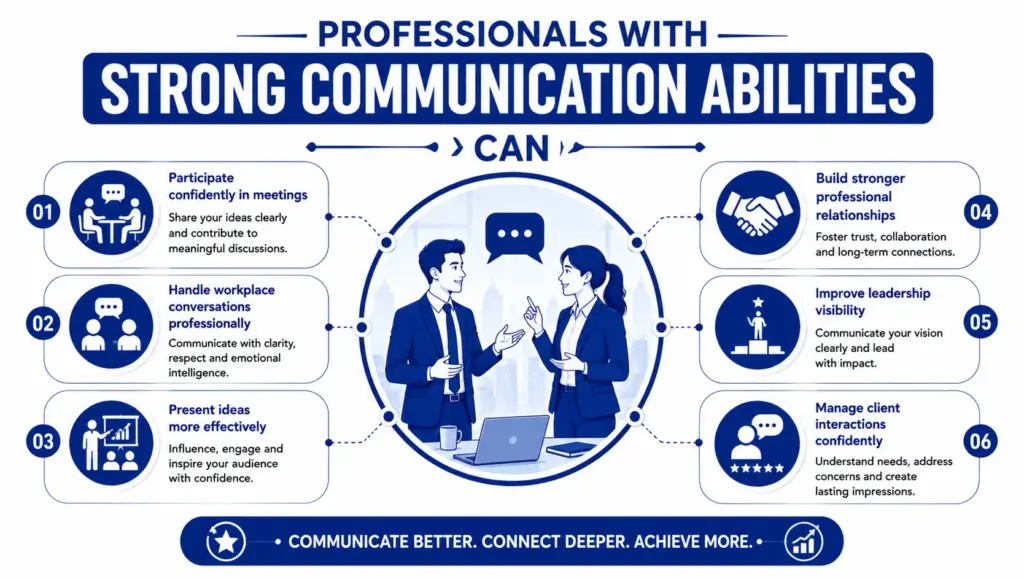
- Participate confidently in meetings
- Handle workplace conversations professionally
- Present ideas more effectively
- Build stronger professional relationships
- Improve leadership visibility
- Manage client interactions confidently
Confidence also plays an important role in workplace adaptability because professionals who communicate effectively are often better prepared to handle responsibilities and collaborative work environments. Practical personality development training helps individuals improve public speaking, interpersonal interaction, and workplace confidence through guided learning activities and real-world communication practice.
Common Communication Mistakes That Affect Professional Growth
Many professionals unintentionally make communication mistakes that affect workplace credibility and professional image. Some common mistakes include:
- Low confidence during discussions
- Weak listening habits
- Informal workplace communication
- Poor presentation abilities
- Lack of communication clarity
| Communication Challenge | Professional Impact |
| Poor communication clarity | Reduced workplace confidence |
| Weak presentation abilities | Lower professional visibility |
| Poor listening skills | Team misunderstandings |
| Informal communication | Professional image concerns |
| Low confidence | Limited career opportunities |
According to insights on career growth skills, strong communication and interpersonal abilities continue to play a major role in improving employability, workplace confidence, and leadership potential.
How Personality Development Improves Workplace Professionalism
Workplace professionalism plays a major role in shaping how employees communicate, collaborate, and handle responsibilities in professional environments. Organizations expect individuals to maintain respectful communication, follow workplace etiquette, and demonstrate accountability during daily interactions. This is why strong personality development and soft skills are essential for improving professional behavior and workplace credibility.
Professionalism in workplaces includes:
- Respectful communication
- Positive workplace attitude
- Time management
- Accountability and discipline
- Professional appearance and behavior
- Responsiveness to feedback
Employees who demonstrate professionalism often build stronger workplace relationships and adapt more confidently to organizational expectations. Strong professional personality development also improves confidence while handling meetings, presentations, and collaborative discussions in workplace environments.
Practical personality development training helps individuals strengthen workplace etiquette, communication confidence, and interpersonal interaction through guided learning activities and real-world professional scenarios. Consistent practice also improves self-discipline and adaptability, which are important for long-term career growth.
A structured learning environment supported by practical practical learning methods can help learners improve workplace professionalism, communication clarity, and confidence while preparing them for modern corporate expectations and collaborative work environments.
Why Leadership and Teamwork Skills Matter in Modern Workplaces
Modern workplaces depend heavily on collaboration because employees regularly work across teams, departments, and projects. Organizations expect professionals to communicate effectively, support team goals, and handle workplace responsibilities confidently in collaborative environments. This is why strong communication and leadership skills are considered essential for long-term workplace success and career growth.
Employees with strong teamwork and leadership abilities can:
- Coordinate effectively with teams
- Handle workplace discussions professionally
- Support collaborative decision-making
- Manage workplace conflicts constructively
- Improve employee engagement
- Adapt to changing work environments
Leadership is no longer limited to managerial positions alone. Many organizations expect employees at different levels to take initiative, communicate ideas clearly, and contribute positively within teams. Strong soft skills for career growth therefore help professionals become more adaptable and collaborative while improving workplace productivity and professional relationships.
Team collaboration also improves workplace confidence because professionals become more comfortable handling shared responsibilities and group interactions. Practical professional personality development strengthens interpersonal communication and leadership presence through real-world workplace activities and guided learning experiences.
According to insights on future workplace skills, communication, adaptability, teamwork, and leadership continue to remain among the most valuable professional skills across modern industries.
Common Personality and Soft Skills Gaps That Affect Career Growth
Many professionals face career growth challenges not because they lack technical expertise, but because they struggle with communication, confidence, and workplace interaction. Organizations increasingly expect employees to demonstrate professionalism, adaptability, and teamwork while handling workplace responsibilities. Without strong personality development and soft skills, individuals may find it difficult to build workplace confidence and progress professionally.
Some common skill gaps include:
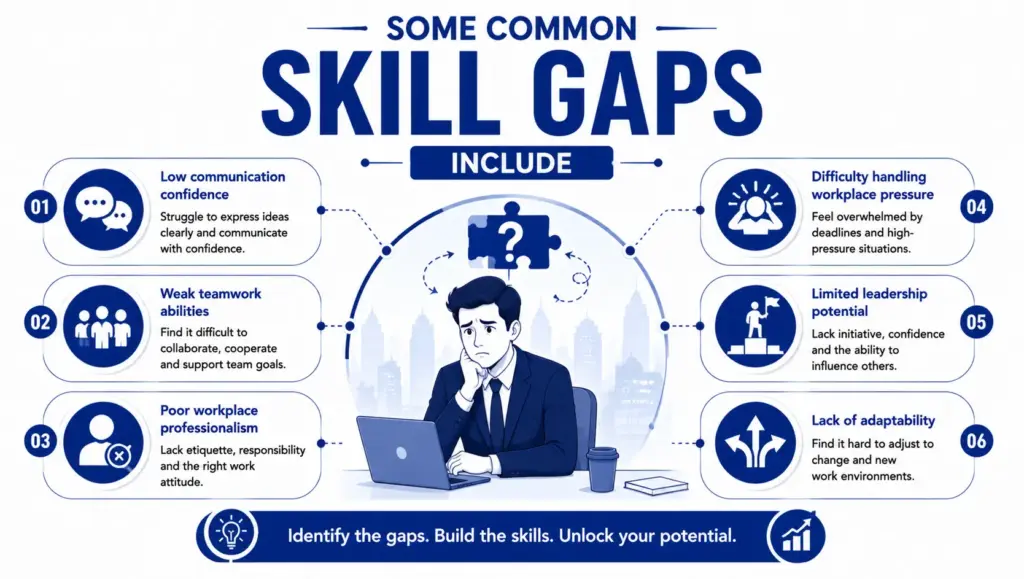
- Low communication confidence
- Weak teamwork abilities
- Poor workplace professionalism
- Difficulty handling workplace pressure
- Limited leadership potential
- Lack of adaptability
These challenges often affect workplace participation, professional visibility, and leadership opportunities. Employees who struggle with communication or interpersonal interaction may also find it difficult to contribute effectively during meetings, presentations, or collaborative projects. Practical personality development training helps individuals strengthen workplace confidence and professional behavior through guided learning activities and real-world workplace exposure.
| Skill Gap | Career Impact |
| Weak communication | Poor workplace interaction |
| Low confidence | Reduced leadership opportunities |
| Poor teamwork | Collaboration challenges |
| Weak adaptability | Difficulty handling workplace change |
| Lack of professionalism | Slower career progression |
Structured soft skills for career growth and continuous professional personality development help individuals improve communication clarity, workplace adaptability, and leadership confidence that support long-term employability and career advancement.
What Makes Practical Personality Development Training More Effective
Practical learning methods help individuals improve confidence and workplace communication more effectively than theory-based training alone. Many learners understand professional concepts academically but struggle when applying them during interviews, workplace discussions, or collaborative projects. This is why practical personality development training plays an important role in improving workplace confidence and long-term career readiness.
Effective training programs usually include:
- Mock interviews
- Presentation practice sessions
- Workplace simulations
- Group discussions
- Real-world communication exercises
- Leadership-building activities
These activities help learners strengthen communication clarity, teamwork, and interpersonal interaction through continuous practice and guided feedback. Structured professional personality development also improves public speaking confidence and workplace adaptability, which are essential for handling professional responsibilities effectively.
Practical exposure allows learners to understand workplace expectations more clearly because they experience real communication and collaboration scenarios in guided environments. Structured industry-oriented exposure programs can further help individuals improve workplace professionalism and communication confidence through industry-focused learning experiences.
Practical-first approaches also support long-term employability because learners become more adaptable, confident, and professionally prepared for collaborative work environments and leadership opportunities.
How Continuous Soft Skills Development Supports Long-Term Success
Career growth depends on continuous learning and the ability to adapt to changing workplace expectations. Professionals who consistently improve communication, leadership, and interpersonal abilities often perform better in collaborative environments and leadership-oriented roles. This is why ongoing development of personality development and soft skills remains important for long-term workplace success and professional adaptability.
Professionals who focus on continuous skill development can:
- Improve workplace confidence
- Strengthen leadership abilities
- Build stronger professional relationships
- Adapt to changing business environments
- Improve communication effectiveness
- Increase long-term career opportunities
Organizations increasingly value employees who demonstrate a growth mindset and willingness to improve continuously. Strong soft skills for career growth help individuals become more adaptable while improving workplace communication, teamwork, and leadership potential over time.
Continuous learning also improves professional confidence because individuals become more comfortable handling workplace conversations, presentations, and collaborative responsibilities. Participating in structured career development programs can help learners strengthen communication confidence, leadership readiness, and workplace professionalism through practical-first learning methods.
As industries continue evolving, consistent professional personality development and practical communication and leadership skills training help individuals remain career-ready, adaptable, and professionally confident throughout their careers.
Final Thoughts
Career success today depends on much more than technical expertise alone. Organizations increasingly expect professionals to communicate confidently, collaborate effectively with teams, and maintain professional behavior in dynamic workplace environments. Strong personality development and soft skills therefore play a major role in improving workplace confidence, leadership potential, and long-term employability across industries.
Practical personality development training helps individuals strengthen communication clarity, workplace professionalism, teamwork, and adaptability through real-world learning experiences. Strong communication and leadership skills also improve workplace relationships, presentation confidence, and professional interaction, which are essential for career growth and workplace success.
As industries continue evolving, organizations increasingly value professionals who can combine technical knowledge with confidence, professionalism, and interpersonal abilities. Investing in continuous soft skills for career growth and structured professional personality development therefore remains essential for improving workplace readiness, leadership capabilities, and long-term professional success.
Strengthen Professional Confidence for Better Career Growth
Building strong communication, leadership, and workplace interaction abilities can help individuals improve professional confidence and long-term career opportunities. Practical learning experiences and structured mentoring support workplace adaptability while strengthening communication clarity and leadership potential.Learners looking to improve workplace confidence and professional interaction through structured career development programs can benefit from practical-first learning approaches designed to support employability, workplace professionalism, and sustainable career growth.
FAQs
1. What are the top soft skills companies expect from freshers in 2026?
Companies in 2026 expect freshers to have strong communication skills, adaptability, teamwork, problem-solving abilities, emotional intelligence, and time management skills.
2. Why are soft skills important for freshers?
Soft skills help freshers communicate effectively, work well in teams, adapt to workplace environments, and perform confidently during interviews and professional interactions.
3. Which communication skills are important for freshers?
Freshers should focus on verbal communication, active listening, presentation skills, professional email writing, and confidence in workplace conversations.
4. How does adaptability help freshers in the workplace?
Adaptability helps freshers quickly adjust to new technologies, work cultures, team structures, and changing job responsibilities.
5. Why do companies value teamwork skills in freshers?
Most organizations work in collaborative environments, so companies prefer candidates who can cooperate, share ideas, and contribute effectively within teams.
6. Can soft skills improve placement opportunities for students?
Yes. Strong soft skills improve interview performance, confidence, communication, and professional behavior, increasing placement and career opportunities.
7. What role does emotional intelligence play for freshers?
Emotional intelligence helps freshers manage stress, understand workplace relationships, handle feedback professionally, and communicate respectfully with colleagues.
8. How can freshers improve their soft skills?
Freshers can improve soft skills through training programs, mock interviews, public speaking practice, group discussions, internships, and teamwork activities.
9. Are leadership skills important for entry-level employees?
Yes. Companies value freshers who show initiative, responsibility, decision-making abilities, and leadership potential even in entry-level roles.
10. How do soft skills help freshers build long-term careers?
Soft skills help freshers build professional relationships, improve workplace performance, adapt to career changes, and grow into leadership positions over time.