

Choosing the right IELTS coaching method is an important decision for students aiming to achieve their target band score. With the growing availability of digital learning platforms, candidates now have the option to choose between online IELTS coaching and traditional classroom-based training. While both approaches can help students prepare for the exam, the learning experience, flexibility, and support offered by each method can vary significantly.
Some learners prefer the convenience and accessibility of online IELTS coaching, while others benefit from the structured environment and face-to-face interaction provided by offline IELTS coaching. The best choice often depends on factors such as learning style, schedule, budget, and personal preferences.
In this guide, we’ll compare online vs offline IELTS coaching, explore the advantages and limitations of each approach, and help you determine which IELTS coaching method is best suited to your preparation goals.
Understanding the Difference Between Online and Offline IELTS Coaching
Before choosing a coaching method, it is important to understand how online and offline IELTS coaching differ. Both options are designed to help students improve their English skills and prepare for the IELTS exam, but the learning experience can vary significantly.
Online IELTS coaching allows students to attend classes remotely through digital platforms. Lessons, study materials, mock tests, and feedback are often accessible from any location with an internet connection. This flexibility makes online learning a popular choice for working professionals, college students, and individuals with busy schedules.
Offline IELTS coaching, on the other hand, takes place in a physical classroom where students interact directly with trainers and peers. Many learners prefer this format because it offers a structured environment, face-to-face communication, and immediate support during classes.
Some key differences include:
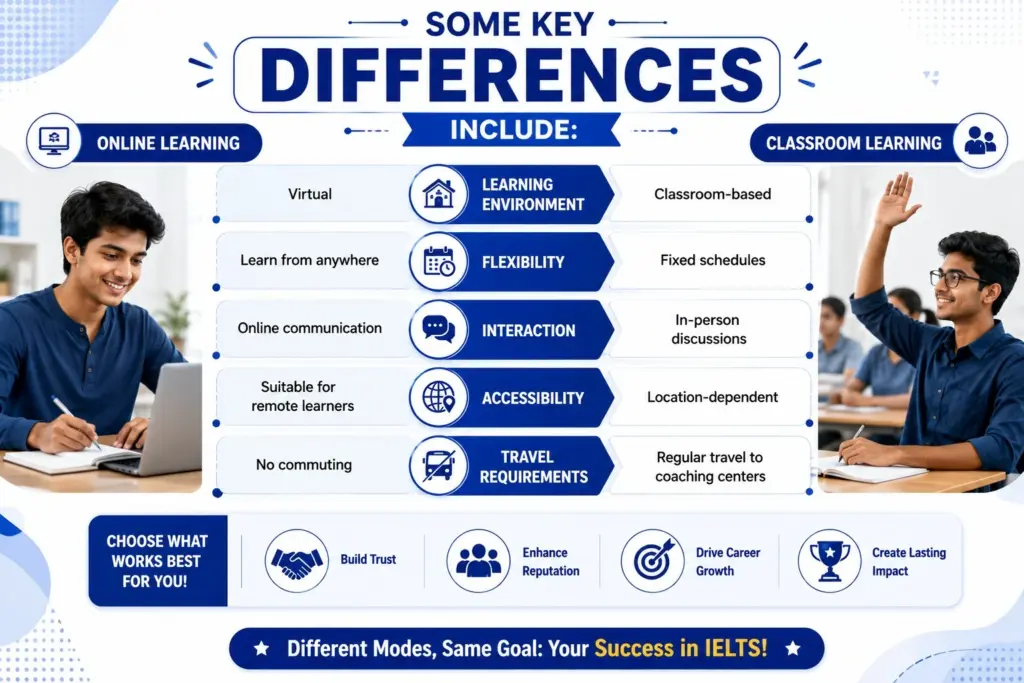
- Learning Environment: Virtual vs classroom-based
- Flexibility: Learn from anywhere vs fixed schedules
- Interaction: Online communication vs in-person discussions
- Accessibility: Suitable for remote learners vs location-dependent
- Travel Requirements: No commuting vs regular travel to coaching centers
Understanding these differences can help you identify which learning format aligns better with your lifestyle, study habits, and preparation goals. Rather than focusing on which option is universally better, it is more important to determine which coaching method can help you learn effectively and stay consistent throughout your IELTS preparation journey.
Benefits of Online IELTS Coaching
Online IELTS coaching has become increasingly popular because it offers flexibility and convenience without compromising access to learning resources. Students can attend classes from home, access recorded sessions, and study at their own pace, making it an attractive option for working professionals and busy learners.
One of the biggest advantages of online learning is accessibility. Students can connect with experienced trainers regardless of their location and often gain access to digital study materials, practice tests, and interactive learning tools.
Advantages and Challenges of Online IELTS Coaching
| Advantages | Challenges |
| Flexible learning schedule | Requires self-discipline |
| Learn from any location | Internet dependency |
| Access to recorded sessions | Limited face-to-face interaction |
| Wide range of learning resources | Potential distractions at home |
| Saves travel time and costs | Less classroom engagement |
Some additional benefits include:
- Easy access to mock tests and digital resources
- Flexible class timings
- Personalized learning pace
- Convenient revision through recorded classes
- Suitable for students with busy schedules
Students exploring different IELTS preparation courses can compare various online learning options and identify programs that align with their preparation goals.
Online IELTS coaching is often an excellent choice for learners who value flexibility, independent study, and the ability to learn from anywhere. However, success depends on maintaining consistency and staying motivated throughout the preparation process.
Advantages of Offline IELTS Coaching
Offline IELTS coaching continues to be a preferred choice for students who learn best in a structured classroom environment. Face-to-face interaction with trainers and peers creates opportunities for immediate feedback, active discussions, and collaborative learning, which can be beneficial for many learners.
One of the biggest strengths of offline coaching is the classroom atmosphere. Regular schedules, direct supervision, and in-person communication help students stay focused and maintain consistency throughout their preparation.
Some key benefits of offline IELTS coaching include:
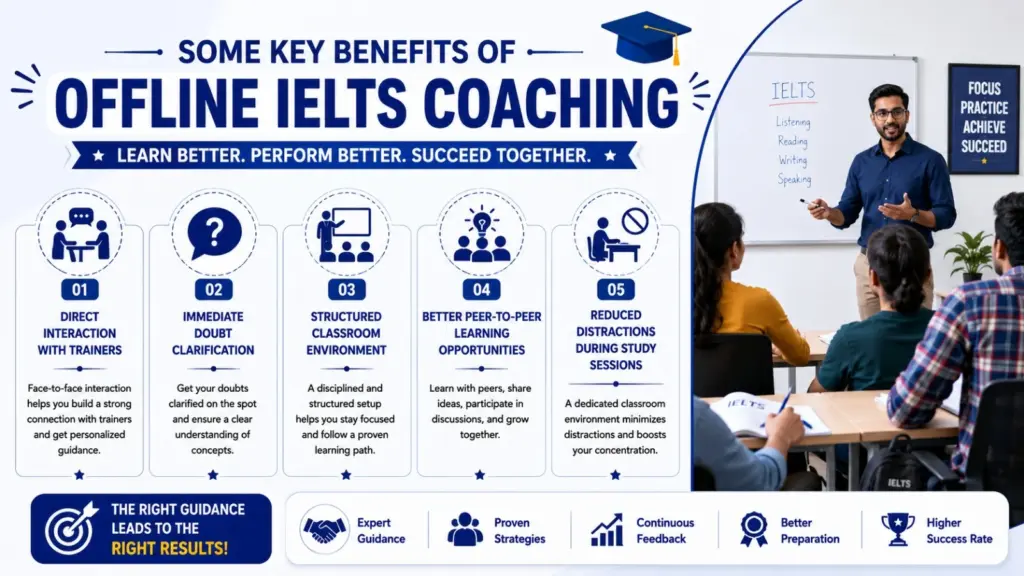
- Direct interaction with trainers
- Immediate doubt clarification
- Structured classroom environment
- Better peer-to-peer learning opportunities
- Reduced distractions during study sessions
Students attending classroom-based coaching often benefit from real-time Speaking practice, group discussions, and personalized feedback during lessons. These interactions can help build confidence and improve communication skills, particularly in the Speaking module.
However, offline coaching may not be suitable for everyone. Fixed schedules, travel requirements, and location limitations can make it difficult for some students to attend classes regularly.
For learners who prefer guided instruction, face-to-face engagement, and a disciplined study routine, offline IELTS coaching can provide a supportive learning environment that encourages consistent progress and accountability throughout the preparation journey.
Comparing Online and Offline IELTS Coaching Side by Side
Both online and offline IELTS coaching can help students achieve their target band scores, but the learning experience differs in several ways. The best option depends on factors such as flexibility, learning preferences, budget, and availability.
Some students thrive in a classroom environment where they can interact directly with trainers and peers. Others prefer the convenience of attending classes from home and accessing learning materials at any time. Understanding these differences can help you choose the coaching format that best supports your learning style.
Which Coaching Method Fits Your Learning Style?
Students who are self-motivated, comfortable with technology, and need flexible schedules often benefit from online IELTS coaching. In contrast, learners who prefer direct interaction, structured routines, and classroom discussions may find offline coaching more effective.
Online vs Offline IELTS Coaching Comparison
| Feature | Online IELTS Coaching | Offline IELTS Coaching |
| Flexibility | High | Limited |
| Learning Location | Anywhere | Fixed classroom |
| Trainer Interaction | Virtual | Face-to-face |
| Travel Requirement | None | Required |
| Study Materials | Mostly digital | Physical & digital |
| Schedule Control | More flexible | Fixed timings |
| Peer Interaction | Limited | Higher |
| Learning Environment | Self-managed | Structured |
When evaluating your options, consider:
- Your daily schedule and commitments
- Preferred learning environment
- Access to reliable internet
- Need for face-to-face interaction
- Personal learning discipline
Rather than choosing a coaching format based on popularity, select the option that helps you stay consistent, engaged, and motivated throughout your IELTS preparation journey.
When Online IELTS Coaching Is the Better Choice
Online IELTS coaching is often the ideal option for students who need flexibility and convenience in their preparation journey. With access to live classes, recorded sessions, digital study materials, and online mock tests, learners can study from virtually anywhere without disrupting their daily commitments.
This coaching method is particularly beneficial for:
- Working professionals with busy schedules
- College students managing academics and IELTS preparation
- Learners living in areas with limited access to coaching centers
- Individuals who prefer self-paced learning
- Students comfortable using digital learning platforms
One of the biggest advantages of online learning is the ability to revisit lessons through recorded sessions. This allows students to review difficult topics multiple times and learn at a pace that suits their individual needs.
Many students also choose online IELTS coaching programs because they offer flexible schedules, interactive learning tools, and access to expert trainers without geographical limitations.
However, online learning requires self-discipline and strong time-management skills. Students must stay committed to their study schedule and minimize distractions to get the most value from the coaching program.
If flexibility, accessibility, and independent learning are your priorities, online IELTS coaching can be an effective and practical solution for achieving your target IELTS band score.
When Offline IELTS Coaching Is the Better Choice
While online learning offers flexibility, offline IELTS coaching can be a better option for students who prefer a structured classroom environment and direct interaction with trainers. Many learners find it easier to stay focused and motivated when attending regular in-person classes.
Offline coaching is particularly suitable for:
- Students who learn best through face-to-face instruction
- Individuals who need regular supervision and accountability
- Learners who benefit from classroom discussions
- Candidates seeking immediate doubt clarification
- Students who prefer a disciplined study routine
One of the biggest advantages of classroom-based coaching is the opportunity for real-time interaction. Trainers can provide instant feedback, conduct speaking activities, and address questions on the spot. This can be especially beneficial for students who require additional support in the Speaking and Writing modules.
According to discussions around online course vs traditional classes, traditional classroom learning often helps students maintain consistency through fixed schedules and a dedicated study environment.
However, offline coaching may require commuting, adherence to fixed class timings, and access to a nearby coaching center. Students should evaluate whether these factors fit their lifestyle and availability.
If you value direct interaction, classroom engagement, and a structured learning atmosphere, offline IELTS coaching may provide the support and discipline needed to achieve your target IELTS band score.
How to Choose the Best IELTS Coaching Method for Your Needs
There is no single coaching method that works for everyone. The best IELTS coaching option depends on your learning style, schedule, goals, and personal preferences. Instead of choosing a format based on trends, focus on the environment that will help you stay consistent and motivated throughout your preparation.
When making your decision, consider the following factors:
- Your daily schedule and availability
- Preferred learning environment
- Level of self-discipline and motivation
- Need for trainer interaction and support
- Budget and travel considerations
- Access to reliable internet and learning resources
Students who are comfortable learning independently and need flexibility may benefit more from online IELTS coaching. On the other hand, those who prefer face-to-face interaction, structured routines, and classroom engagement may find offline coaching more effective.
If you’re unsure which option is right for you, learning more about Wilfred’s Academy can help you understand the different training approaches available and how they support IELTS learners with varying needs and goals.
For personalized guidance on selecting the most suitable IELTS coaching format, you can also contact our team and discuss your learning preferences, preparation timeline, and target band score.
Ultimately, the best IELTS coaching method is the one that keeps you engaged, consistent, and focused on achieving your desired results. Choosing the right learning environment can make your preparation journey more productive and enjoyable.
Final Thoughts
Both online and offline IELTS coaching offer valuable benefits, and neither option is universally better than the other. The right choice depends on your learning preferences, schedule, level of self-discipline, and the type of support you need throughout your preparation journey.
Online IELTS coaching provides flexibility, convenience, and access to learning resources from anywhere, making it ideal for students with busy schedules. Offline IELTS coaching, on the other hand, offers structured learning, face-to-face interaction, and a classroom environment that many learners find motivating and engaging.
By evaluating your goals, study habits, and learning style, you can choose the coaching method that best supports your preparation. The most effective IELTS coaching program is ultimately the one that helps you stay consistent, build confidence, and work toward achieving your target IELTS band score.
Start Your IELTS Preparation with the Right Guidance
Choosing the right coaching method is an important step toward IELTS success. Whether you prefer the flexibility of online learning or the structure of classroom training, having expert support can make your preparation more effective and goal-oriented.
If you’re ready to take the next step, explore our IELTS preparation program and discover how personalized guidance, expert trainers, and practical learning strategies can help you prepare confidently and achieve your desired IELTS band score.
FAQs
1. Is online IELTS coaching as effective as offline coaching?
Yes, online IELTS coaching can be just as effective as offline coaching when it includes structured lessons, expert guidance, mock tests, and consistent practice. The effectiveness largely depends on the student’s commitment and learning style.
2. Which is better for IELTS preparation: online or offline coaching?
Neither option is universally better. Online coaching offers flexibility and convenience, while offline coaching provides face-to-face interaction and a structured classroom environment. The best choice depends on your individual learning preferences.
3. Is online IELTS coaching suitable for working professionals?
Yes, online IELTS coaching is often ideal for working professionals because it offers flexible schedules, recorded sessions, and the ability to study from any location without disrupting work commitments.
4. Does offline IELTS coaching provide better trainer interaction?
Offline IELTS coaching allows direct interaction with trainers, immediate doubt clarification, and real-time classroom discussions. Many students find this beneficial for improving confidence and understanding complex concepts.
5. Can I achieve a high IELTS band score through online coaching?
Yes, many students achieve high IELTS band scores through online coaching by following a structured study plan, attending classes regularly, completing mock tests, and practicing consistently.
6. What are the advantages of online IELTS coaching?
Online IELTS coaching offers flexibility, accessibility, recorded lessons, digital learning resources, and reduced travel time. It is particularly beneficial for students who need a convenient and adaptable learning environment.
7. What are the benefits of offline IELTS coaching?
Offline IELTS coaching provides a classroom atmosphere, direct trainer support, peer interaction, structured schedules, and immediate feedback, which can help students stay motivated and accountable throughout their preparation.
8. How do I choose the best IELTS coaching method?
Consider factors such as your learning style, schedule, budget, self-discipline, and preferred level of trainer interaction. The best IELTS coaching method is the one that helps you stay consistent and engaged.
9. Is offline IELTS coaching more expensive than online coaching?
In many cases, offline coaching may cost more because it includes classroom facilities and additional operational expenses. However, fees can vary depending on the institution, course structure, and available learning resources.
10. Can I switch from offline to online IELTS coaching during preparation?
Yes, many students switch between coaching formats based on their schedule, location, or learning needs. The key is to maintain consistency in your preparation and continue following a structured study plan regardless of the format.