
Planning a successful trip involves much more than booking flights and hotels. In today’s competitive travel industry, itinerary planning skills play a crucial role in delivering seamless and memorable travel experiences. A well-structured itinerary helps travelers save time, manage budgets, avoid disruptions, and make the most of their journey.
Recent travel studies reveal that planning a trip is one of the most time-consuming parts of travel, with travelers spending nearly 18 hours researching destinations, comparing prices, and organizing activities. Additionally, 23% of travelers identify trip planning as a major challenge, highlighting the need for skilled itinerary planners.
Key benefits of strong itinerary planning skills include:
- Improved travel efficiency and time management
- Better budget control and resource allocation
- Enhanced customer satisfaction and travel experiences
- Reduced travel disruptions and scheduling conflicts
- Personalized travel recommendations based on traveler preferences
As tourism continues to evolve with digital tools and personalized travel experiences, itinerary planning has become an essential skill for travel professionals, tour operators, and travel consultants seeking to create exceptional customer journeys.
What Are Itinerary Planning Skills?
Itinerary planning skills refer to the ability to organize and coordinate every aspect of a trip, from transportation and accommodation to sightseeing activities and budgeting. In the travel industry, these skills help travel professionals create smooth, enjoyable, and stress-free experiences for travelers.
According to a survey by Expedia, travelers spend several hours researching destinations, accommodations, and activities before booking a trip. Effective itinerary planning helps reduce this complexity by providing a clear travel roadmap.
Strong itinerary planning skills can set you apart in the competitive travel industry. If you’re passionate about travel, tourism, and creating unforgettable experiences, Wilfred’s Academy offers the right foundation to help you succeed. Career Pathway Courses
Key Elements of Itinerary Planning Skills
- Researching destinations and attractions
- Scheduling transportation and accommodations
- Managing travel budgets
- Coordinating activities and sightseeing
- Preparing backup plans for unexpected situations
- Understanding customer preferences
Example of Itinerary Planning
A travel consultant planning a 5-day Dubai vacation may organize flights, hotel bookings, city tours, desert safari activities, restaurant recommendations, and airport transfers into one detailed schedule.
| Itinerary Component | Purpose |
| Flights & Transfers | Ensure smooth travel between locations |
| Accommodation | Provide comfortable stay options |
| Attractions | Maximize travel experiences |
| Budget Planning | Control travel expenses |
| Emergency Planning | Reduce travel disruptions |
Strong itinerary planning skills benefit both travelers and travel businesses. They improve customer satisfaction, save time, reduce travel stress, and increase operational efficiency. As travelers increasingly seek personalized experiences, itinerary planning has become one of the most valuable skills in modern tourism and travel management.
Why Itinerary Planning Skills Are Important in the Travel Industry
Itinerary planning skills play a vital role in the travel industry because they help create organized, enjoyable, and hassle-free travel experiences. Modern travelers expect personalized trips, smooth transportation, and well-planned schedules. Without proper itinerary planning, travel delays, budget overruns, and customer dissatisfaction can quickly occur.
According to industry surveys, over 70% of travelers prefer customized travel experiences that match their interests and schedules.According to Global Tourism Trends, international travel continues to grow, creating new opportunities for skilled tourism professionals. Travel professionals who possess strong itinerary planning skills can meet these expectations while improving customer satisfaction and business reputation.
Benefits of Itinerary Planning Skills
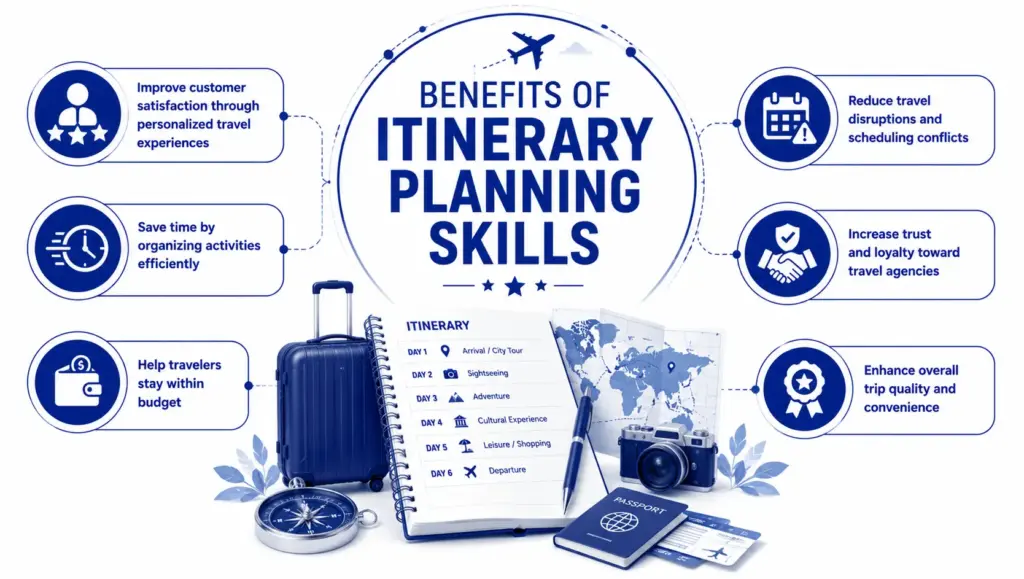
- Improve customer satisfaction through personalized travel experiences
- Save time by organizing activities efficiently
- Help travelers stay within budget
- Reduce travel disruptions and scheduling conflicts
- Increase trust and loyalty toward travel agencies
- Enhance overall trip quality and convenience
Example
Imagine a family planning a 7-day trip to Singapore. A skilled travel consultant creates a detailed itinerary that includes flights, hotel check-ins, sightseeing tours, dining recommendations, and transportation schedules. This organized approach allows travelers to enjoy their vacation without worrying about logistics.
| Benefit | Impact on Travelers |
| Time Management | Maximizes sightseeing opportunities |
| Budget Control | Reduces unnecessary expenses |
| Better Coordination | Ensures smooth travel arrangements |
| Customer Satisfaction | Creates memorable experiences |
| Risk Management | Handles unexpected travel issues effectively |
As competition grows in the tourism sector, itinerary planning has become an essential skill for travel consultants, tour operators, and travel agencies. It helps businesses deliver exceptional customer experiences while improving efficiency, profitability, and long-term customer relationships.
Essential Itinerary Planning Skills Every Travel Professional Needs
Successful travel professionals rely on strong itinerary planning skills to create seamless and memorable travel experiences. As travelers increasingly seek personalized trips, travel consultants, tour operators, and travel coordinators must combine organizational abilities with destination expertise to meet customer expectations.Travel Industry Insights
According to travel industry reports, personalized travel experiences significantly influence booking decisions, making itinerary planning one of the most valuable skills in tourism today.
Key Itinerary Planning Skills Every Professional Should Master
- Research Skills
- Gather accurate information about destinations, attractions, weather, and local regulations.
- Example: Recommending indoor attractions during monsoon season.
- Time Management
- Organize activities efficiently without overloading the travel schedule.
- Example: Scheduling sightseeing locations based on proximity to reduce travel time.
- Communication Skills
- Understand customer preferences and provide clear travel instructions.
- Example: Discussing dietary requirements before planning restaurant visits.
- Budget Planning
- Create travel plans that match the traveler’s budget.
- Example: Offering both luxury and budget accommodation options.
- Problem-Solving Skills
- Handle flight delays, cancellations, or unexpected itinerary changes quickly.
- Example: Arranging alternative transportation during a flight disruption.
- Technology Proficiency
- Use travel management software, booking platforms, and AI-powered planning tools.
- Example: Using itinerary apps to provide real-time travel updates.
Why These Skills Matter
Travel professionals who develop these skills can create well-organized itineraries, improve customer satisfaction, reduce travel stress, and build long-term client relationships. In a competitive travel industry, strong itinerary planning skills help professionals deliver exceptional experiences while increasing efficiency and business success.
Benefits of Effective Itinerary Planning for Travel Agencies
Effective itinerary planning gives travel agencies a significant advantage in today’s competitive tourism market. Travelers expect smooth, personalized, and well-organized experiences, and a carefully designed itinerary helps agencies meet those expectations. When travel agencies create detailed travel plans, they improve customer satisfaction while increasing operational efficiency.
Industry studies show that more than 70% of travelers prefer personalized travel experiences. Agencies that provide customized itineraries often attract repeat customers and generate positive reviews.
Key Benefits of Effective Itinerary Planning
- Improves Customer Satisfaction
- Creates organized and stress-free travel experiences.
- Helps travelers enjoy more activities without confusion.
- Builds Customer Trust and Loyalty
- Demonstrates professionalism and attention to detail.
- Encourages repeat bookings and referrals.
- Enhances Operational Efficiency
- Reduces scheduling errors and booking conflicts.
- Improves coordination between hotels, airlines, and tour operators.
- Increases Revenue Opportunities
- Allows agencies to recommend additional tours, activities, and upgrades.
- Creates opportunities for upselling travel packages.
- Reduces Travel Disruptions
- Includes backup plans for delays, weather issues, or cancellations.
- Helps agencies respond quickly to unexpected situations.
Example
Suppose a travel agency plans a 6-day Bali vacation package. By organizing airport transfers, hotel bookings, sightseeing tours, and dining recommendations into one seamless itinerary, the agency delivers a hassle-free experience. As a result, travelers enjoy their trip more and are more likely to leave positive reviews.
Why It Matters
Strong itinerary planning not only improves the traveler’s experience but also strengthens a travel agency’s reputation, customer retention, and long-term business growth. In the modern travel industry, effective itinerary planning has become a key factor in achieving success.
Common Challenges in Itinerary Planning
Creating a perfect travel itinerary sounds simple, but travel professionals often face several challenges during the planning process. Every traveler has unique preferences, budgets, and expectations, making itinerary planning a complex task. Even a minor scheduling mistake can affect the entire travel experience.
According to travel industry surveys, many travelers change their travel preferences after the initial booking stage, forcing travel agencies to adjust plans quickly. Travel professionals must stay flexible while maintaining a smooth travel schedule.
Understanding Travel Industry Standards helps travel professionals create accurate and efficient travel itineraries.
Common Challenges in Itinerary Planning
- Managing Different Traveler Preferences
- Some travelers prefer adventure activities, while others seek relaxation.
- Example: A family trip may require kid-friendly attractions, while a honeymoon package focuses on luxury experiences.
- Budget Constraints
- Travelers often want premium experiences within limited budgets.
- Example: Balancing luxury accommodations with affordable transportation options.
- Changing Travel Regulations
- Visa requirements, entry rules, and local regulations can change frequently.
- Example: Updating travel plans when destination entry policies change unexpectedly.
- Transportation and Accommodation Availability
- Flights and hotels may become fully booked during peak seasons.
- Example: Finding alternative accommodations during holiday periods.
- Weather and Seasonal Conditions
- Bad weather can affect sightseeing plans and outdoor activities.
- Example: Heavy rain may force changes to a beach vacation itinerary.
- Unexpected Travel Disruptions
- Flight delays, cancellations, or local emergencies can impact schedules.
- Example: Rearranging airport transfers after a delayed flight.
Why Overcoming These Challenges Matters
Travel professionals who anticipate these challenges and prepare backup plans can deliver smoother travel experiences. Strong itinerary planning skills help minimize disruptions, improve customer satisfaction, and ensure travelers enjoy a well-organized and memorable journey.
Best Practices for Creating a Perfect Travel Itinerary
Creating a perfect travel itinerary requires careful planning, attention to detail, and a strong understanding of traveler preferences. A well-structured itinerary helps travelers save time, stay within budget, and enjoy a stress-free experience. According to travel industry surveys, nearly 80% of travelers prefer personalized trips that match their interests and schedules, making itinerary planning a crucial skill for travel professionals.
Follow These Best Practices for Effective Itinerary Planning
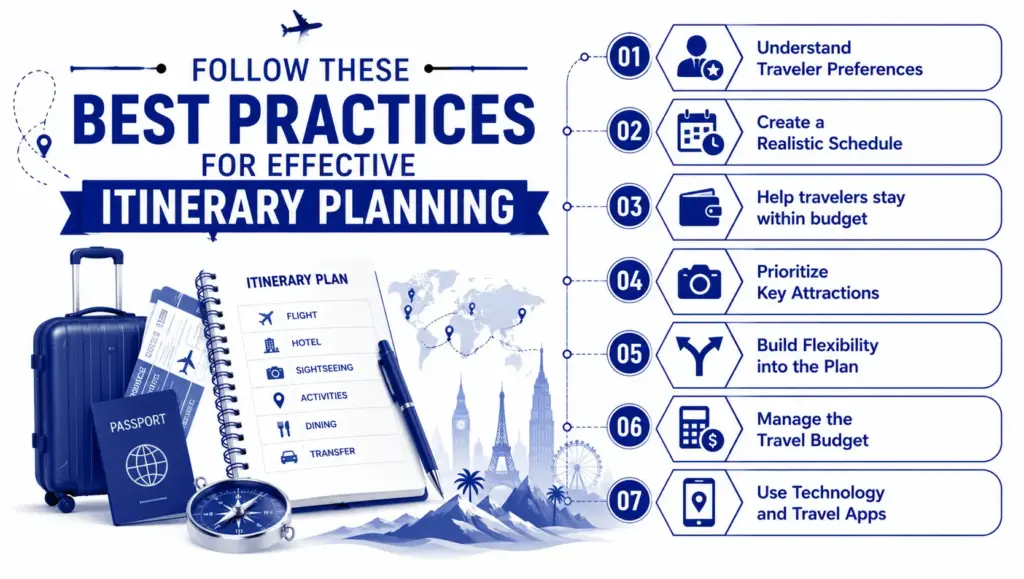
- Understand Traveler Preferences
- Ask about budget, travel style, interests, and special requirements.
- Example: Adventure travelers may prefer trekking activities, while families may prioritize theme parks and sightseeing.
- Create a Realistic Schedule
- Avoid overcrowding the itinerary with too many activities.
- Leave enough time for transportation, meals, and relaxation.
- Prioritize Key Attractions
- Include must-visit destinations first.
- Organize activities based on location to reduce travel time.
- Build Flexibility into the Plan
- Prepare alternative options for weather changes or unexpected delays.
- Example: Include indoor attractions if outdoor activities become unavailable.
- Manage the Travel Budget
- Balance accommodation, transportation, and activity costs.
- Offer multiple options to suit different budgets.
- Use Technology and Travel Apps
- Utilize itinerary management tools for real-time updates and scheduling.
Example
For a 5-day Singapore trip, a travel professional can schedule city tours, Sentosa Island visits, and shopping experiences while allowing free time for personal exploration. This balanced approach improves customer satisfaction and creates a memorable travel experience.
By following these best practices, travel professionals can deliver organized, efficient, and personalized itineraries that enhance both traveler experiences and business success.
Wilfred’s Academy equips you with the knowledge and confidence needed to thrive in this dynamic field. Tourism Career Program
Final Thoughts
In today’s fast-paced travel industry, itinerary planning skills have become more important than ever. From organizing transportation and accommodations to creating personalized travel experiences, these skills help travel professionals deliver seamless, enjoyable, and memorable journeys. Effective itinerary planning improves customer satisfaction, saves time, controls travel costs, and reduces unexpected disruptions.
As travelers increasingly seek customized and hassle-free experiences, travel agencies, tour operators, and travel consultants must develop strong itinerary planning abilities to stay competitive. Professionals who master these skills can build stronger client relationships, improve operational efficiency, and create greater value for both travelers and businesses.
Whether you are an aspiring travel professional or looking to advance your career in tourism, investing in itinerary planning skills can open doors to exciting opportunities in the travel industry.
As the travel industry continues to grow, employers seek professionals with strong itinerary planning and travel management skills. Wilfred’s Academy Tourism Industry Training equips you with the knowledge and confidence needed to thrive in this dynamic field.
Ready to Build a Successful Career in Travel and Tourism?
Gain industry-relevant skills, practical knowledge, and hands-on training that prepare you for real-world travel management challenges. Start developing your itinerary planning expertise today and take the first step toward becoming a successful travel professional.
FAQs
1. What are itinerary planning skills?
Itinerary planning skills involve organizing and managing all aspects of a trip, including transportation, accommodation, activities, budgeting, and scheduling. These skills help create smooth and enjoyable travel experiences.
2. Why are itinerary planning skills important in the travel industry?
Itinerary planning skills help travel professionals deliver personalized travel experiences, improve customer satisfaction, reduce travel disruptions, and ensure efficient trip management.
3. What are the key components of a travel itinerary?
A well-planned travel itinerary typically includes:
- Flight and transportation details
- Hotel or accommodation bookings
- Daily activity schedules
- Budget information
- Emergency contacts and backup plans
4. How do itinerary planning skills improve customer satisfaction?
A structured itinerary helps travelers save time, avoid confusion, and enjoy a stress-free experience. It also ensures that all travel arrangements align with the traveler’s preferences and expectations.
5. What skills are required for effective itinerary planning?
Successful itinerary planners need:
- Research skills
- Time management
- Communication skills
- Problem-solving abilities
- Budget planning knowledge
- Technology and travel software proficiency
6. How does technology help with itinerary planning?
Modern travel tools and apps help professionals manage bookings, track schedules, provide real-time updates, and create personalized itineraries more efficiently.
7. What challenges do travel professionals face when planning itineraries?
Common challenges include:
- Flight delays and cancellations
- Weather disruptions
- Budget limitations
- Changing travel regulations
- Diverse customer preferences
8. Can itinerary planning skills help grow a travel agency?
Yes. Effective itinerary planning improves customer experiences, increases positive reviews, encourages repeat bookings, and strengthens a travel agency’s reputation.
9. What career opportunities require itinerary planning skills?
Professionals with itinerary planning skills can work as:
- Travel Consultants
- Tour Operators
- Travel Coordinators
- Tourism Managers
- Corporate Travel Planners
- Destination Management Specialists
10. How can I improve my itinerary planning skills?
You can improve your skills by studying travel destinations, using travel planning software, gaining practical experience, staying updated with tourism trends, and understanding customer needs.