
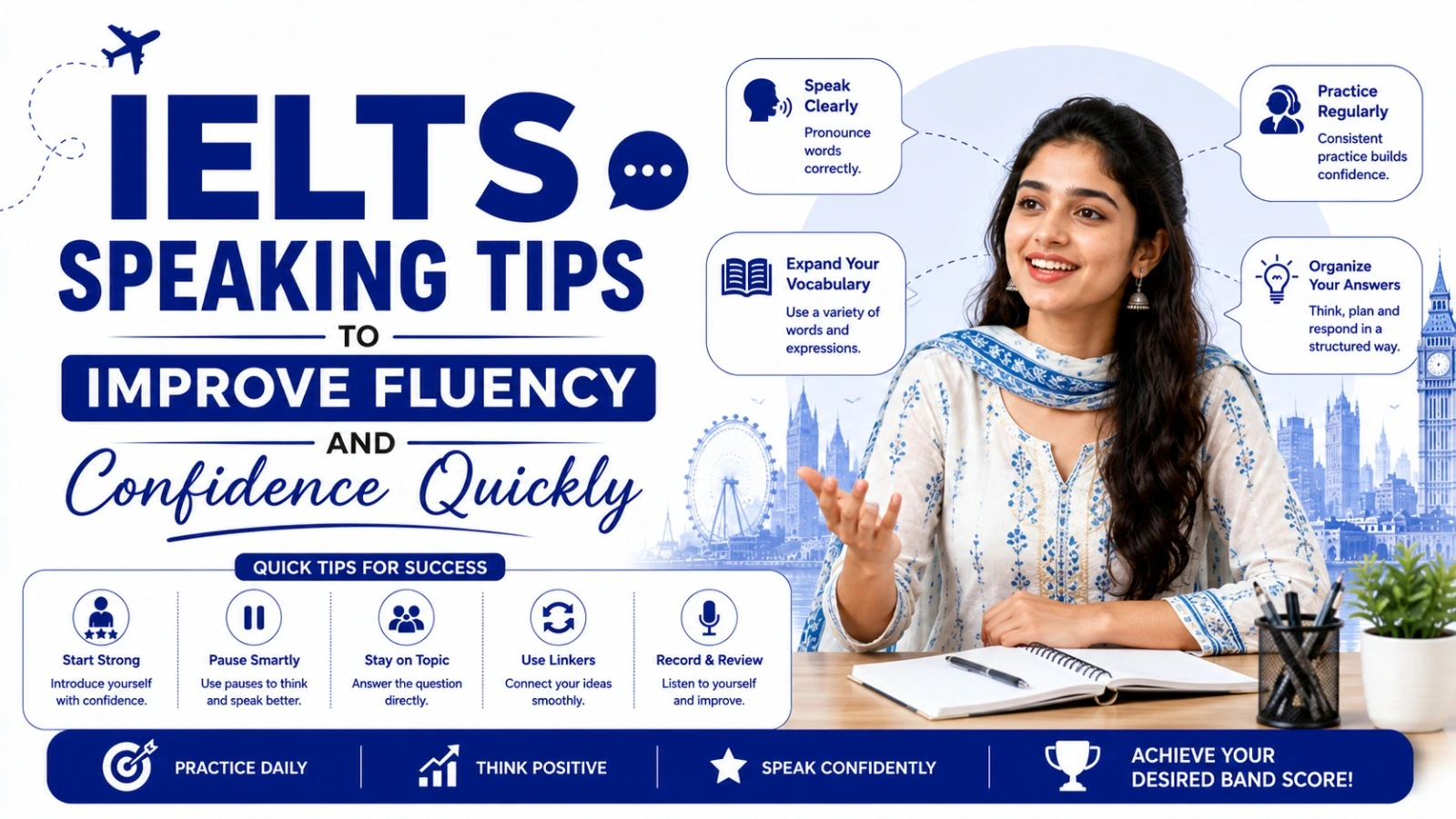
Have you ever felt confident while practicing English but suddenly gone blank during an IELTS speaking mock test? You’re not alone. Many test-takers lose valuable marks not because of poor English skills, but because of nervousness, lack of fluency, and uncertainty about how to answer common speaking questions.
According to IELTS examiners, fluency and coherence account for 25% of your overall Speaking band score, making them critical factors in achieving a high score. The good news is that improving your speaking performance doesn’t require months of preparation. With the right IELTS Speaking Tips, consistent practice, and smart strategies, you can become a more confident and natural speaker in a relatively short time.
In this article, you’ll discover:
- Practical techniques to speak more fluently during the test
- Effective ways to handle challenging IELTS Speaking Questions
- Proven IELTS Confidence Tips to overcome nervousness
- Common mistakes that lower speaking scores
- Actionable IELTS Speaking Preparation Tips for higher band results
Let’s explore the strategies that can help you speak with confidence and improve your IELTS Speaking score quickly.
Understanding How the IELTS Speaking Test Is Evaluated
Before applying effective IELTS Speaking Tips, it is important to understand how the IELTS Speaking test is scored. Many candidates focus only on improving vocabulary or memorizing answers, but examiners assess several aspects of your communication skills. Understanding these criteria helps you prepare more strategically and focus on the areas that directly impact your band score.
The IELTS Speaking test is divided into three parts and is evaluated using four equally weighted criteria: Fluency and Coherence, Lexical Resource, Grammatical Range and Accuracy, and Pronunciation. According to the British Council, each criterion contributes 25% to the final Speaking score. This means that strong vocabulary alone cannot guarantee a high band score if fluency or pronunciation is weak.
Examiners assess how naturally and effectively you communicate ideas throughout the test. A common misconception is that speaking quickly leads to a better score. In reality, speaking clearly and coherently is far more important than speed. Candidates who develop their answers with relevant examples and explanations often perform better than those who provide short or memorized responses.
By understanding how the IELTS Speaking test is evaluated, you can focus your preparation on the skills that matter most and build a strong foundation for achieving your target band score.
Why Most Candidates Struggle With Fluency During the IELTS Speaking Test
One of the biggest challenges IELTS candidates face is maintaining fluency throughout the speaking test. Many students have a good understanding of English grammar and vocabulary, yet they struggle to express their thoughts smoothly when speaking. This often happens because fluency is a skill that develops through practice rather than memorization.
A common reason for poor fluency is the habit of translating thoughts from a native language into English. This process takes time and creates pauses, making speech sound unnatural. Another challenge is the fear of making mistakes. Many candidates focus so much on grammar accuracy that they hesitate before speaking, which affects the natural flow of conversation.
According to language learning experts, regular speaking practice helps learners think directly in English, reducing hesitation and improving communication. Candidates who actively engage in conversations, mock tests, and self-recording exercises tend to show greater improvement in fluency.
Some common factors that affect fluency include:
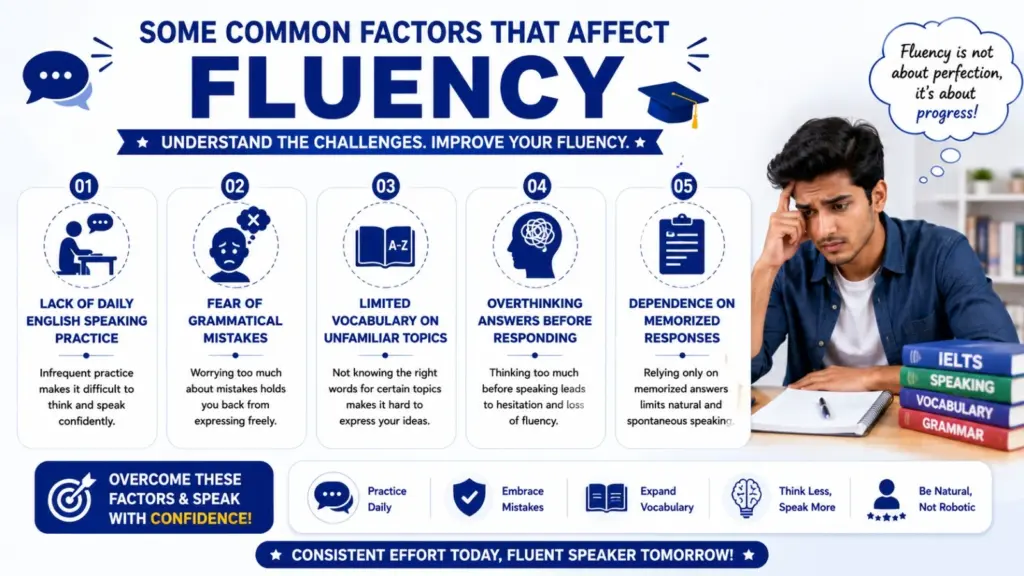
- Lack of daily English speaking practice
- Fear of grammatical mistakes
- Limited vocabulary on unfamiliar topics
- Overthinking answers before responding
- Dependence on memorized responses
Fluency is not about speaking quickly. Instead, it involves expressing ideas clearly, maintaining a steady pace, and connecting thoughts logically. During the exam, candidates should focus on communicating their ideas effectively rather than aiming for perfect grammar in every sentence.
Improving fluency requires consistent effort, but small daily speaking activities can make a significant difference over time. The more you practice speaking naturally, the more comfortable you will become when answering IELTS Speaking Questions under exam conditions.
Practical IELTS Speaking Tips to Improve Fluency Faster
Improving fluency is one of the most effective ways to boost your IELTS Speaking score. While many candidates focus heavily on grammar and vocabulary, fluency develops through regular speaking practice and consistent exposure to English. The good news is that even small daily habits can lead to noticeable improvements over time.
Daily Speaking Habits That Build Fluency
Developing a routine is essential for long-term improvement. Some simple habits include:
- Think in English during everyday activities
- Read articles or news stories aloud
- Record yourself speaking on different topics
- Practice describing objects, places, or experiences
- Listen to English podcasts and repeat key phrases
These activities help train your brain to process and respond in English more naturally.
Proven Practice Methods for Faster Improvement
One of the best ways to improve fluency is to simulate real exam situations. Instead of memorizing answers, focus on expressing ideas naturally. Speaking with a study partner, participating in mock interviews, and answering random IELTS topics can help build confidence and improve response speed.
Based on guidance from IELTS trainers, candidates who practice speaking regularly often show better fluency and coherence than those who rely solely on textbooks. The goal is to make English a part of your daily routine rather than limiting it to study sessions.
Fluency Improvement Activities and Their Benefits
| Activity | Benefit |
| Reading Aloud | Improves pronunciation and rhythm |
| Voice Recording | Identifies speaking weaknesses |
| Mock Speaking Tests | Builds exam confidence |
| English Conversations | Improves spontaneous responses |
| Listening and Repeating | Enhances fluency and intonation |
Consistent practice allows you to answer IELTS Speaking Questions more naturally and with fewer pauses. Over time, these habits can significantly improve both fluency and overall speaking performance.
How to Answer IELTS Speaking Questions Effectively
Many candidates lose valuable marks because they provide short answers or struggle to organize their thoughts during the test. While there is no fixed answer format required by IELTS examiners, following a simple structure can help you respond more confidently and maintain better fluency.
A practical approach is to use the Answer → Explain → Example method. First, answer the question directly. Then, explain your response by adding details, and finally provide an example or personal experience to support your answer. This structure helps you develop ideas naturally and keeps the conversation flowing.
For example, explain why you enjoy reading and mention a recent book you’ve read. This demonstrates your ability to communicate clearly and provides more language opportunities for assessment.
Listen carefully before answering. Taking a brief moment to think can help you provide a more organized response.
According to IELTS experts, candidates who support their opinions with explanations and examples often perform better in Fluency and Coherence. Rather than memorizing responses, focus on expressing your genuine thoughts naturally. This approach not only improves fluency but also helps you sound more confident throughout the test.
Effective IELTS Speaking Preparation Tips for Higher Band Scores
Preparing for the IELTS Speaking test requires more than just learning vocabulary and grammar rules. A structured preparation plan helps candidates build fluency, improve pronunciation, and develop confidence when responding to different topics. Consistency is often the key difference between average and high-scoring candidates.
Creating a Weekly Speaking Practice Plan
A well-organized study schedule can help you track progress and identify areas that need improvement. Instead of studying for long hours occasionally, focus on short and consistent practice sessions.
A balanced weekly plan may include:
- Daily speaking practice for 15–20 minutes
- Learning and using new vocabulary in conversations
- Recording and reviewing your responses
- Practicing common IELTS topics
- Taking one mock speaking test each week
This approach allows you to gradually strengthen all aspects of speaking without feeling overwhelmed.
Useful Resources for IELTS Speaking Preparation
There are many resources available to support your preparation. English podcasts, YouTube learning channels, IELTS practice websites, and language exchange platforms can provide valuable speaking opportunities. Additionally, practicing with friends or joining online speaking communities can help simulate real conversations.
Based on recommendations from IELTS trainers, candidates who combine self-practice with regular feedback often improve more quickly. Reviewing your recorded responses can help identify pronunciation errors, repetitive vocabulary, and hesitation patterns that may affect your score.
Following these IELTS Speaking Preparation Tips consistently can improve your ability to communicate naturally, respond confidently, and perform effectively during the exam.
Common IELTS Speaking Mistakes and How to Avoid Them
Even well-prepared candidates can lose marks because of simple mistakes during the IELTS Speaking test. Many of these errors are avoidable and can be corrected through awareness and regular practice. Understanding these common issues can help you perform more confidently and improve your overall band score.
Common IELTS Speaking Mistakes and Solutions
| Common Mistake | How to Avoid It |
| Memorizing answers | Speak naturally and personalize responses |
| Giving very short answers | Add explanations and examples |
| Speaking too fast | Maintain a steady and clear pace |
| Using difficult words incorrectly | Use familiar vocabulary accurately |
| Ignoring pronunciation | Practice stress, intonation, and clarity |
One of the biggest mistakes candidates make is focusing too much on perfection. This often leads to hesitation and unnatural speech. Remember that examiners are evaluating communication skills, not flawless English.
To improve your performance, avoid the following habits:
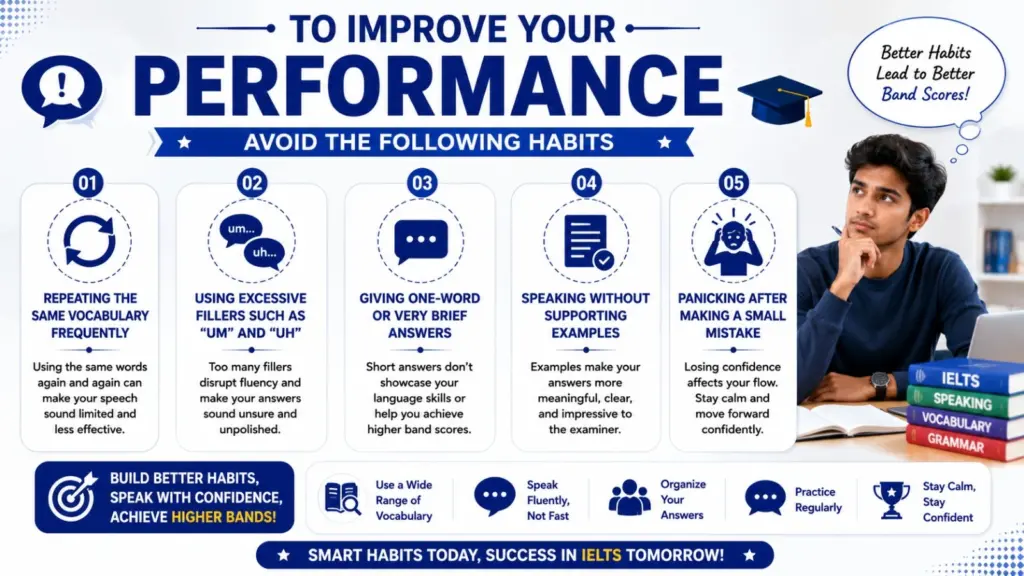
- Repeating the same vocabulary frequently
- Using excessive fillers such as “um” and “uh”
- Giving one-word or very brief answers
- Speaking without supporting examples
- Panicking after making a small mistake
According to IELTS trainers, candidates who communicate naturally often perform better than those who rely on memorized responses. If you make a mistake during the test, continue speaking confidently rather than stopping to correct every error.
Consistent practice and self-evaluation can help eliminate these habits over time. The goal is to communicate your ideas clearly and effectively rather than trying to sound overly advanced.
IELTS Confidence Tips to Stay Calm and Perform Your Best on Test Day
Confidence plays a major role in IELTS Speaking performance. Many candidates have the required language skills but fail to demonstrate them effectively because of nervousness. Feeling slightly anxious before the test is normal, but learning how to manage those emotions can help you communicate more naturally and achieve a better score.
Managing Nervousness Before the Exam
A calm mind can help you think clearly and respond more effectively during the test. To reduce anxiety before your exam:
- Get at least 7–8 hours of sleep the night before
- Practice deep breathing exercises to stay relaxed
- Avoid comparing yourself with other candidates
- Arrive at the test center early to avoid unnecessary stress
- Focus on communicating rather than achieving a perfect score
These simple habits can help you enter the examination room with a more positive mindset.
Confidence-Building Strategies During the Test
Once the test begins, concentrate on expressing your ideas rather than worrying about mistakes.
Some useful strategies include:
- Maintain natural eye contact with the examiner
- Listen carefully to every question
- Take a second to organize your thoughts before answering
- Continue speaking even if you make a minor mistake
- Use examples and personal experiences to support your answers
According to speaking coaches, candidates who stay engaged in the conversation often appear more confident and fluent than those who focus excessively on grammar accuracy.
The IELTS Speaking test assesses communication, not perfection. Remember that occasional mistakes are completely acceptable. What matters most is your ability to express ideas clearly and keep the conversation flowing naturally.
By applying these IELTS Confidence Tips alongside regular practice, you can approach the exam with greater self-assurance and significantly improve your chances of achieving your target band score.
Final Thoughts
Achieving a higher IELTS Speaking score is not about using complex vocabulary or giving perfect answers. It comes from consistent practice, clear communication, and the confidence to express your ideas naturally. By applying effective IELTS Speaking Tips, practicing common IELTS Speaking Questions, and following a structured preparation plan, you can steadily improve your fluency and performance.
Remember, every speaking session is an opportunity to build confidence and strengthen your communication skills. The more you practice, the more comfortable you’ll become during the actual test.
Take Your IELTS Speaking Skills to the Next Level
Strong fluency, confident delivery, and clear pronunciation can make a significant difference in your IELTS Speaking score. If you’re ready to improve faster, consider joining professional IELTS training programs that offer expert guidance, mock speaking tests, and personalized feedback.
With the right support and consistent effort, you can boost your confidence, enhance your speaking abilities, and move one step closer to achieving your target IELTS band score.
FAQs
1. How can I improve fluency for IELTS Speaking quickly?
Daily speaking practice, mock interviews, and recording your responses can help improve fluency and reduce hesitation
2. How often should I practice IELTS Speaking?
Ideally, you should practice speaking for at least 15–20 minutes every day. Consistent practice is more effective than occasional long study sessions.
3. What are the most common IELTS Speaking Questions?
Common topics include hobbies, education, work, technology, travel, family, and future goals. Practicing these topics can help you feel more prepared on test day.
4. Is memorizing answers recommended for IELTS Speaking?
No. Examiners can often identify memorized responses. It is better to understand common topics and practice expressing your ideas naturally.
5. How can I improve my pronunciation for IELTS?
Listening to native speakers, reading aloud, and recording yourself can help improve pronunciation, stress, and intonation over time.
6. What causes nervousness during the IELTS Speaking test?
Fear of making mistakes, lack of preparation, and exam pressure are common causes of nervousness. Regular practice and mock tests can help build confidence.
7. How is fluency assessed in IELTS Speaking?
Fluency is assessed based on your ability to speak continuously, connect ideas logically, and communicate without excessive pauses or repetition.
8. Can I achieve Band 7 with self-study?
Yes. Many candidates achieve Band 7 or higher through self-study by following a structured preparation plan and practicing consistently.
9. How long should I prepare for IELTS Speaking?
Preparation time varies by individual, but most candidates benefit from four to eight weeks of focused speaking practice.
10. What are the best IELTS Speaking Preparation Tips for beginners?
Beginners should focus on building vocabulary, practicing daily speaking, improving pronunciation, and becoming familiar with common IELTS Speaking Questions and test formats.