

In today’s competitive business environment, building strong customer relationships is just as important as making sales. Customers expect personalized experiences, prompt communication, and consistent support throughout their journey with a business. As a result, organizations increasingly seek professionals who can effectively manage customer interactions, strengthen relationships, and contribute to long-term customer satisfaction. This growing demand has made a customer management course a valuable learning opportunity for individuals pursuing careers in sales, customer service, and business development.
Customer management focuses on understanding customer needs, maintaining positive relationships, resolving concerns, and creating experiences that encourage loyalty and repeat business. Professionals with strong customer relationship management skills are better equipped to build trust, improve customer retention, and support business growth. These abilities are particularly important in sales roles, where long-term success often depends on the quality of customer relationships rather than one-time transactions.
A structured customer management training program helps individuals develop essential competencies such as communication, active listening, customer engagement, problem-solving, and relationship-building. These skills not only improve workplace performance but also enhance career prospects across various industries. As businesses continue adopting customer-centric strategies, professionals who understand customer management principles are becoming increasingly valuable.
Whether you are a student, aspiring sales professional, customer service executive, or business development specialist, understanding the CRM course benefits and developing customer-focused skills can help you improve professional effectiveness, strengthen customer relationships, and build a successful long-term career.
What Is a Customer Management Course and Why Is It Important?
A customer management course is designed to help professionals develop the knowledge and skills needed to build, maintain, and strengthen customer relationships. The course focuses on customer communication, relationship management, customer satisfaction, retention strategies, and customer-focused business practices. As businesses increasingly prioritize customer experience, customer management has become a critical component of sales success and long-term business growth.
Customer management involves:
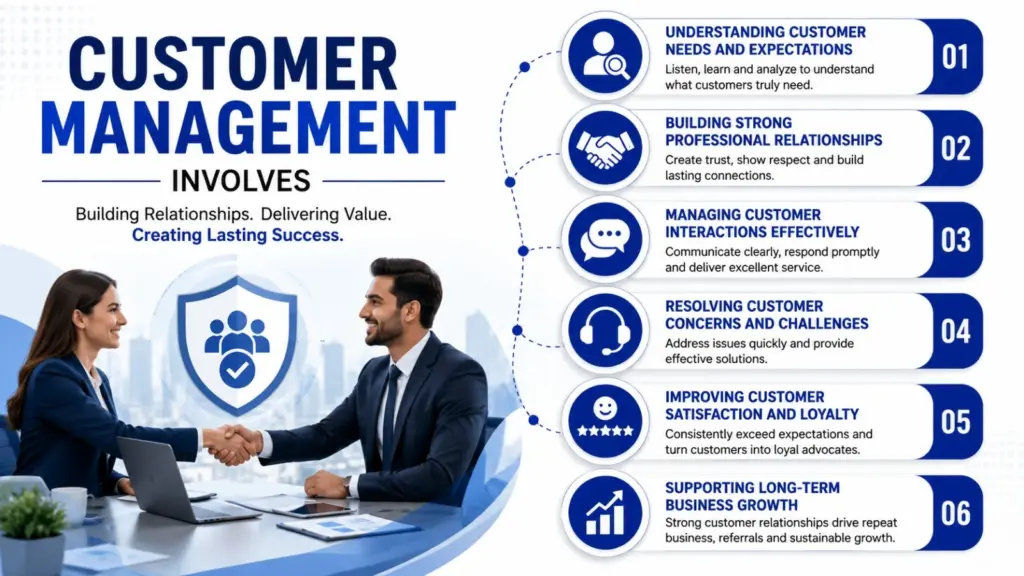
- Understanding customer needs and expectations
- Building strong professional relationships
- Managing customer interactions effectively
- Resolving customer concerns and challenges
- Improving customer satisfaction and loyalty
- Supporting long-term business growth
For sales professionals, customer management is particularly important because successful sales often depend on trust and relationship-building. Customers are more likely to continue doing business with organizations that provide consistent support, personalized communication, and positive experiences throughout the customer journey.
A well-structured customer management training program helps individuals develop practical skills that improve both customer satisfaction and business performance. These skills can enhance customer retention, increase repeat business, and strengthen brand reputation. In many industries, retaining existing customers is often more cost-effective than acquiring new ones, making customer management a valuable business function.
Professionals who develop strong customer relationship management skills are often better equipped to handle customer interactions, build loyalty, and contribute to organizational success. These competencies are highly valued across sales, customer service, account management, and business development roles.
According to insights on customer relationship management learning, customer relationship management helps organizations improve customer engagement, strengthen business relationships, and create customer-centric strategies that support sustainable growth and long-term success.
Essential Customer Relationship Management Skills Every Sales Professional Needs
Strong customer relationship management skills are the foundation of successful customer interactions and long-term business relationships. While product knowledge and sales techniques are important, the ability to understand customer needs, communicate effectively, and build trust often determines long-term success in sales and customer-focused roles. This is why a customer management course places significant emphasis on developing practical relationship management skills.
Some of the most important customer management skills include:
- Communication and interpersonal skills
- Active listening abilities
- Relationship-building techniques
- Customer engagement strategies
- Problem-solving and conflict-resolution skills
These skills help professionals create positive customer experiences while improving customer loyalty and retention. Effective customer management goes beyond completing transactions; it focuses on developing lasting relationships that benefit both the customer and the organization.
Why Effective Communication Strengthens Customer Relationships
Communication is one of the most valuable skills in customer management because every customer interaction depends on how clearly and professionally information is exchanged.
Strong communication helps professionals:
- Understand customer expectations
- Build trust and credibility
- Resolve concerns effectively
- Deliver personalized service experiences
- Maintain long-term customer relationships
Active listening is equally important because customers want to feel heard and understood. Professionals who listen carefully can identify customer needs more accurately and provide solutions that create value.
| CRM Skill | Professional Benefit |
| Communication | Better customer interactions |
| Active Listening | Improved customer understanding |
| Relationship Building | Stronger customer loyalty |
| Problem Solving | Faster issue resolution |
| Customer Engagement | Higher retention rates |
According to insights on sales relationship development skills, relationship-building, communication, customer understanding, and trust development are among the most important skills for sales professionals seeking to improve customer satisfaction and long-term business performance.
How Customer Management Improves Sales Performance
Effective customer management plays a direct role in improving sales performance because strong customer relationships often lead to repeat business, referrals, and long-term loyalty. While acquiring new customers is important, retaining existing customers is equally valuable for sustainable growth. This is why developing strong customer relationship management skills is considered essential for sales professionals across industries.
Customer management helps sales teams:
- Build stronger customer relationships
- Increase customer retention rates
- Improve customer satisfaction
- Encourage repeat purchases
- Generate positive referrals
- Enhance customer lifetime value
One of the biggest advantages of effective customer management is customer retention. Existing customers who receive consistent support and positive experiences are more likely to continue purchasing products or services. They are also more likely to recommend a business to others, creating additional sales opportunities.
Personalized communication is another important factor. Customers appreciate businesses that understand their preferences, respond promptly to inquiries, and provide relevant solutions. This personalized approach helps strengthen trust and improve customer engagement.
Regular follow-ups also contribute to stronger relationships. Staying connected with customers after a sale demonstrates commitment and helps identify future opportunities to provide value. This approach supports both customer satisfaction and long-term revenue growth.
| Customer Management Activity | Business Impact |
| Regular Follow-Ups | Improved customer retention |
| Relationship Building | Increased loyalty |
| Personalized Communication | Better customer experience |
| Feedback Management | Service improvement |
| Customer Support | Stronger trust and satisfaction |
By applying the principles taught in a customer management course, sales professionals can improve customer interactions, strengthen relationships, and create more opportunities for long-term business success. Effective customer management not only enhances sales performance but also contributes to sustainable growth by turning customers into loyal advocates for the business.
The Role of Customer Satisfaction in Long-Term Business Success
Customer satisfaction is one of the most important factors influencing long-term business growth and sustainability. Businesses that consistently meet or exceed customer expectations are more likely to retain customers, strengthen their reputation, and achieve sustainable success. This is why customer satisfaction is a core focus of every effective customer management course and an essential component of modern sales strategies.
Customer satisfaction contributes to business success by:

- Improving customer loyalty
- Encouraging repeat purchases
- Increasing customer retention
- Strengthening brand reputation
- Generating positive referrals
- Supporting long-term profitability
Satisfied customers are more likely to continue doing business with an organization because they trust the quality of products, services, and support they receive. Over time, these customers often become brand advocates who recommend the business to friends, family, and colleagues, helping attract new customers through word-of-mouth marketing.
Customer satisfaction also helps businesses reduce customer churn. Retaining existing customers is often more cost-effective than constantly acquiring new ones. Organizations that focus on delivering positive experiences can improve retention rates while strengthening long-term customer relationships.
Another important benefit is reputation management. In today’s digital environment, customer reviews and feedback can significantly influence purchasing decisions. Businesses that prioritize customer satisfaction are more likely to receive positive reviews, strengthen credibility, and enhance their market position.
According to insights on customer management best practices, organizations that adopt customer-centric strategies and focus on relationship management are better positioned to improve customer loyalty, increase satisfaction levels, and achieve sustainable business growth.
By applying strong customer service management and relationship-building practices, professionals can help organizations create meaningful customer experiences that drive long-term success and business stability.
Why Customer Management Skills Are Valuable Across Industries
Customer management is no longer a skill limited to sales professionals. In today’s customer-driven business environment, organizations across various industries rely on professionals who can build relationships, understand customer needs, and deliver positive experiences. As a result, strong customer relationship management skills have become valuable across a wide range of career paths and business functions.
Industries that highly value customer management skills include:
- Sales and business development
- Customer service and support
- Banking and financial services
- Hospitality and tourism
- Retail and e-commerce
- Healthcare and professional services
One of the key reasons these skills are widely applicable is that every business depends on customer satisfaction and loyalty. Professionals who can communicate effectively, resolve issues, and maintain strong relationships contribute directly to customer retention and organizational success.
Customer management skills are particularly important in roles such as:
- Sales Executive
- Account Manager
- Customer Success Manager
- Business Development Executive
- Client Relationship Manager
- Customer Support Specialist
These positions require professionals to interact with customers regularly, manage expectations, provide solutions, and ensure a positive customer experience. Strong relationship-building abilities often help individuals perform better in these roles and create opportunities for career advancement.
In addition, customer management skills support leadership development. Managers and team leaders frequently work with customers, stakeholders, and internal teams, making communication, empathy, and relationship management essential competencies for effective leadership.
Developing these abilities through professional career development can help individuals strengthen workplace effectiveness, improve customer engagement, and prepare for diverse career opportunities across multiple industries.
As organizations continue prioritizing customer-centric business strategies, professionals with strong customer management training and relationship management expertise will remain highly sought after in both customer-facing and leadership-focused roles.
How Practical Industry Exposure Strengthens Customer Management Skills
While theoretical knowledge provides a foundation for understanding customer behavior and relationship management, practical experience is what truly helps professionals develop effective customer relationship management skills. Real-world exposure allows individuals to interact with customers, handle challenges, and apply customer management techniques in professional environments. This hands-on experience is invaluable for anyone pursuing a career in sales, customer service, business development, or account management.
Practical industry exposure can include:
- Customer interaction projects
- Industry internships and training programs
- Live sales and customer support activities
- Business workshops and seminars
- Professional networking events
- Workplace communication exercises
One of the biggest advantages of practical learning is the opportunity to understand customer expectations firsthand. Professionals learn how customers communicate, what influences their decisions, and how they respond to different service experiences. This knowledge helps improve communication, problem-solving, and relationship-building abilities.
Practical exposure also helps individuals develop confidence when dealing with customer concerns and service-related challenges. Learning how to handle complaints, provide solutions, and maintain professionalism in difficult situations strengthens overall customer management capabilities.
Industry networking and collaborative projects further enhance learning by exposing individuals to experienced professionals, industry best practices, and real business scenarios. These experiences help bridge the gap between classroom learning and workplace expectations.
Participating in programs that provide industry learning opportunities can help learners gain practical customer interaction experience, strengthen workplace communication skills, and develop the confidence needed to succeed in customer-focused roles.
By combining formal learning with hands-on industry experience, professionals can improve customer engagement, enhance service quality, and build the practical competencies required for long-term success in sales and customer relationship management.
Building a Successful Sales Career Through Continuous Customer Management Learning
The business landscape continues to evolve as customer expectations, communication channels, and relationship management strategies become more sophisticated. Sales professionals who continuously improve their knowledge and skills are often better prepared to adapt to these changes and maintain strong customer relationships. This is why continuous learning remains an essential part of professional growth and long-term success in sales and customer management.
Continuous learning helps professionals:
- Stay updated with customer behavior trends
- Improve communication and relationship-building abilities
- Adapt to new CRM technologies and tools
- Enhance customer engagement strategies
- Strengthen sales performance and customer retention
- Increase career advancement opportunities
One of the most significant developments in modern sales is the growing use of Customer Relationship Management (CRM) systems. These tools help organizations track customer interactions, manage communication, analyze customer data, and improve service delivery. Professionals who understand CRM platforms and customer-focused business practices often have a competitive advantage in the workplace.
Continuous learning also helps sales professionals respond effectively to changing customer expectations. Today’s customers expect personalized communication, quick responses, and seamless service experiences. Staying informed about customer management best practices enables professionals to meet these expectations more effectively.
Career growth in sales often depends on an individual’s ability to build relationships, solve problems, and create value for customers. Professionals who invest in ongoing development are more likely to progress into leadership roles such as Customer Success Manager, Account Manager, Sales Manager, or Business Development Manager.
By embracing lifelong learning and continuously refining their customer relationship management skills, professionals can improve workplace performance, strengthen customer loyalty, and create sustainable career growth opportunities.
Final Thoughts
A customer management course provides valuable knowledge and practical skills that help professionals build stronger customer relationships, improve customer satisfaction, and support long-term business success. In today’s customer-focused business environment, organizations increasingly rely on professionals who can communicate effectively, understand customer needs, and create positive customer experiences.
Developing strong customer relationship management skills helps sales professionals improve customer retention, strengthen trust, and increase overall sales performance. Skills such as communication, active listening, relationship building, customer engagement, and problem-solving contribute significantly to both professional success and organizational growth.
As businesses continue prioritizing customer-centric strategies, the demand for professionals with effective customer management training and CRM expertise is expected to remain strong. Continuous learning, practical experience, and a commitment to customer success can help individuals stay competitive and achieve long-term career advancement.
Whether you are beginning your career or seeking to improve your professional capabilities, investing in customer management skills can help you build meaningful customer relationships, enhance business performance, and create lasting success in sales and customer-focused roles.
Develop Customer Management Skills for Sales Success
Strong customer relationships are the foundation of successful sales performance and long-term business growth. Developing customer management, communication, and relationship-building skills can help you improve customer satisfaction, increase retention, and strengthen your professional value in today’s competitive business environment.
If you’re ready to enhance your customer relationship expertise and build a successful sales career, explore customer success training and discover how practical learning can help you develop industry-relevant skills for long-term success.
FAQs
1. What is a customer management course?
A customer management course is a training program that teaches professionals how to build, manage, and strengthen customer relationships while improving customer satisfaction, retention, and business performance.
2. Why is customer management important in sales?
Customer management helps sales professionals build trust, improve customer loyalty, increase repeat business, and create long-term relationships that contribute to sustainable revenue growth.
3. What skills are taught in customer management training?
Customer management training typically covers communication, active listening, relationship building, customer engagement, conflict resolution, problem-solving, and customer retention strategies.
4. How does customer relationship management improve sales performance?
Customer relationship management improves sales performance by strengthening customer relationships, increasing retention rates, encouraging repeat purchases, and improving customer lifetime value.
5. Why is communication important in customer management?
Effective communication helps professionals understand customer needs, build trust, resolve concerns, and deliver positive customer experiences that strengthen long-term relationships.
6. What are customer relationship management skills?
Customer relationship management skills include communication, active listening, empathy, relationship building, customer engagement, conflict resolution, and customer service management.
7. How can customer management improve customer retention?
Customer management improves retention by maintaining regular communication, addressing customer concerns promptly, delivering personalized experiences, and building strong customer relationships.
8. What careers benefit from customer management skills?
Customer management skills are valuable in careers such as Sales Executive, Customer Success Manager, Account Manager, Business Development Executive, Customer Support Specialist, and Client Relationship Manager.
9. How can sales professionals build stronger customer relationships?
Sales professionals can build stronger relationships by actively listening, understanding customer needs, communicating consistently, providing value, and maintaining regular follow-up interactions.
10. What role does customer satisfaction play in business growth?
Customer satisfaction supports business growth by increasing customer loyalty, encouraging referrals, strengthening brand reputation, and improving customer retention rates.
11. Are customer management skills useful outside sales?
Yes. Customer management skills are valuable in customer service, hospitality, healthcare, finance, retail, education, business development, and leadership roles.
12. How does practical experience improve customer management abilities?
Practical experience helps professionals understand customer behavior, improve communication skills, handle real-world challenges, and apply customer management techniques more effectively.
13. What are the benefits of a customer management course?
A customer management course helps professionals improve communication, customer engagement, relationship-building abilities, customer retention strategies, and overall workplace performance.
14. How can CRM technology support customer management?
CRM technology helps businesses track customer interactions, manage communication, analyze customer data, improve service quality, and strengthen customer relationships through organized customer information management.
15. Why is continuous learning important for sales professionals?
Continuous learning helps sales professionals stay updated with customer behavior trends, improve relationship management techniques, adapt to new CRM technologies, and remain competitive in a changing business environment.