
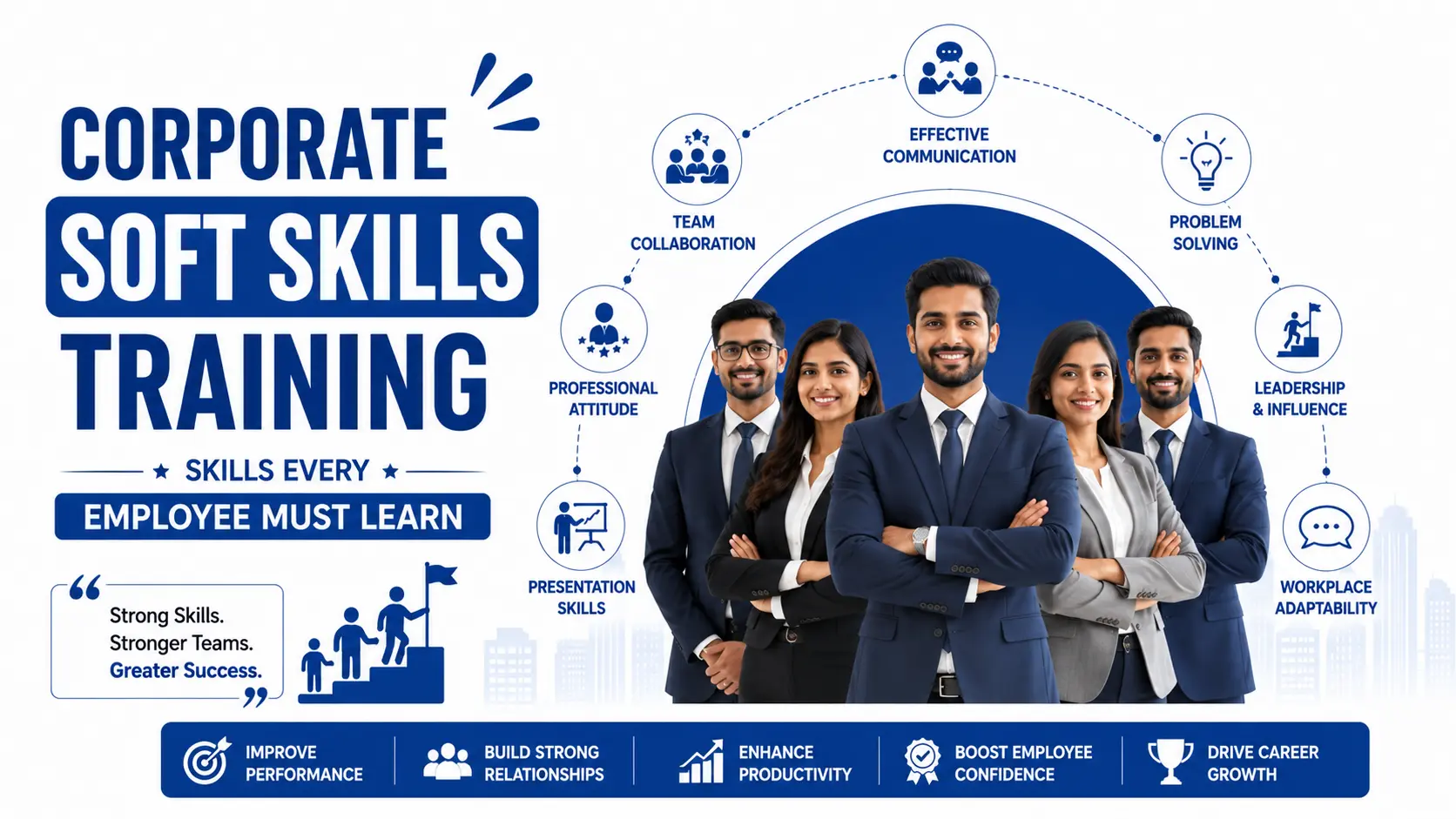
Modern workplaces demand more than technical expertise from employees. Organizations today expect professionals to communicate effectively, collaborate with teams, manage workplace challenges, and adapt quickly to changing business environments. As companies focus more on productivity, employee engagement, and leadership development, corporate soft skills training has become an essential part of professional growth and organizational success.
Many businesses face challenges such as poor workplace communication, lack of teamwork, low employee confidence, and ineffective leadership despite having technically skilled teams. These issues often affect collaboration, productivity, and overall workplace efficiency. Structured employee soft skills development programs help employees strengthen communication, leadership, adaptability, and interpersonal abilities that directly influence workplace performance and professional relationships.
As industries continue evolving, organizations increasingly invest in workplace communication training and practical professional development training to prepare employees for modern corporate expectations. Skills such as communication clarity, leadership, problem-solving, and teamwork are now considered critical for long-term career growth and organizational effectiveness. Strong leadership and teamwork skills also help employees contribute more confidently in collaborative and fast-paced professional environments.
Why Corporate Soft Skills Training Has Become Essential for Businesses
Businesses today operate in fast-paced environments where communication, collaboration, and adaptability directly influence workplace performance. Even highly skilled employees may struggle to perform effectively if they lack professional communication or teamwork abilities. This is why many organizations now consider corporate soft skills training an important investment for improving employee productivity and workplace efficiency.
Modern workplaces require employees to handle responsibilities such as:
- Team collaboration
- Client communication
- Workplace problem-solving
- Leadership discussions
- Presentation delivery
- Professional decision-making
Without strong interpersonal abilities, workplace misunderstandings and communication gaps can affect team performance and organizational growth. Structured employee soft skills development programs help employees improve communication clarity, confidence, and collaboration skills that support smoother workplace interactions.
Organizations also prioritize employees who can adapt quickly to changing business environments and work effectively under pressure. Practical workplace communication training helps professionals manage workplace relationships more confidently while improving productivity and engagement across teams.
According to insights on workplace effectiveness, employers increasingly value communication, professionalism, and collaboration skills because they contribute significantly to long-term business success and employee performance.
Communication Skills Every Employee Should Develop
Effective communication plays a major role in maintaining productivity, teamwork, and professional relationships within organizations. Employees who communicate clearly can manage workplace responsibilities more efficiently, avoid misunderstandings, and contribute more confidently during meetings, presentations, and client interactions. This is why corporate soft skills training strongly focuses on improving workplace communication abilities across different professional roles.
Some of the most important communication skills employees should develop include:
- Active listening
- Clear verbal communication
- Professional email writing
- Presentation confidence
- Meeting participation
- Client interaction skills
Strong communication also improves collaboration between teams and helps employees handle workplace discussions more professionally. Structured workplace communication training allows professionals to improve confidence while learning how to communicate ideas clearly in fast-paced business environments.
Communication Mistakes That Affect Workplace Productivity
Small communication mistakes can create major workplace challenges when teams fail to share information effectively. Common communication issues include:
- Poor listening habits
- Unclear instructions
- Delayed responses
- Lack of presentation confidence
- Miscommunication between teams
| Communication Issue | Workplace Impact |
| Unclear instructions | Reduced productivity |
| Poor listening | Team misunderstandings |
| Weak presentation skills | Lower professional visibility |
| Delayed responses | Workflow inefficiency |
| Lack of collaboration | Reduced team performance |
According to insights on communication abilities, effective communication and interpersonal skills remain critical for improving collaboration, workplace efficiency, and long-term professional growth.
How Leadership and Teamwork Skills Improve Organizational Performance
Strong leadership and teamwork are essential for maintaining productivity and creating positive workplace environments. Organizations often perform better when employees can collaborate effectively, manage responsibilities confidently, and contribute to team goals without communication barriers. This is why employee soft skills development programs focus heavily on improving leadership abilities and teamwork skills across all levels of an organization.
Employees with strong leadership and collaboration abilities can:
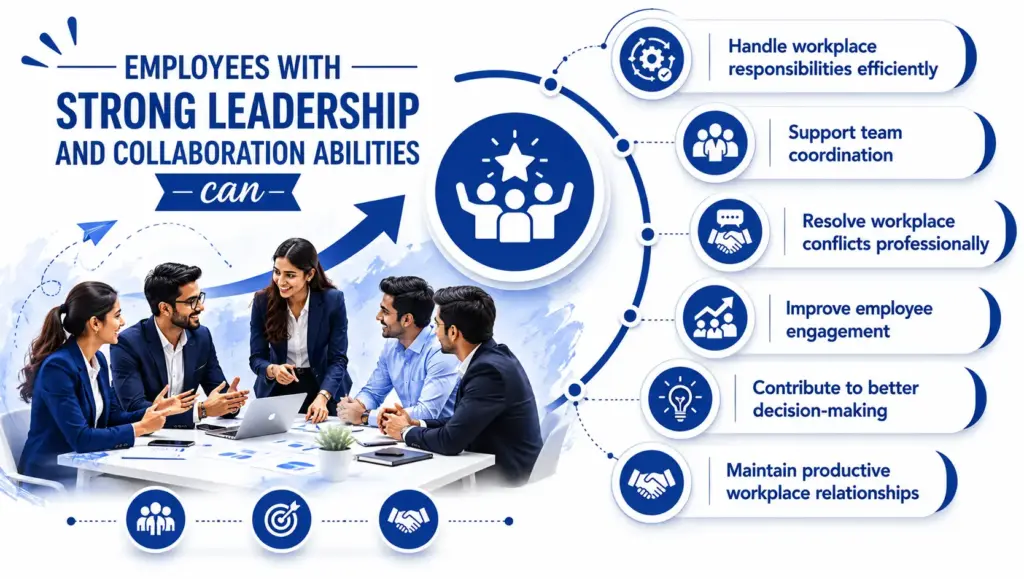
- Handle workplace responsibilities efficiently
- Support team coordination
- Resolve workplace conflicts professionally
- Improve employee engagement
- Contribute to better decision-making
- Maintain productive workplace relationships
Leadership is no longer limited to managerial roles alone. Many organizations expect employees at different levels to take initiative, communicate ideas clearly, and work collaboratively in dynamic business environments. Structured professional development training helps employees strengthen accountability, adaptability, and confidence while improving overall workplace performance.
Practical learning environments also help employees apply these skills more effectively through real-world workplace scenarios and collaborative activities. Organizations that follow a strong practical methodology for skill development often create more confident and productive teams capable of handling modern workplace challenges more efficiently.
Why Adaptability and Problem-Solving Matter in Modern Workplaces
Modern workplaces constantly evolve due to changing technologies, customer expectations, and business strategies. Employees who can adapt quickly and solve workplace challenges effectively often contribute more positively to organizational performance. This is why corporate soft skills training now focuses heavily on adaptability, critical thinking, and problem-solving abilities.
Employees with strong adaptability skills can:
- Adjust to workplace changes faster
- Handle pressure more effectively
- Learn new processes quickly
- Respond confidently to unexpected situations
- Work efficiently in dynamic environments
Problem-solving abilities are equally important because organizations expect employees to identify challenges, analyze situations, and make practical decisions without depending entirely on management support. Structured professional development training helps employees improve analytical thinking, decision-making, and workplace confidence through practical learning activities and collaborative exercises.
In fast-paced industries, employees who resist change or struggle to handle workplace pressure may face difficulty maintaining productivity and professional growth. Strong leadership and teamwork skills also support better problem-solving because collaborative teams often respond more effectively to workplace challenges.
According to insights on future workplace demands, adaptability, communication, and critical thinking continue to remain among the most valuable professional skills across modern workplaces.
Common Soft Skills Gaps That Affect Employee Productivity
Many organizations experience productivity challenges not because employees lack technical expertise, but because workplace communication and collaboration are weak. Poor interpersonal skills can affect teamwork, employee engagement, and overall business efficiency. This is why structured employee soft skills development programs are important for improving workplace performance and professional interaction.
Some of the most common soft skills gaps include:
- Poor workplace communication
- Weak collaboration between teams
- Lack of leadership confidence
- Difficulty managing workplace pressure
- Low employee engagement
- Poor time management habits
These challenges often create misunderstandings, reduce workflow efficiency, and affect workplace relationships. Employees who struggle with communication or teamwork may also find it difficult to contribute effectively during meetings, presentations, or collaborative projects. Practical workplace communication training helps professionals improve clarity, confidence, and coordination in day-to-day workplace interactions.
| Soft Skills Gap | Business Impact |
| Weak communication | Lower team efficiency |
| Poor teamwork | Workplace conflicts |
| Lack of leadership skills | Reduced employee engagement |
| Weak adaptability | Slow response to changes |
| Poor problem-solving | Operational delays |
Organizations that invest in structured professional development training often build more productive teams because employees become better prepared to manage workplace responsibilities, collaborate effectively, and contribute positively to organizational goals.
What Makes Practical Corporate Training More Effective
The effectiveness of workplace learning depends largely on how employees apply skills in real business situations. Traditional training methods often focus heavily on theory, but practical learning creates stronger engagement and better long-term results. This is why organizations increasingly prefer corporate soft skills training programs that include real-world activities, interactive sessions, and workplace-oriented learning methods.
Practical training environments usually include:
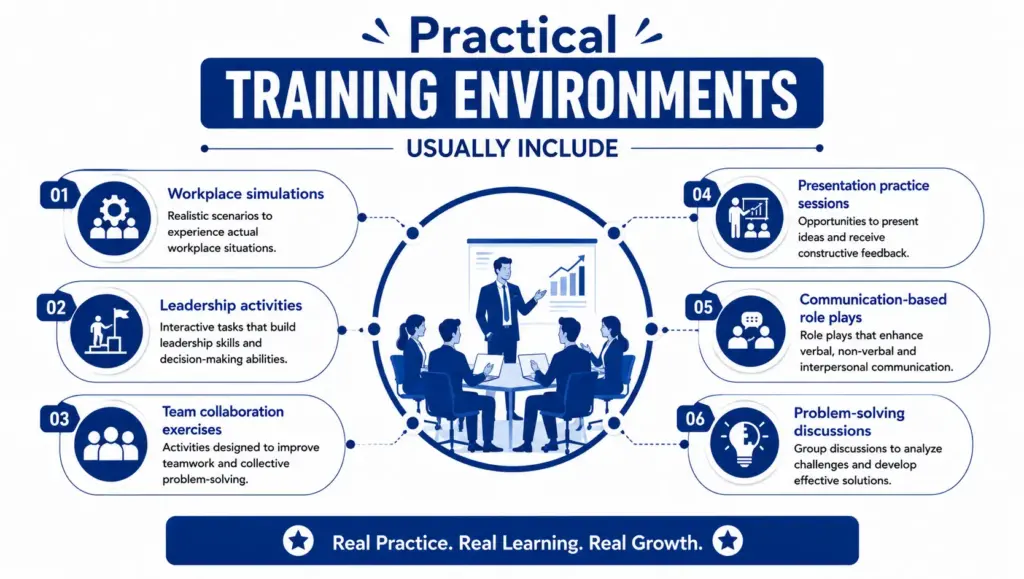
These activities help employees improve confidence while developing stronger workplace communication and interpersonal abilities. Structured workplace communication training also allows professionals to practice handling meetings, client interactions, and team discussions more effectively in realistic business scenarios.
Interactive learning methods improve employee participation because individuals can apply concepts immediately instead of learning only through theoretical explanations. Organizations that provide proper industry exposure through practical learning approaches often create more adaptable and workplace-ready teams.
Practical professional development training also helps employees strengthen leadership qualities, improve collaboration, and build workplace confidence through continuous feedback and guided learning experiences that support long-term organizational growth.
H2: How Corporate Soft Skills Training Supports Long-Term Professional Growth
Long-term professional growth depends not only on technical performance but also on how effectively employees communicate, collaborate, and manage workplace responsibilities. Organizations increasingly promote individuals who demonstrate leadership potential, adaptability, and strong interpersonal abilities. This makes corporate soft skills training an important part of continuous employee development and career progression.
Employees with strong workplace skills often experience:
- Better career advancement opportunities
- Improved leadership confidence
- Stronger workplace relationships
- Higher professional visibility
- Better client interaction abilities
- Increased workplace adaptability
Structured employee soft skills development programs help professionals strengthen communication, teamwork, and decision-making abilities that support long-term career success. Employees who can manage workplace interactions professionally often contribute more effectively to organizational goals and collaborative work environments.
Continuous learning also improves confidence in leadership discussions, presentations, and client-facing responsibilities. Practical leadership and teamwork skills help professionals become more adaptable while improving productivity and workplace engagement over time.
Organizations that invest in structured corporate skill programs often create stronger teams capable of handling workplace challenges more effectively while supporting both employee growth and long-term business performance.
Final Thoughts
Modern organizations increasingly recognize that technical expertise alone is not enough to maintain productivity and long-term business growth. Employees who can communicate clearly, collaborate effectively, adapt to workplace changes, and handle professional responsibilities confidently often contribute more positively to organizational success. This growing shift has made corporate soft skills training an essential part of employee development across industries.
Structured employee soft skills development helps professionals strengthen communication, leadership, problem-solving, and workplace collaboration abilities that directly influence performance and productivity. Practical workplace communication training and industry-oriented learning approaches also improve employee confidence, teamwork, and professional adaptability in fast-paced business environments.
As companies continue prioritizing workplace efficiency and employee engagement, investing in continuous professional development training can help organizations build stronger teams, improve workplace relationships, and support long-term professional growth for employees at every level.
Build Stronger Workplace Skills for Long-Term Business Success
Organizations that invest in communication, leadership, and collaboration skills often create more confident, productive, and adaptable teams. Practical learning approaches help employees improve workplace interactions, strengthen teamwork, and handle professional responsibilities more effectively in dynamic business environments.Businesses and professionals looking to improve employee performance through structured corporate training solutions can benefit from practical-first learning programs designed to support workplace productivity, leadership development, and long-term professional growth.
FAQs
1. What is corporate soft skills training?
Corporate soft skills training helps employees improve workplace communication, teamwork, leadership, problem-solving, adaptability, and professional behavior to perform effectively in an organization.
2. Why is soft skills training important for employees?
Soft skills training improves collaboration, productivity, workplace relationships, customer interactions, and overall employee performance, helping organizations build stronger teams.
3. Which soft skills are most important in the corporate workplace?
The most important corporate soft skills include communication, teamwork, leadership, emotional intelligence, adaptability, time management, and conflict resolution.
4. How does soft skills training improve workplace communication?
It helps employees communicate clearly, listen actively, present ideas confidently, and maintain professional interactions with colleagues, clients, and management.
5. Can corporate soft skills training increase productivity?
Yes. Employees with strong soft skills manage time better, collaborate efficiently, solve problems faster, and contribute positively to team performance.
6. Who should attend corporate soft skills training programs?
Corporate soft skills training is beneficial for freshers, team members, managers, customer support staff, sales professionals, and leadership teams.
7. What topics are covered in corporate soft skills training?
Training programs commonly cover communication skills, leadership development, workplace etiquette, presentation skills, teamwork, stress management, and decision-making.
8. How does soft skills training help managers and leaders?
It helps leaders improve team management, employee motivation, conflict handling, decision-making, and workplace communication skills.
9. How long does corporate soft skills training take?
The duration depends on the training program. It can range from one-day workshops to several weeks of structured corporate learning sessions.
10. How can companies benefit from employee soft skills training?
Companies benefit through improved employee engagement, stronger teamwork, better customer service, increased productivity, and higher workplace professionalism.