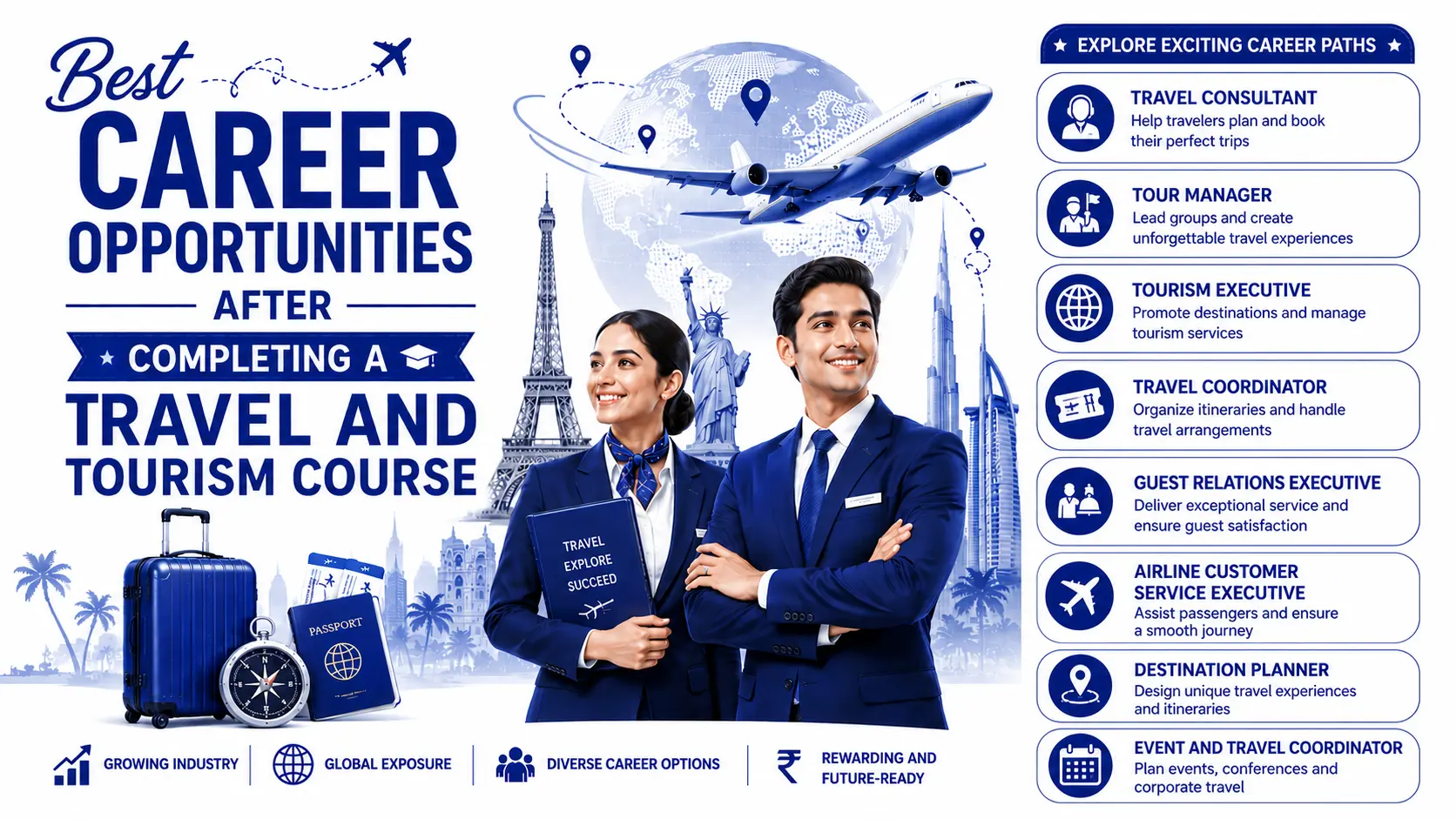
A travel and tourism course can open doors to a wide range of exciting career opportunities across travel, hospitality, aviation, and tourism-related industries. As the tourism sector continues expanding both in India and globally, organizations are actively seeking trained professionals who can deliver exceptional customer experiences and support travel operations effectively. This growing demand has increased the availability of diverse career opportunities after travel and tourism course completion for students looking to build rewarding and dynamic careers.
The industry offers multiple employment pathways, ranging from travel consultancy and tour operations to hospitality management and airline customer service. Professionals in these roles interact with travelers, coordinate travel experiences, and contribute to the smooth functioning of tourism businesses. As a result, jobs after travel and tourism course completion are becoming increasingly attractive for individuals who enjoy communication, customer interaction, and service-oriented work environments.
With the tourism sector evolving rapidly, employers are looking for candidates who possess industry knowledge, communication abilities, and strong customer service skills. Practical learning and professional exposure play a vital role in preparing learners for successful travel and tourism career options and long-term tourism management careers. By developing industry-relevant skills and workplace readiness, students can improve their employability and explore diverse travel industry jobs with strong growth potential.
Why a Travel and Tourism Course Opens Multiple Career Paths
A travel and tourism course provides learners with industry knowledge, customer service expertise, and practical skills that can be applied across various sectors. Unlike many specialized fields that focus on a single career route, tourism education prepares students for diverse professional opportunities in travel services, hospitality, aviation, destination management, and tourism operations. This is why career opportunities after travel and tourism course completion continue to expand as the industry grows.
A tourism qualification can help learners explore careers in:
- Travel agencies and consultancy services
- Tour operations and destination management
- Hotels and hospitality businesses
- Airlines and airport services
- Event and travel coordination
- Tourism marketing and customer support
The versatility of the industry allows professionals to choose roles that match their interests and strengths. Whether someone enjoys customer interaction, travel planning, sales, operations, or hospitality services, the tourism sector offers multiple pathways for career growth.
The growing demand for skilled professionals has also increased the value of industry-focused education. Learners who develop communication, customer service, and operational skills often gain a competitive advantage when applying for travel and tourism career options across different sectors.
According to insights on tourism career pathways, tourism graduates can pursue a wide range of professional opportunities across travel, hospitality, customer service, and tourism management fields, making the industry one of the most versatile career sectors available today.
Top Jobs After Completing a Travel and Tourism Course
Completing a tourism program can lead to a variety of rewarding roles across the travel and hospitality industry. As travel demand continues to increase, organizations are actively recruiting skilled professionals who can manage customer experiences, travel operations, and tourism services effectively. This growing demand has created numerous jobs after travel and tourism course completion for students seeking long-term career growth.
Some of the most popular career options include:
- Travel Consultant
- Tour Coordinator
- Tourism Executive
- Travel Advisor
- Guest Relations Executive
- Travel Operations Executive
- Reservation Executive
- Customer Service Executive
These roles offer opportunities to work with travelers, tourism businesses, hospitality organizations, and travel service providers. Professionals often gain valuable industry exposure while developing customer service, communication, and operational management skills.
Entry-Level Roles Popular Among Tourism Graduates
Many fresh graduates begin their careers in entry-level positions that provide practical industry experience and career progression opportunities. Common starting roles include:
- Travel booking assistant
- Tour operations coordinator
- Travel sales executive
- Front office executive
- Customer support representative
| Job Role | Primary Responsibility |
| Travel Consultant | Travel planning and bookings |
| Tour Coordinator | Managing tours and itineraries |
| Tourism Executive | Tourism operations support |
| Guest Relations Executive | Customer experience management |
| Travel Advisor | Travel guidance and recommendations |
According to insights on tourism job opportunities, tourism graduates can access a wide range of career opportunities across travel services, hospitality operations, customer relations, and tourism management, making the industry a strong career choice for aspiring professionals.
Career Opportunities in Travel Agencies and Tour Operations
Travel agencies and tour operation companies remain among the largest employers in the tourism sector. These organizations play a vital role in helping travelers plan trips, manage bookings, coordinate itineraries, and deliver seamless travel experiences. As a result, they continue to create excellent travel and tourism career options for graduates entering the industry.
Professionals working in this sector may be involved in:
- Travel planning and itinerary creation
- Tour package development
- Customer support and travel assistance
- Reservation and booking management
- Travel sales and marketing
- Vendor and destination coordination
Travel agencies require professionals who can understand customer requirements and recommend suitable travel solutions. Tour operation companies, on the other hand, focus on organizing and managing travel experiences, ensuring smooth coordination between travelers, hotels, transportation providers, and local service partners.
These roles help professionals develop communication, customer service, sales, and operational management skills while gaining valuable industry exposure. The experience gained in travel agencies and tour operations can also lead to career progression into supervisory and managerial positions.
Industry-focused learning supported by industry-focused learning helps learners understand travel operations, customer interaction, and tourism business processes, preparing them for successful tourism management careers and long-term growth within the travel industry.
How Hospitality and Aviation Sectors Hire Tourism Graduates
The hospitality and aviation industries offer excellent employment opportunities for tourism graduates because both sectors rely heavily on customer service, communication, and operational coordination. As travel demand continues to increase, hotels, resorts, airlines, and airport service providers are actively recruiting professionals who can deliver high-quality customer experiences. This has expanded the scope of career opportunities after travel and tourism course completion across multiple service-oriented sectors.
Popular roles in hospitality and aviation include:
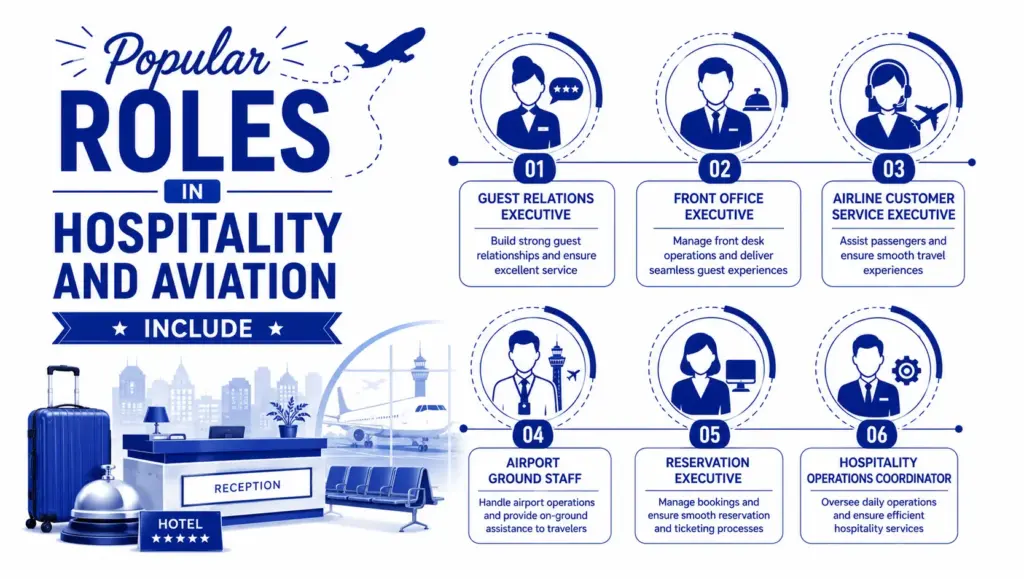
- Guest Relations Executive
- Front Office Executive
- Airline Customer Service Executive
- Airport Ground Staff
- Reservation Executive
- Hospitality Operations Coordinator
These positions require professionals to interact with customers, manage service requests, handle reservations, and ensure smooth travel experiences. Strong communication and problem-solving abilities are particularly important because employees often deal with diverse customer needs and operational situations.
The hospitality sector also provides opportunities to work in hotels, resorts, event venues, and tourism establishments, while aviation careers allow professionals to contribute to airline and airport operations. Both industries offer structured career progression pathways and opportunities for long-term professional growth.
According to insights on tourism employment trends, hospitality and aviation continue to be among the most active recruiters of tourism graduates, creating strong employment prospects for individuals entering the travel and tourism industry.
Essential Skills That Improve Employability in Tourism Careers
Employers in the tourism industry look beyond academic qualifications when hiring candidates. They seek professionals who can communicate effectively, manage customer interactions confidently, and adapt to fast-paced service environments. Developing the right skills can significantly improve career opportunities after travel and tourism course completion and help professionals succeed in a competitive industry.
Some of the most important skills employers value include:
- Communication and interpersonal skills
- Customer service excellence
- Problem-solving abilities
- Team collaboration
- Time management
- Adaptability and flexibility
These skills help professionals handle traveler inquiries, resolve service issues, coordinate operations, and deliver positive customer experiences. Since tourism is a customer-centric industry, strong communication and relationship-building abilities often play a crucial role in career advancement.
Professionals who demonstrate adaptability are also highly valued because travel plans, customer requirements, and operational situations can change unexpectedly. The ability to respond effectively under pressure helps employees perform better in both customer-facing and operational roles.
| Essential Skill | Career Benefit |
| Communication | Better customer interaction |
| Customer Service | Improved guest satisfaction |
| Problem Solving | Efficient travel issue resolution |
| Teamwork | Better operational support |
| Adaptability | Improved career flexibility |
By developing these competencies, learners can improve their employability, strengthen their professional confidence, and access a wider range of travel industry jobs and tourism management careers across the growing tourism sector.
How Practical Exposure Helps Tourism Students Build Careers
Practical exposure plays a crucial role in helping students understand how the tourism industry operates beyond classroom learning. While theoretical knowledge provides a strong foundation, real-world experiences help learners develop confidence, workplace readiness, and industry-specific skills. This is why practical learning opportunities are highly valuable for students pursuing career opportunities after travel and tourism course completion.
Practical exposure can include:
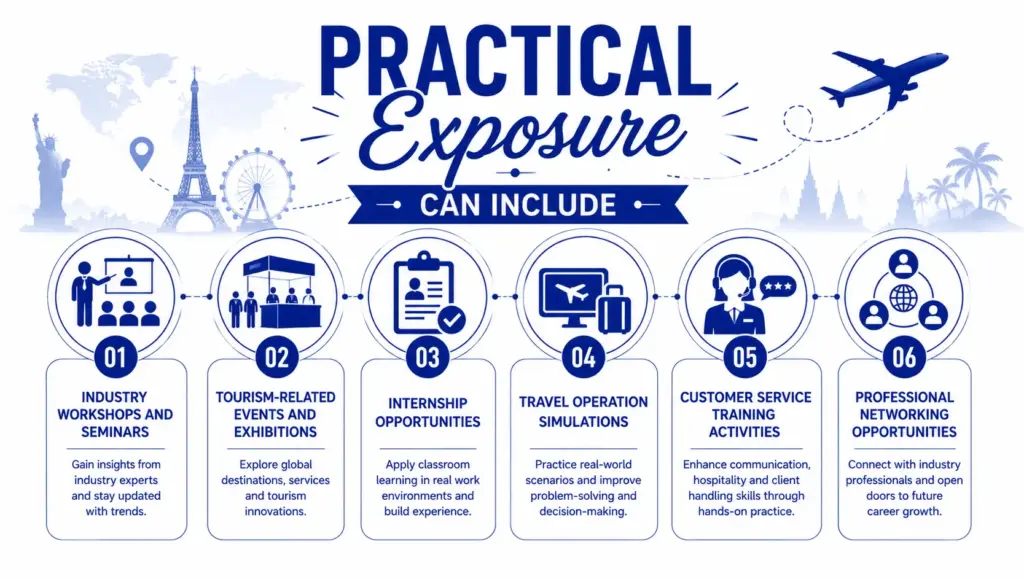
- Industry workshops and seminars
- Tourism-related events and exhibitions
- Internship opportunities
- Travel operation simulations
- Customer service training activities
- Professional networking opportunities
These experiences help students gain a better understanding of tourism operations, customer expectations, and workplace responsibilities. Exposure to real industry environments also allows learners to improve communication, teamwork, and problem-solving abilities while building professional confidence.
Participating in industry activities can further help students connect with professionals, understand current market trends, and explore different career paths within tourism and hospitality. Such experiences often make candidates more attractive to employers because they demonstrate practical understanding alongside academic knowledge.
Engaging in structured industry engagement activities helps learners gain valuable industry exposure, strengthen workplace skills, and prepare for a wide range of travel and tourism career options in the growing tourism sector.
Why Tourism Remains a Promising Career Choice for the Future
The tourism industry continues to offer strong long-term career potential due to rising travel demand, expanding tourism services, and increasing investments in hospitality and transportation infrastructure. As more people travel for leisure, business, education, and cultural experiences, organizations are creating new roles to support industry growth. This positive outlook makes career opportunities after travel and tourism course completion highly attractive for students seeking stable and dynamic professions.
Several factors support the future growth of tourism careers:
- Expansion of domestic and international tourism
- Growth in hospitality and aviation sectors
- Increasing demand for personalized travel experiences
- Adoption of digital travel technologies
- Development of emerging tourism segments
- Rising employment opportunities across tourism businesses
The industry also offers diverse career progression pathways. Professionals can begin in entry-level positions and gradually move into supervisory, managerial, and specialized roles based on their experience and skills. This flexibility makes travel and tourism career options suitable for individuals looking for long-term professional development.
Global tourism trends are further creating opportunities for skilled professionals who possess strong communication, customer service, and operational abilities. As businesses continue expanding, qualified candidates can expect increased demand across a wide range of travel industry jobs and tourism management careers.
The continued growth of tourism, hospitality, and travel services highlights why the sector remains one of the most promising career fields for individuals seeking professional growth, industry exposure, and diverse employment opportunities.
Final Thoughts
A travel and tourism course can open the door to a wide range of rewarding career paths across travel agencies, tour operations, hospitality services, aviation, and destination management. As the tourism sector continues expanding, employers are actively seeking professionals who possess industry knowledge, customer service expertise, and strong communication abilities. This growing demand has significantly increased career opportunities after travel and tourism course completion for students and aspiring tourism professionals.
The industry offers diverse jobs after travel and tourism course completion, ranging from Travel Consultant and Tour Coordinator to Guest Relations Executive and Tourism Executive roles. With opportunities available across multiple sectors, learners can choose career paths that align with their interests, strengths, and long-term professional goals. Developing practical skills and gaining industry exposure can further improve employability and career progression.
As tourism continues to evolve and create new employment opportunities, individuals with the right knowledge, adaptability, and customer-focused approach will remain in high demand. Building industry-ready skills and exploring emerging travel and tourism career options can help professionals establish successful tourism management careers and achieve long-term growth in one of the world’s most dynamic industries.
Take the First Step Toward a Successful Tourism Career
The tourism industry offers exciting opportunities for individuals who enjoy travel, customer interaction, hospitality, and service excellence. With the right training, practical exposure, and industry knowledge, you can prepare yourself for a rewarding career in one of the fastest-growing sectors.
If you’re ready to build a strong foundation for your future in tourism, explore tourism operations careers and discover how industry-focused learning can help you achieve your professional goals.
FAQs
1. What are the best career opportunities after completing a travel and tourism course?
Some of the best career opportunities include Travel Consultant, Tour Coordinator, Tourism Executive, Travel Advisor, Guest Relations Executive, Destination Planner, and Airline Customer Service Executive.
2. What jobs can I get after a travel and tourism course?
Graduates can pursue roles in travel agencies, tour operations, hospitality businesses, airlines, airports, destination management companies, and tourism marketing organizations.
3. Is travel and tourism a good career choice?
Yes, travel and tourism is a promising career choice because it offers diverse job opportunities, career progression, industry growth, and opportunities to work with people from different backgrounds.
4. Can fresh graduates get jobs in the tourism industry?
Yes, many organizations hire fresh graduates for entry-level positions such as Travel Consultant, Travel Coordinator, Reservation Executive, Customer Service Executive, and Tourism Executive.
5. What skills are required for tourism careers?
Professionals typically need communication skills, customer service abilities, teamwork, adaptability, problem-solving skills, and professional workplace behavior.
6. What is the role of a Travel Consultant?
A Travel Consultant helps customers plan trips, make reservations, provide destination information, recommend travel packages, and manage travel-related requirements.
7. What are tourism management careers?
Tourism management careers involve planning, coordinating, and managing tourism operations, travel services, hospitality activities, and customer experiences within the tourism sector.
8. Can tourism graduates work in the aviation industry?
Yes, tourism graduates can pursue careers in airline customer service, airport operations, passenger assistance, reservations, and aviation support services.
9. What opportunities are available in hospitality for tourism students?
Hospitality opportunities include Guest Relations Executive, Front Office Executive, Customer Service Executive, Reservations Coordinator, and Hospitality Operations roles.
10. How does practical exposure help tourism students?
Practical exposure helps students develop workplace readiness, improve communication skills, understand industry operations, and gain real-world experience through workshops, internships, and industry events.
11. What industries hire travel and tourism graduates?
Travel and tourism graduates are hired by travel agencies, tour operators, hotels, resorts, airlines, airports, event management companies, tourism boards, and destination management organizations.
12. What is the future scope of tourism careers?
The future scope remains strong due to increasing travel demand, tourism infrastructure development, digital transformation, and growing employment opportunities across the tourism ecosystem.
13. Are travel and tourism career options suitable for people who enjoy customer interaction?
Yes, many tourism careers involve direct interaction with travelers and customers, making the industry ideal for individuals who enjoy communication and customer service.
14. How can I improve my employability in tourism careers?
You can improve employability by developing communication skills, gaining practical experience, strengthening customer service abilities, and staying updated with tourism industry trends.
15. Why are travel industry jobs becoming more popular?
Travel industry jobs are becoming more popular because the tourism sector is expanding rapidly, creating diverse employment opportunities and offering long-term career growth across multiple industries.