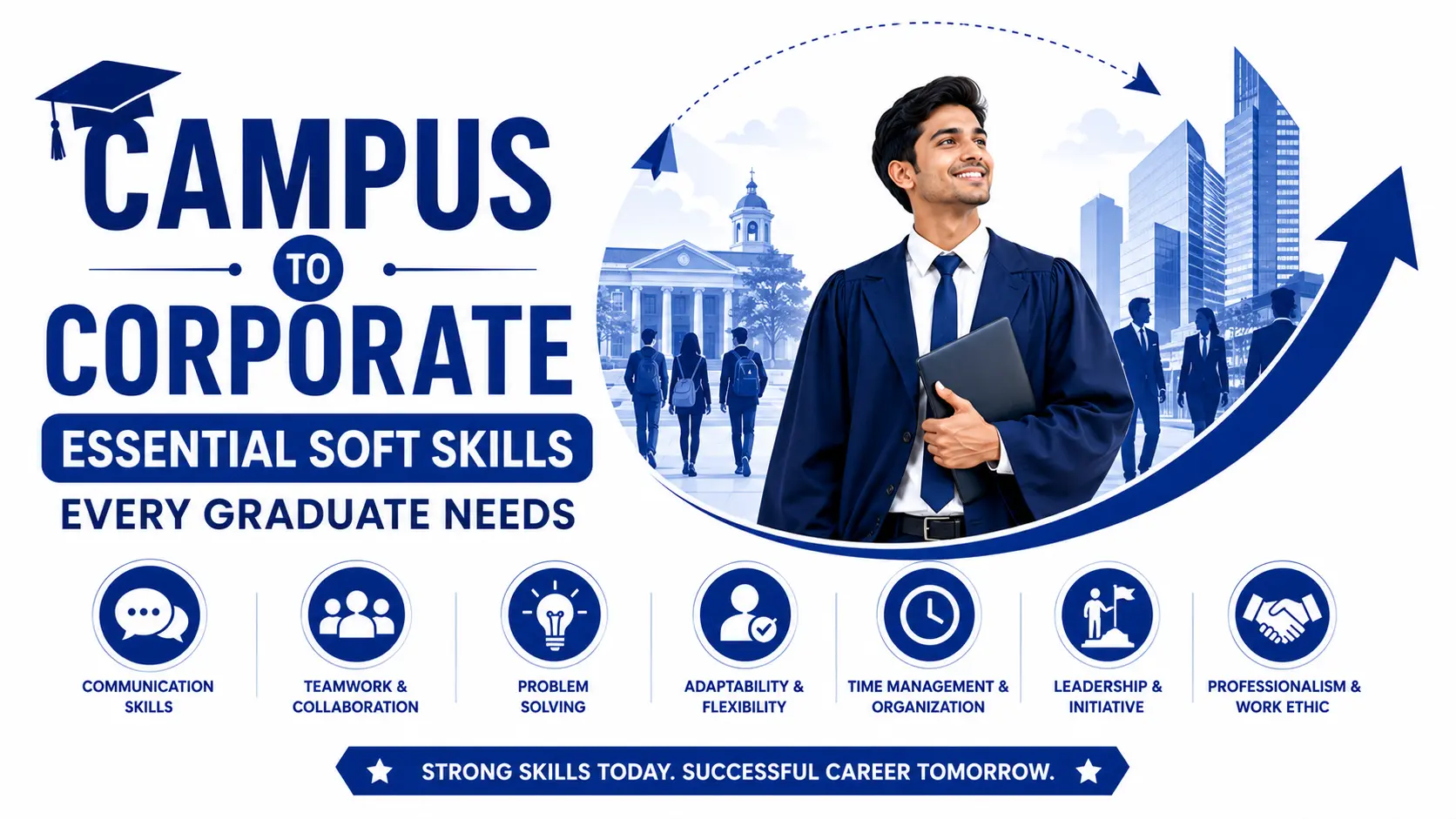
The transition from college life to corporate workplaces can be challenging for many graduates. While academic knowledge helps students build technical expertise, professional environments demand much more than subject-related skills alone. Companies now expect employees to communicate confidently, collaborate effectively with teams, and adapt quickly to workplace expectations. This growing shift has increased the importance of developing strong campus to corporate soft skills before entering professional careers.
Many graduates struggle during interviews and early workplace interactions because they lack confidence in communication, teamwork, and professional behavior. Difficulty handling workplace conversations, presentations, and collaborative tasks often affects employability and career growth opportunities. Practical communication skills for graduates and structured workplace readiness training help learners improve workplace confidence, professional interaction, and adaptability through real-world learning methods and guided practice sessions.
As modern workplaces continue evolving, organizations increasingly value professionals who demonstrate communication clarity, professionalism, teamwork, and leadership potential alongside technical qualifications. Structured learning focused on soft skills for graduates and practical professional skills development helps individuals become more career-ready and adaptable to corporate environments. Strong soft skills therefore play a major role in improving workplace performance, professional confidence, and long-term career success.
Why the Transition from Campus to Corporate Is Challenging for Graduates
The transition from academic environments to professional workplaces can be difficult for many graduates because workplace expectations differ significantly from college life. In colleges, students mainly focus on academic performance and technical learning, whereas corporate environments require communication, teamwork, professionalism, and accountability. This is why developing strong campus to corporate soft skills has become essential for improving workplace readiness and professional confidence.
Many graduates initially struggle with:
- Workplace communication
- Professional etiquette
- Team collaboration
- Time management
- Handling workplace pressure
- Adapting to corporate culture
Organizations expect employees to contribute effectively in collaborative environments and handle responsibilities professionally from the beginning of their careers. Without proper workplace exposure, many freshers find it difficult to adapt quickly to corporate expectations and professional interaction standards.
Practical workplace readiness training helps graduates improve communication confidence, interpersonal interaction, and workplace adaptability through real-world learning experiences. Structured professional skills development also prepares individuals to manage workplace conversations, presentations, and collaborative tasks more effectively.
According to insights on corporate transition skills, strong communication, adaptability, and professional behavior continue to remain important factors influencing successful transitions from campus environments into corporate workplaces.
Communication Skills Every Graduate Needs for Workplace Success
Strong communication abilities help graduates adapt more confidently to professional environments and workplace expectations. Organizations expect employees to communicate clearly during meetings, presentations, client interactions, and collaborative projects. This is why practical communication skills for graduates play a major role in improving workplace confidence and professional growth during the early stages of a career.
Graduates should focus on developing skills such as:
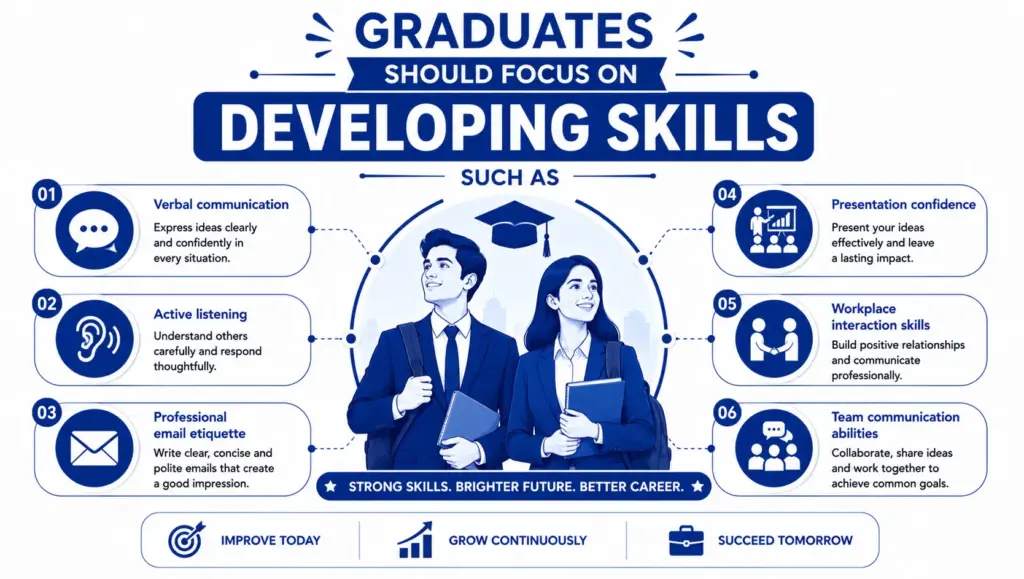
- Verbal communication
- Active listening
- Professional email etiquette
- Presentation confidence
- Workplace interaction skills
- Team communication abilities
These skills help employees participate more effectively in workplace discussions and maintain better professional relationships with colleagues and managers. Strong communication also improves confidence while handling interviews, presentations, and collaborative work responsibilities.
Communication Mistakes Graduates Should Avoid
Many fresh graduates unintentionally make communication mistakes that affect professional image and workplace performance. Some common mistakes include:
- Informal workplace communication
- Weak presentation confidence
- Poor listening habits
- Unclear responses during discussions
- Delayed communication with teams
| Communication Challenge | Workplace Impact |
| Unclear communication | Reduced workplace confidence |
| Poor listening | Team misunderstandings |
| Weak presentation skills | Lower professional visibility |
| Informal communication | Professional image concerns |
| Delayed responses | Workflow inefficiency |
According to insights on professional communication, communication and interpersonal abilities remain among the most important skills graduates need to succeed in modern professional environments.
Why Workplace Professionalism Matters for Fresh Graduates
Workplace professionalism plays a major role in helping graduates build credibility and adapt successfully to corporate environments. Organizations expect employees to maintain professional behavior, communicate respectfully, manage responsibilities efficiently, and contribute positively within teams. This is why developing strong campus to corporate soft skills is essential for graduates entering professional workplaces for the first time.
Professionalism in workplaces includes:
- Maintaining respectful communication
- Following workplace etiquette
- Managing time effectively
- Taking accountability for responsibilities
- Maintaining a positive work attitude
- Responding professionally to feedback
Graduates who demonstrate professionalism often build stronger workplace relationships and adapt more confidently to organizational expectations. Employers also value individuals who can manage responsibilities independently while maintaining professional communication and collaboration within teams.
Practical professional skills development helps graduates understand workplace culture, communication standards, and professional behavior through real-world learning experiences. Structured workplace readiness training also improves confidence while preparing individuals to handle meetings, presentations, and workplace responsibilities more effectively.
A strong learning environment supported by practical mentoring approaches can help graduates strengthen workplace professionalism, communication confidence, and long-term career adaptability in modern corporate environments.
How Teamwork and Collaboration Improve Workplace Adaptability
Modern corporate environments depend heavily on teamwork because employees often work across departments and collaborative projects. Companies expect graduates to contribute effectively within teams, communicate professionally, and support workplace coordination without creating communication gaps. This is why strong teamwork abilities are considered essential soft skills for graduates entering professional workplaces.
Employees with strong collaboration skills can:
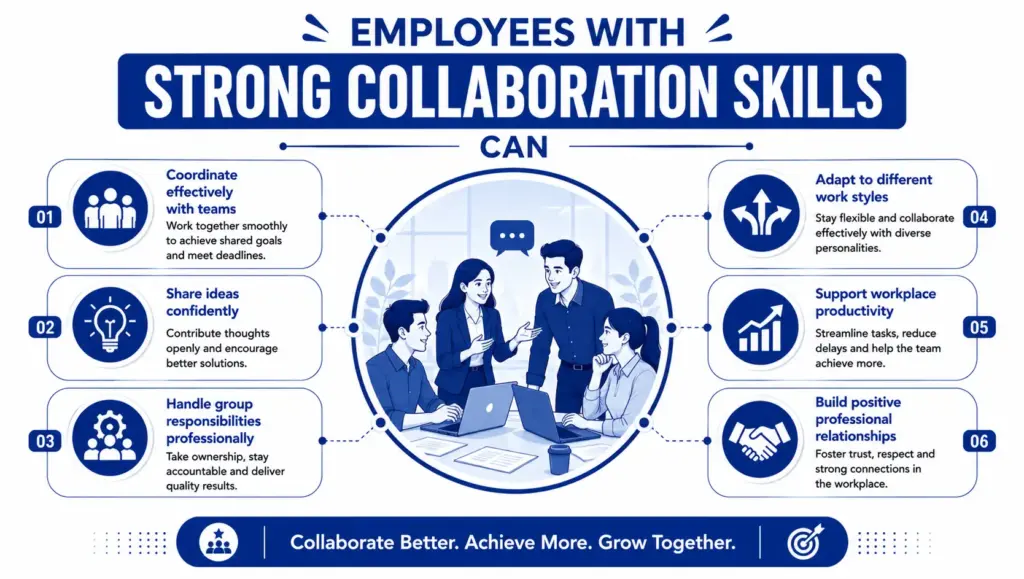
- Coordinate effectively with teams
- Share ideas confidently
- Handle group responsibilities professionally
- Adapt to different work styles
- Support workplace productivity
- Build positive professional relationships
Graduates who struggle with teamwork may find it difficult to adjust to collaborative corporate cultures where communication and coordination directly influence performance. Practical workplace readiness training helps learners improve teamwork confidence, interpersonal interaction, and collaborative problem-solving through real-world learning experiences.
Team collaboration also improves workplace adaptability because employees become more comfortable handling shared responsibilities and dynamic work environments. Structured professional skills development strengthens communication and relationship-building abilities that support smoother workplace transitions and better employee engagement.
According to insights on career transition learning, practical teamwork and collaboration skills continue to remain essential for helping graduates adapt successfully to corporate workplaces and long-term professional environments.
Common Soft Skills Gaps That Affect Graduate Employability
Many graduates face employability challenges not because they lack technical expertise, but because they struggle with workplace communication and professional interaction. Companies increasingly expect fresh employees to demonstrate confidence, adaptability, and teamwork during interviews and onboarding processes. Without strong campus to corporate soft skills, graduates may find it difficult to adjust to professional environments and workplace expectations.
Some common soft skills gaps include:
- Low communication confidence
- Difficulty handling interviews
- Weak teamwork abilities
- Poor workplace professionalism
- Lack of adaptability
- Weak presentation skills
These challenges often affect workplace participation and professional growth opportunities. Graduates who struggle with communication or collaboration may also find it difficult to contribute effectively during meetings, presentations, or team projects. Practical communication skills for graduates help learners improve confidence and workplace interaction through guided learning activities and real-world workplace scenarios.
| Soft Skills Gap | Career Impact |
| Weak communication | Poor interview performance |
| Low confidence | Limited workplace participation |
| Poor teamwork | Collaboration challenges |
| Weak adaptability | Difficulty handling workplace changes |
| Lack of professionalism | Reduced employability |
Structured professional skills development and practical workplace readiness training help graduates strengthen workplace communication, professionalism, and collaboration skills that support long-term employability and career growth.
What Makes Practical Workplace Readiness Training More Effective
Practical learning methods help graduates apply workplace skills more confidently in real corporate environments. Many freshers understand theoretical concepts but struggle when handling workplace communication, presentations, and collaborative responsibilities professionally. This is why practical workplace readiness training plays an important role in improving confidence and helping graduates transition smoothly into professional careers.
Effective training programs usually include:
- Mock interviews
- Workplace simulations
- Group discussions
- Presentation activities
- Team collaboration exercises
- Professional communication practice
These activities help learners strengthen communication, teamwork, and adaptability through real-world interaction and guided feedback. Practical communication skills for graduates also improve confidence while handling meetings, workplace conversations, and collaborative projects more effectively.
Industry-oriented learning environments provide graduates with better exposure to workplace expectations and professional interaction standards. Structured industry exposure programs help learners understand corporate communication, teamwork dynamics, and workplace professionalism more clearly through practical learning experiences.
Practical-first training approaches also improve long-term employability because graduates become more adaptable, collaborative, and professionally confident before entering corporate workplaces.
Why Continuous Soft Skills Development Supports Long-Term Career Growth
Career success depends on continuous learning and the ability to adapt to changing workplace expectations. Graduates who consistently improve communication, teamwork, and leadership abilities often perform better in collaborative environments and growth-oriented roles. This is why ongoing development of campus to corporate soft skills remains important even after entering professional careers.
Professionals who focus on continuous skill development can:
- Improve workplace confidence
- Strengthen communication abilities
- Build better professional relationships
- Adapt to evolving corporate environments
- Increase leadership potential
- Improve long-term employability
Organizations increasingly value employees who demonstrate a growth mindset and willingness to improve continuously. Practical soft skills for graduates help individuals become more adaptable while strengthening communication, professionalism, and workplace collaboration abilities over time.
Continuous learning also supports career advancement because professionals with strong communication and interpersonal skills are often considered for leadership responsibilities and collaborative roles. Participating in structured career readiness training programs can help graduates strengthen workplace confidence, professional interaction, and long-term adaptability through practical-first learning approaches.
As industries continue evolving, strong professional skills development and consistent workplace readiness training help graduates remain career-ready, adaptable, and professionally confident throughout their professional journey.
Final Thoughts
The transition from campus life to corporate environments requires much more than technical knowledge alone. Companies today expect graduates to communicate confidently, collaborate effectively with teams, and adapt quickly to workplace expectations. Strong campus to corporate soft skills therefore play a major role in helping graduates build workplace confidence, improve professional interaction, and succeed in long-term careers.
Practical communication skills for graduates and structured workplace readiness training help individuals strengthen teamwork, professionalism, adaptability, and presentation abilities through real-world learning experiences. Strong soft skills for graduates also improve interview performance and help freshers contribute more confidently within collaborative corporate environments.
As industries continue evolving, organizations increasingly value employees who can combine technical expertise with communication, teamwork, and professional behavior. Investing in continuous professional skills development therefore remains essential for improving employability, workplace adaptability, and long-term career growth.
Develop Workplace-Ready Skills for a Strong Corporate Career
Building strong communication, teamwork, and professional interaction abilities can help graduates adapt more confidently to modern corporate environments. Practical learning experiences and structured mentoring improve workplace readiness while supporting long-term professional growth and career adaptability.Graduates looking to strengthen workplace confidence and professional communication through structured career readiness training can benefit from practical-first learning approaches designed to support employability and long-term corporate success.