

In today’s competitive business environment, attracting customers is only part of the challenge. Long-term success depends on an organization’s ability to convert prospects into customers and retain them through positive experiences and strong relationships. Businesses that focus on both customer acquisition and customer loyalty are often better positioned to achieve sustainable growth and maintain a competitive advantage. This is why mastering effective sales techniques has become essential for sales professionals, entrepreneurs, and business development teams.
Modern customers are more informed, selective, and value-conscious than ever before. They expect personalized interactions, meaningful communication, and solutions that address their specific needs. As a result, traditional sales approaches are gradually being replaced by customer-focused strategies that emphasize trust, relationship building, and value creation. Effective customer conversion strategies help professionals engage prospects more successfully, while strong customer retention techniques ensure that customers remain satisfied and loyal over time.
Successful sales professionals understand that conversion and retention are closely connected. Winning a customer’s trust during the sales process often lays the foundation for long-term relationships, repeat business, and referrals. Skills such as active listening, consultative selling, objection handling, follow-up communication, and relationship management play a critical role in improving sales outcomes and customer satisfaction.
Whether you are a sales executive, entrepreneur, business development professional, or aspiring sales specialist, learning proven sales closing techniques and customer relationship strategies can help improve performance, increase revenue opportunities, and support long-term business growth. By developing strong sales skills for professionals, individuals can build meaningful customer relationships while contributing to sustainable business success.
Understanding Customer Conversion and Retention in Modern Sales
Customer conversion and customer retention are two of the most important performance indicators in modern sales. While conversion focuses on turning prospects into paying customers, retention focuses on maintaining long-term relationships that encourage repeat business and customer loyalty. Businesses that successfully balance both areas are often more profitable and better positioned for sustainable growth. This is why effective sales techniques must address both customer acquisition and customer retention.
Customer conversion refers to the process of guiding potential customers through the sales journey and encouraging them to make a purchase decision. This process typically involves:
- Identifying customer needs
- Building trust and credibility
- Presenting relevant solutions
- Addressing concerns and objections
- Supporting purchasing decisions
On the other hand, customer retention techniques focus on keeping existing customers satisfied and engaged after the sale. Retention strategies help businesses strengthen customer loyalty, increase repeat purchases, and improve long-term customer value.
Some key retention practices include:
- Consistent customer communication
- Personalized customer experiences
- Prompt customer support
- Relationship management
- Ongoing value creation
Customer conversion and retention are closely connected because the quality of the initial sales experience often influences future customer behavior. Customers who feel understood and supported during the buying process are more likely to remain loyal to the business.
A customer-centric sales approach recognizes that sales success is not solely about closing deals. Instead, it focuses on creating meaningful relationships that continue beyond the initial transaction. This approach helps businesses build trust, strengthen customer engagement, and improve overall customer satisfaction.
According to insights on sales conversion improvement strategies, organizations that prioritize customer understanding, personalized engagement, and relationship-focused selling often achieve stronger conversion rates and better long-term business outcomes.
Essential Sales Techniques Every Professional Should Master
Successful sales professionals understand that modern selling is not about pressuring customers into making purchases. Instead, it focuses on understanding customer needs, providing relevant solutions, and building long-term relationships. Developing effective sales techniques helps professionals improve customer engagement, increase conversion rates, and strengthen customer loyalty.
Some of the most important sales techniques include:
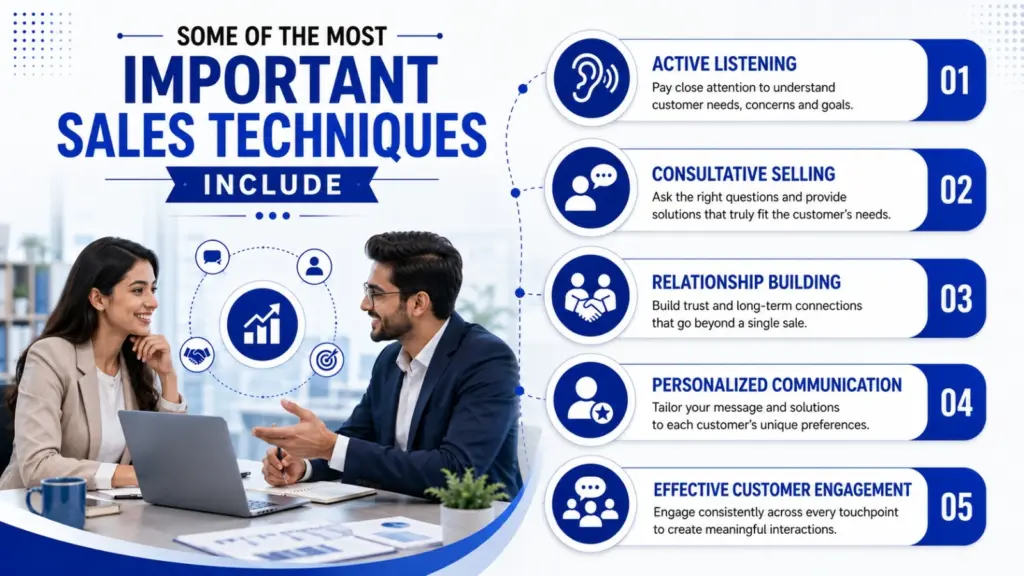
- Active listening
- Consultative selling
- Relationship building
- Personalized communication
- Effective customer engagement
These techniques help create positive customer experiences while improving the likelihood of successful conversions. Customers are more likely to purchase from professionals who understand their challenges and provide solutions that address their specific needs.
Why Consultative Selling Improves Customer Trust
Consultative selling is one of the most effective customer conversion strategies because it focuses on helping rather than simply selling. Instead of immediately presenting a product or service, sales professionals first seek to understand customer goals, concerns, and expectations.
Key elements of consultative selling include:
- Asking meaningful questions
- Understanding customer challenges
- Identifying customer objectives
- Recommending suitable solutions
- Providing ongoing support and guidance
This approach builds trust because customers feel valued and understood. Rather than viewing the salesperson as someone trying to make a sale, customers begin to see them as a trusted advisor who is focused on delivering value.
Active listening also plays a critical role in consultative selling. Professionals who listen carefully can gather important information, tailor their recommendations, and create more relevant customer experiences. Personalized interactions often result in stronger engagement and improved conversion outcomes.
| Sales Technique | Customer Benefit |
| Active Listening | Better understanding of needs |
| Consultative Selling | Personalized solutions |
| Relationship Building | Increased trust |
| Effective Communication | Clear customer interactions |
| Personalization | Improved customer experience |
Developing these techniques through structured learning and professional sales development can help professionals improve customer interactions, strengthen relationships, and achieve better sales results in increasingly competitive markets.
How Strong Customer Relationships Increase Conversion Rates
Strong customer relationships are one of the most effective drivers of sales success. Customers are more likely to engage with businesses they trust, and trust is built through consistent communication, genuine interest in customer needs, and positive interactions over time. This is why relationship building remains one of the most valuable sales techniques for improving customer conversion and long-term business performance.
Customer relationships influence conversion rates by:
- Building trust and credibility
- Reducing customer hesitation
- Improving customer engagement
- Increasing confidence in purchasing decisions
- Encouraging repeat interactions
When customers feel understood and valued, they are more willing to share their challenges, goals, and expectations. This allows sales professionals to offer solutions that align more closely with customer needs, making the sales process more relevant and effective.
Consistent communication also plays a major role in strengthening relationships. Regular follow-ups, personalized interactions, and proactive support demonstrate commitment to customer success. These actions help maintain engagement throughout the sales journey and improve the likelihood of conversion.
Value-based selling is another important component of relationship-driven sales. Instead of focusing solely on product features, professionals highlight how their solution addresses specific customer problems and delivers meaningful benefits. This customer-centric approach often leads to stronger purchasing decisions.
| Relationship-Building Activity | Business Impact |
| Personalized Communication | Higher engagement |
| Customer Follow-Ups | Improved conversions |
| Trust Building | Better customer loyalty |
| Value-Based Selling | Increased purchase decisions |
| Customer Support | Stronger relationships |
Strong customer relationships not only improve customer conversion strategies but also lay the foundation for effective customer retention techniques. Businesses that prioritize trust, communication, and customer success are often better equipped to create loyal customers who contribute to long-term growth and profitability.
Effective Sales Closing Techniques for Better Results
Closing a sale is one of the most critical stages of the sales process. Even when a customer shows interest in a product or service, the final decision often depends on how effectively the sales professional addresses concerns, reinforces value, and guides the customer toward a confident purchase decision. Mastering effective sales closing techniques can significantly improve conversion rates while maintaining positive customer relationships.
Some proven sales closing techniques include:
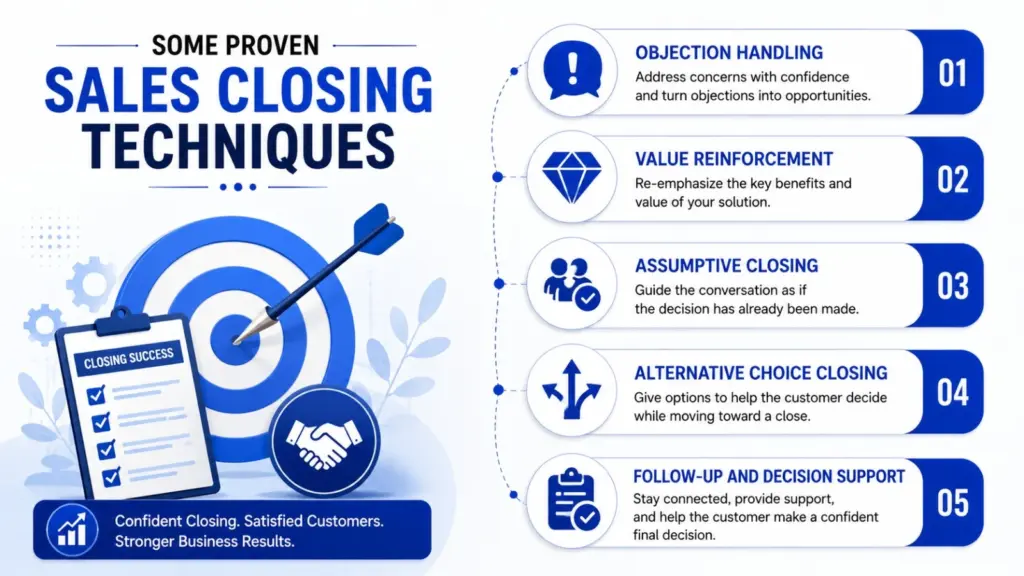
- Objection handling
- Value reinforcement
- Assumptive closing
- Alternative choice closing
- Follow-up and decision support
One of the most important aspects of closing a sale is handling objections professionally. Customers may have concerns related to pricing, product features, implementation, or overall value. Instead of viewing objections as barriers, successful sales professionals see them as opportunities to better understand customer needs and provide additional clarification.
Value reinforcement is another effective technique. Customers are more likely to make a purchase when they clearly understand how a solution will help them achieve their goals or solve a specific problem. Re-emphasizing benefits and outcomes helps strengthen confidence in the decision-making process.
Confidence and professionalism also play a significant role in successful sales conversations. Customers often look to sales professionals for guidance and reassurance. Clear communication, product knowledge, and a customer-focused attitude can help create a more positive buying experience.
Follow-up communication is equally important because not every customer makes an immediate decision. Thoughtful follow-ups provide additional information, answer remaining questions, and keep the conversation active without creating pressure.
The most successful sales techniques focus on helping customers make informed decisions rather than pushing them toward a purchase. By combining objection handling, value-based communication, and supportive follow-up strategies, sales professionals can improve conversion rates while building trust and long-term customer relationships.
Customer Retention Techniques That Support Long-Term Growth
While customer conversion is important for acquiring new business, long-term success depends heavily on retaining existing customers. Businesses that focus on effective customer retention techniques can improve customer loyalty, increase repeat purchases, and strengthen overall profitability. Retention is often more cost-effective than acquiring new customers because loyal customers already trust the brand and are more likely to continue engaging with its products or services.
Some of the most effective customer retention strategies include:
- Delivering consistent customer experiences
- Maintaining regular communication
- Providing proactive customer support
- Personalizing customer interactions
- Building long-term relationships
Customer satisfaction forms the foundation of retention. When customers consistently receive value and positive experiences, they are more likely to remain loyal and continue doing business with the organization. Satisfied customers also tend to share positive feedback and recommend the business to others, creating additional growth opportunities.
Personalized communication is another powerful retention tool. Customers appreciate businesses that understand their preferences, remember past interactions, and provide relevant recommendations. This personalized approach helps strengthen emotional connections and improves customer engagement.
Consistent follow-up communication also plays a significant role in customer loyalty. Checking in with customers after a purchase, addressing concerns promptly, and providing ongoing support demonstrates a commitment to customer success rather than focusing solely on sales transactions.
According to insights on customer retention best practices, businesses that prioritize relationship-building, customer satisfaction, and proactive engagement are more likely to improve retention rates and develop long-term customer loyalty.
By integrating strong customer retention techniques into their sales process, professionals can build lasting relationships, increase customer lifetime value, and create a stable foundation for sustainable business growth.
How Practical Industry Exposure Improves Sales Performance
While theoretical knowledge provides a strong understanding of sales concepts, practical experience is what helps professionals apply effective sales techniques in real-world situations. Industry exposure allows individuals to interact with customers, handle objections, conduct sales conversations, and understand how businesses build and maintain customer relationships. This hands-on experience plays a vital role in improving both customer conversion and retention outcomes.
Practical industry exposure can include:
- Real-world customer interactions
- Sales simulations and role-playing exercises
- Industry projects and case studies
- Business networking events
- Customer engagement activities
- Workplace training programs
One of the biggest benefits of practical exposure is the opportunity to develop confidence in customer-facing situations. Sales professionals learn how to communicate effectively, respond to customer concerns, and adapt their approach based on individual customer needs. These experiences help improve both sales skills for professionals and overall workplace readiness.
Industry projects and simulations also help learners practice essential sales activities such as lead qualification, consultative selling, negotiation, and follow-up communication. By applying these techniques in realistic scenarios, professionals can strengthen their ability to build trust and guide customers through the sales journey.
Networking opportunities provide additional value by allowing individuals to connect with experienced professionals, learn industry best practices, and gain insights into evolving customer expectations. Exposure to different business environments helps sales professionals develop a broader understanding of customer behavior and relationship management.
Participating in programs that offer industry learning experiences can help individuals gain practical sales experience, improve customer engagement abilities, and develop the confidence needed to succeed in competitive sales environments.
By combining classroom learning with real-world experience, professionals can strengthen their sales performance, improve customer relationships, and enhance their ability to convert prospects into loyal, long-term customers.
Building Long-Term Success Through Continuous Sales Improvement
The most successful sales professionals understand that learning does not stop after mastering a few sales strategies. Customer expectations, buying behaviors, market trends, and business technologies continue to evolve, making continuous improvement essential for long-term success. Professionals who regularly enhance their sales techniques are often better positioned to improve customer conversion, strengthen retention, and achieve sustainable career growth.
Continuous sales improvement helps professionals:
- Adapt to changing customer expectations
- Improve communication and relationship-building skills
- Enhance customer conversion strategies
- Strengthen customer retention efforts
- Stay competitive in evolving markets
- Increase career advancement opportunities
One of the key areas of improvement is understanding customer behavior. Modern customers conduct extensive research before making purchasing decisions and often expect personalized experiences. Sales professionals who continuously learn about customer preferences and engagement strategies can create more relevant and effective sales conversations.
Technology is also transforming the sales profession. Customer Relationship Management (CRM) systems, sales automation tools, data analytics platforms, and digital communication channels are becoming increasingly important. Professionals who understand how to use these tools effectively can improve productivity, customer engagement, and sales performance.
Regular performance evaluation is another valuable practice. Reviewing sales activities, customer feedback, conversion rates, and retention metrics helps professionals identify strengths and areas for improvement. This data-driven approach supports continuous growth and more effective decision-making.
According to insights on customer loyalty and retention insights, organizations that focus on customer satisfaction, relationship management, and ongoing service improvement are more likely to build loyal customer bases and achieve long-term business success.
Final Thoughts
Effective sales techniques are essential for improving both customer conversion and customer retention. In today’s customer-focused business environment, success depends on more than simply closing deals. Sales professionals must understand customer needs, build trust, communicate value, and maintain strong relationships that encourage long-term loyalty.
Techniques such as active listening, consultative selling, relationship building, objection handling, and personalized communication help create meaningful customer experiences that support both immediate sales outcomes and future business opportunities. These strategies not only improve conversion rates but also strengthen customer satisfaction and retention.
Businesses that prioritize customer relationships often achieve stronger growth because loyal customers are more likely to make repeat purchases, provide referrals, and contribute to long-term profitability. For this reason, modern sales professionals must focus on both acquisition and retention as part of a comprehensive sales strategy.
Continuous learning, practical experience, and adaptability remain critical for long-term success. By refining their sales skills for professionals and staying informed about evolving customer expectations, individuals can improve performance, strengthen customer relationships, and create lasting value for both customers and organizations.
Strengthen Your Sales and Customer Success Skills
Strong sales performance begins with effective communication, relationship building, negotiation, and customer-focused selling. Developing these skills can help professionals improve customer conversion rates, strengthen retention, and achieve long-term career growth.
If you’re ready to enhance your sales expertise and customer success capabilities, explore sales and customer success training and discover how practical learning can help you build stronger customer relationships and achieve better business results.
FAQs
1. What are sales techniques?
Sales techniques are methods and strategies used by sales professionals to engage prospects, build relationships, address customer needs, and encourage purchasing decisions.
2. Why are customer conversion strategies important?
Customer conversion strategies help businesses turn potential customers into paying customers, increasing revenue and improving overall sales performance.
3. How can consultative selling improve sales performance?
Consultative selling improves performance by focusing on customer needs, providing personalized solutions, building trust, and creating stronger customer relationships.
4. What is customer retention in sales?
Customer retention refers to the process of maintaining long-term relationships with existing customers and encouraging repeat business through positive experiences and ongoing engagement.
5. Why is relationship building important in sales?
Relationship building helps establish trust, improve customer loyalty, increase customer satisfaction, and create opportunities for repeat purchases and referrals.
6. How can active listening improve customer conversions?
Active listening helps sales professionals better understand customer challenges, identify needs accurately, and recommend solutions that are more relevant and valuable.
7. What are some effective sales closing techniques?
Effective sales closing techniques include objection handling, value reinforcement, assumptive closing, alternative choice closing, follow-up communication, and customer decision support.
8. How can sales professionals handle customer objections effectively?
Sales professionals can handle objections by listening carefully, understanding the customer’s concern, providing relevant information, addressing doubts confidently, and focusing on value rather than pressure.
9. What strategies help improve customer loyalty?
Consistent communication, personalized service, excellent customer support, proactive engagement, and delivering ongoing value are some of the most effective customer loyalty strategies.
10. Why is follow-up important in sales?
Follow-up communication helps maintain customer engagement, answer additional questions, address concerns, strengthen relationships, and increase the likelihood of successful conversions.
11. How can sales professionals improve customer retention?
Sales professionals can improve retention by maintaining regular communication, providing personalized experiences, resolving issues promptly, and consistently delivering value to customers.
12. What role does customer satisfaction play in sales success?
Customer satisfaction contributes to sales success by improving loyalty, increasing repeat purchases, generating referrals, and strengthening long-term customer relationships.
13. How does practical experience improve sales skills?
Practical experience helps professionals develop confidence, improve communication, strengthen relationship-building abilities, handle objections effectively, and apply sales techniques in real-world situations.
14. Why is continuous learning important in sales?
Continuous learning helps sales professionals stay updated with customer behavior trends, improve sales strategies, adapt to new technologies, and remain competitive in evolving markets.
15. What skills are essential for successful sales professionals?
Successful sales professionals need communication skills, active listening, relationship building, negotiation abilities, problem-solving capabilities, customer engagement expertise, and a customer-centric mindset.